NASA is planning for small satellites on bigger Moon missions
NASA is asking organizations to express interest in flying CubeSats on future Artemis missions, extending a model it has already used to attach smaller science and technology payloads to major deep-space launches. The request for information covers potential opportunities on Artemis III, IV, and V and sets an initial response deadline of June 1, according to the supplied source.
The move signals that, even as Artemis focuses on astronaut missions and lunar infrastructure, NASA still sees room for comparatively small, lower-cost spacecraft to ride alongside flagship exploration hardware. Those secondary payloads can conduct targeted investigations, test technologies, or pursue independent missions that would otherwise struggle to secure launch access.
What NASA says may be available
While the agency is still reviewing specific mission profiles, the source says NASA expects to accommodate 6U and 12U CubeSats. These could deploy in Earth orbit or on a heliocentric disposal trajectory after Orion separates from the rocket. NASA also says there may be opportunities for CubeSats deployed on a reentry trajectory from Earth orbit.
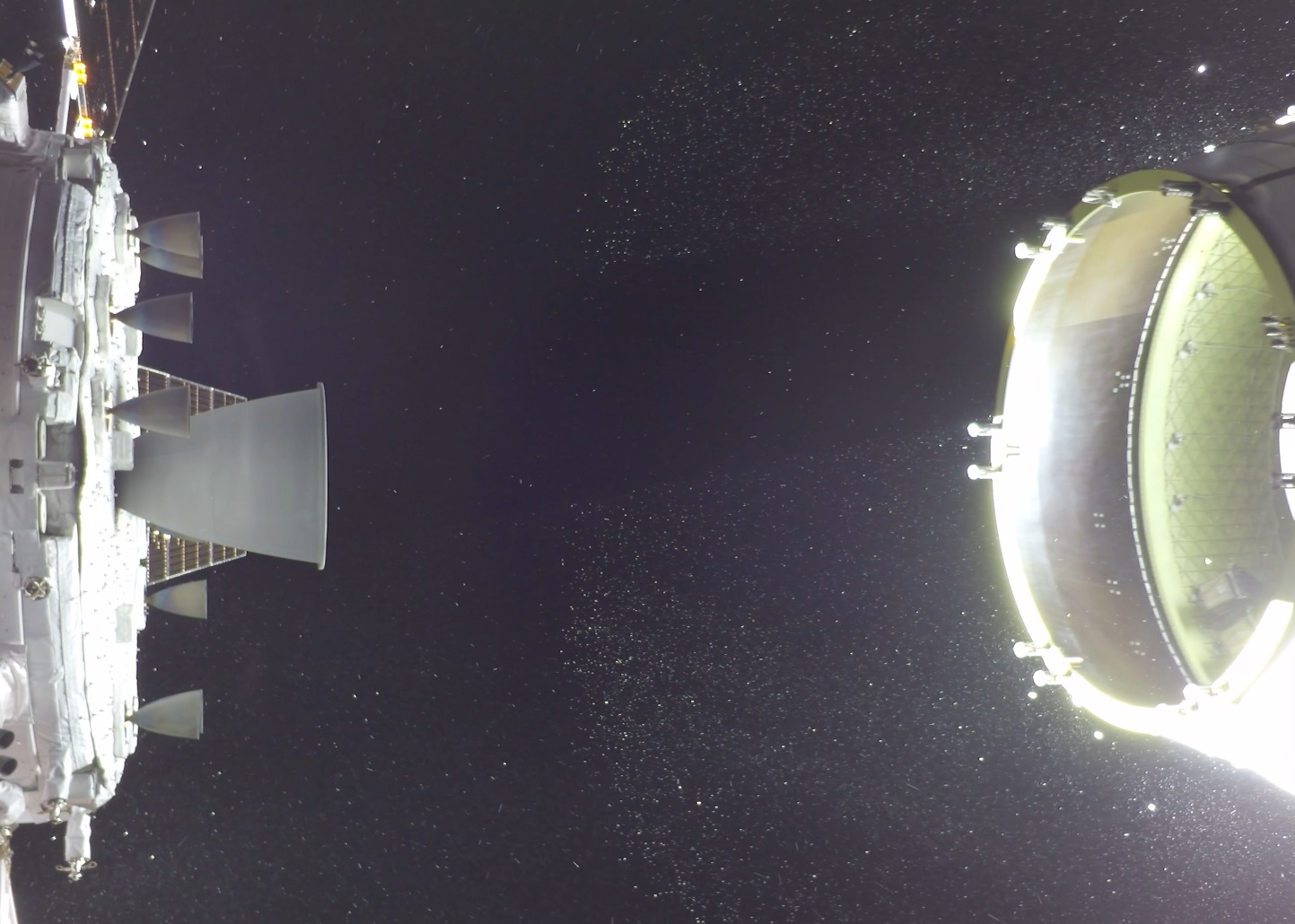
The deployment point is significant. The nanosatellites would be released from a ring on the upper stage of the Space Launch System rocket after the primary spacecraft is on its way. That means CubeSat teams are effectively being invited into a highly constrained but high-value rideshare environment connected to one of NASA’s most prominent exploration programs.
Artemis as a multiplier for smaller missions
NASA flew 10 CubeSats on the uncrewed Artemis I mission in 2022 and four on the crewed Artemis II mission, according to the source text. That history matters because it shows the agency is not treating secondary payloads as a novelty. Instead, it is building them into the mission architecture where feasible and backing them with payload integration and engineering support.
For universities, small companies, and research institutions, that support can be as important as the launch itself. CubeSats are relatively compact and standardized, but integrating them safely with a heavy-lift system and a human spaceflight mission requires technical coordination. NASA’s role lowers some of that barrier while preserving a path for specialized experiments to hitch a ride on larger exploration campaigns.
Why CubeSats still matter
CubeSats do not replace large spacecraft, and they are not the centerpiece of Artemis. Their value is different. They allow more institutions to participate in major missions, enable focused demonstrations, and can test ideas at lower cost and shorter development cycles. In a program as large as Artemis, they also broaden the scientific and technological return from each launch.
The agency’s language ties the opportunities to science and technology investigations that contribute to the expansion of human space exploration. That framing fits a larger pattern in NASA strategy: use major missions not only to move astronauts and hardware, but also to seed a wider ecosystem of experiments and capabilities around them.
A practical sign of Artemis maturing
The request is also a sign that Artemis planning is becoming more operationally detailed. Rather than speaking only in broad exploration goals, NASA is now outlining the mechanics of how auxiliary payloads might be incorporated into missions several flights ahead. That gives external organizations time to shape proposals around realistic constraints and suggests the agency wants a fuller pipeline of small payload candidates in place early.
For NASA, the benefit is flexibility. For the broader space sector, the benefit is access. If the Artemis campaign is meant to inaugurate a sustained human return to the Moon, the CubeSat pathway offers one modest but meaningful way to widen participation. The missions may be built around astronauts, Orion, and the Space Launch System, but NASA is making clear that there is still room on the manifest for smaller spacecraft with focused jobs to do.
This article is based on reporting by NASA. Read the original article.
Originally published on nasa.gov