Mission readiness starts on the ground
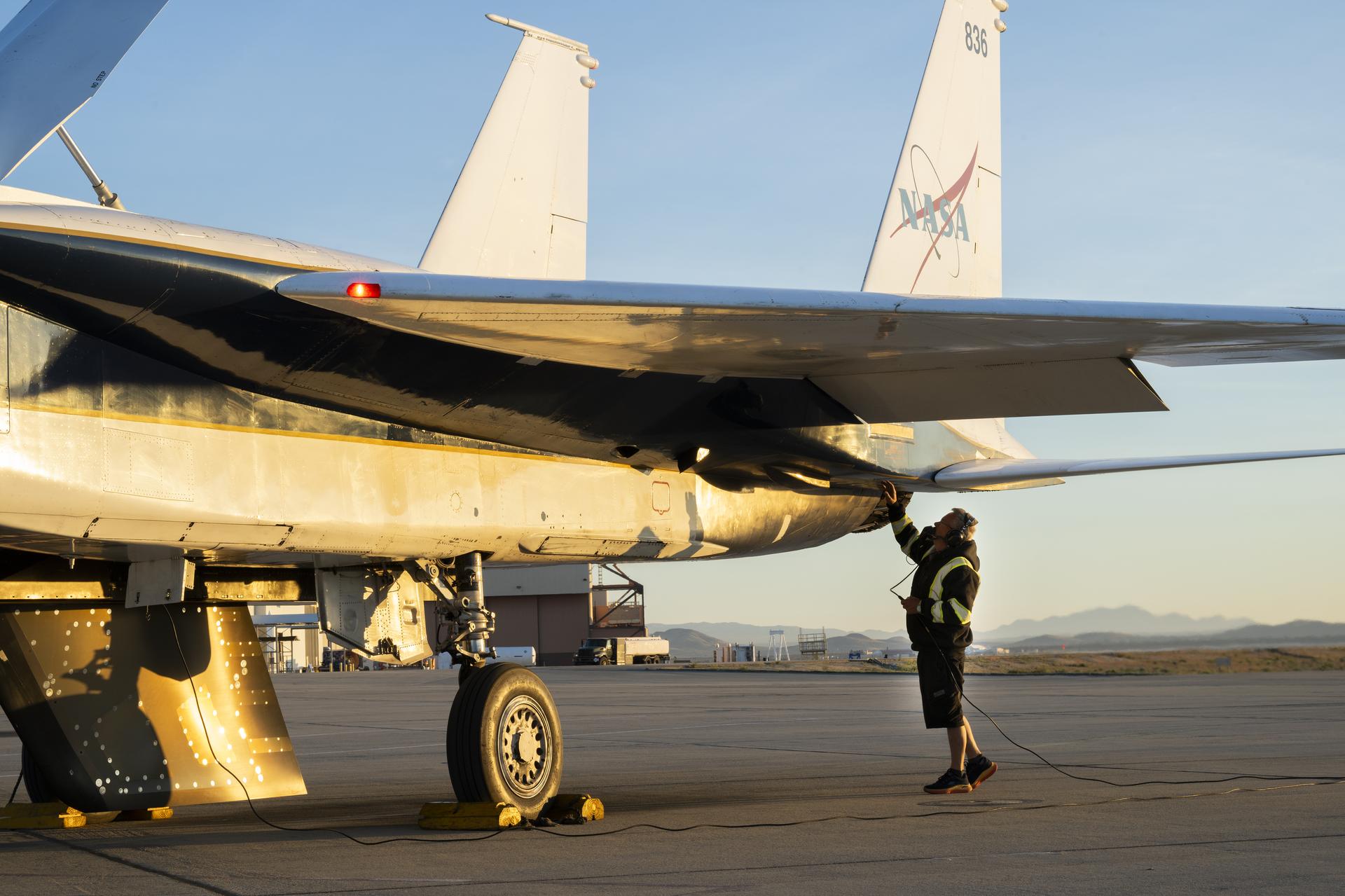
NASA’s latest spotlight on aircraft operations is not about a new science result or a headline flight. It is about the people who make those missions possible before takeoff. At NASA’s Armstrong Flight Research Center in Edwards, California, the agency says specially trained maintenance crews are central to keeping its aircraft safe, reliable, and ready across a wide range of missions.
The timing is notable because Armstrong’s fleet has expanded this year with two F-15s and a Pilatus PC-12. Those additions join aircraft with very different profiles and demands, including high-altitude ER-2s and the X-59, NASA’s newest X-plane. The result is a flight line defined by variety rather than standardization, and that puts a premium on crews that can adapt quickly between platforms, configurations, and mission types.
Jose “Manny” Rodriguez, NASA Armstrong Gulfstream G-IV crew chief, described that adaptability as the defining strength of the maintenance teams. In his account, the work can shift from loading instruments one day to aircraft reconfiguration or repairs the next, often while multiple systems across multiple aircraft require attention at once.
A fleet built for specialized jobs
NASA’s aircraft are not maintained for routine airline-style service. Each platform supports a specific mission set. Some conduct science research. Some serve as support or chase aircraft. Others assist rocket launches. They operate at different speeds, carry specialized hardware, and can be moved in and out of configuration based on program needs.
That means readiness is not a static label. On any given day, according to NASA, an aircraft may be cleared for flight, undergoing scheduled maintenance, being modified, or sitting in longer-term care. Ground crews have to manage those changing states while preserving safety margins across highly specialized systems.
The agency’s description of the work is concrete and unglamorous in the best sense. Crews check ejection seats, fuel tanks, brakes, wheels, wiring, and other hardware that degrades with use. Those are ordinary maintenance categories in one sense, but they become more complicated when spread across aircraft with different roles, different instrumentation, and different research schedules.
Why new aircraft matter
The addition of two F-15s and a PC-12 underscores how NASA continues to rely on a mixed fleet rather than a single research platform model. F-15s can support high-performance flight research and chase duties. A PC-12 adds a different capability profile. The ER-2s sit at the high-altitude science end of the spectrum. The X-59 represents a major aeronautics test effort in its own right.
From a maintenance perspective, that diversity is both a strength and a burden. It gives NASA flexibility to support very different programs, but it also raises the complexity of logistics, parts, procedures, and training. A maintenance culture that can handle that mix becomes a strategic asset, not just a support function.
NASA’s message is therefore partly operational and partly institutional. The agency is making clear that aviation research capacity depends on craft knowledge and disciplined upkeep as much as on advanced airframes or experimental payloads. Research aircraft may symbolize technological ambition, but they fly only when technicians, crew chiefs, and quality staff keep them within safe operating condition.
The hidden infrastructure of aerospace progress
There is a tendency to treat aerospace advancement as the product of pilots, engineers, and marquee vehicles. NASA’s account is a reminder that readiness itself is a form of infrastructure. Without continuous inspections, reconfiguration work, and replacement of worn hardware, even the most capable aircraft become unavailable or unsafe.
This is especially true at a center like Armstrong, where experimentation often means change. Aircraft are not merely flown; they are modified, instrumented, and repurposed for evolving test and science goals. That creates a maintenance environment in which standard procedures matter deeply, but so does the capacity to respond to unique mission demands.
By foregrounding ground crews, NASA is making a quiet but important point about how research organizations scale capability. New aircraft can be added to a fleet, but mission value appears only when the support workforce can absorb the complexity. Armstrong’s maintenance teams are being presented as exactly that enabling layer.
As NASA pushes forward on aeronautics and airborne science, the public-facing milestones will still come from flights, campaigns, and test results. But the agency’s own description suggests that one of the clearest indicators of future performance may be much less visible: whether the people on the ramp can keep an increasingly varied fleet ready for whatever comes next.
This article is based on reporting by NASA. Read the original article.
Originally published on nasa.gov