August brings an uncommon run of headline sky events
NASA says August 2026 will offer one of the year’s strongest stretches for skywatchers, with a total solar eclipse, the Perseid meteor shower under favorable moon conditions, a bright evening appearance by Venus, and a deep partial lunar eclipse later in the month. Taken individually, none of these events is unusual. What stands out is how closely they are packed together and how accessible several of them are to casual observers, including viewers in parts of the United States.
According to NASA’s monthly skywatching guide, the sequence begins in earnest on August 12, when a total solar eclipse crosses northern Russia, Greenland, Iceland, and northern Spain, with a small part of Portugal also inside the path of totality. For U.S. observers, the eclipse will not be total, but parts of the country from Alaska to North Carolina are expected to see a partial eclipse. The amount of the Sun covered will depend on location.
That alone would make for a noteworthy month. But NASA’s guide emphasizes that the same night also sets up one of the best annual meteor displays under unusually good viewing conditions. The Perseid meteor shower, which peaks the night of August 12 into the early morning of August 13, arrives with a New Moon on August 12. That means darker skies and less moonlight interference, a major advantage for meteor watching.
The eclipse comes first, with safety still the central message
Solar eclipses are among the most dramatic celestial events visible from Earth, but they are also the one event in this lineup that demands strict viewing precautions. NASA’s guidance is unambiguous: whenever any part of the Sun remains visible, observers need certified eclipse glasses or a safe solar viewer. Regular sunglasses are not enough, and optical devices such as binoculars, telescopes, and cameras require solar filters placed at the front of the optics.
That safety message is not a footnote. Partial eclipses can look deceptively manageable because the Sun often remains bright even when a noticeable segment has been obscured. For that reason, public interest tends to rise quickly near eclipse day, and so does the risk of unsafe viewing with improvised gear. NASA’s positioning of the eclipse in its August roundup reflects both the event’s appeal and the need for preparation.
For observers in the direct path overseas, totality will offer the rare moment when the Sun’s bright face is fully blocked and the corona becomes visible. For U.S. viewers seeing only a partial eclipse, the spectacle will be subtler but still significant, especially because the event shares the calendar with other strong targets later that same night.
The Perseids may benefit from ideal darkness
The Perseid meteor shower is already one of the most reliable and best-known annual showers, caused by Earth passing through debris left by Comet Swift-Tuttle. As those particles strike Earth’s atmosphere at high speed, they burn up as bright streaks across the sky. What changes from year to year is not the shower’s basic origin, but the observing conditions. In 2026, NASA says those conditions line up especially well because the Moon will be new at the time of the peak.
Dark skies matter because moonlight can wash out fainter meteors, reducing the number visible to the naked eye. Without that interference, more of the shower can be seen, especially from darker locations away from city lights. NASA recommends looking toward the northeast once it is fully dark and watching for the constellation Perseus to rise, though meteors can appear across the sky rather than only near the radiant point.
The advice is simple and practical: stay out late, find an open dark spot, and give your eyes around 30 minutes to adjust. That accessibility is part of the Perseids’ enduring appeal. Unlike some sky events that demand equipment, this one rewards patience more than hardware. For many people, it can be the easiest gateway into observational astronomy.
Venus takes over the western sky after sunset
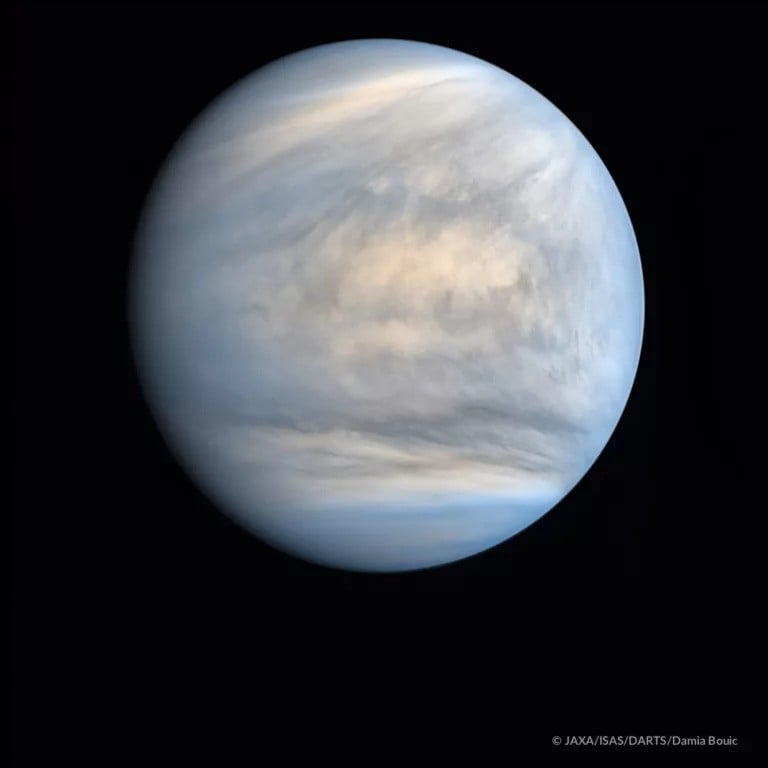
The middle of the month brings a different kind of highlight. On August 14 through 16, Venus reaches greatest eastern elongation, meaning its widest apparent separation from the Sun during this evening appearance. NASA says the planet will shine low in the west after sunset, making it a strong target even for people who are not actively planning a night-sky outing.
This matters because Venus is one of the few celestial objects that can cut through ordinary urban viewing conditions. A meteor shower asks for darkness and time. An eclipse asks for preparation and safe gear. Venus, by contrast, can announce itself to almost anyone who looks west at the right time. Greatest elongation does not make the planet physically brighter than ever in an absolute sense, but it does place it in a viewing geometry that makes it especially easy to spot as an evening object.
For educators and public observatories, that creates a useful bridge event. People drawn in by the eclipse or Perseids may find Venus easier to revisit on subsequent nights, extending interest beyond a single date. In that sense, August’s sequence works not just as a calendar of events, but as a ladder of engagement from special-event viewing to routine sky awareness.
The month closes with a broad-view partial lunar eclipse
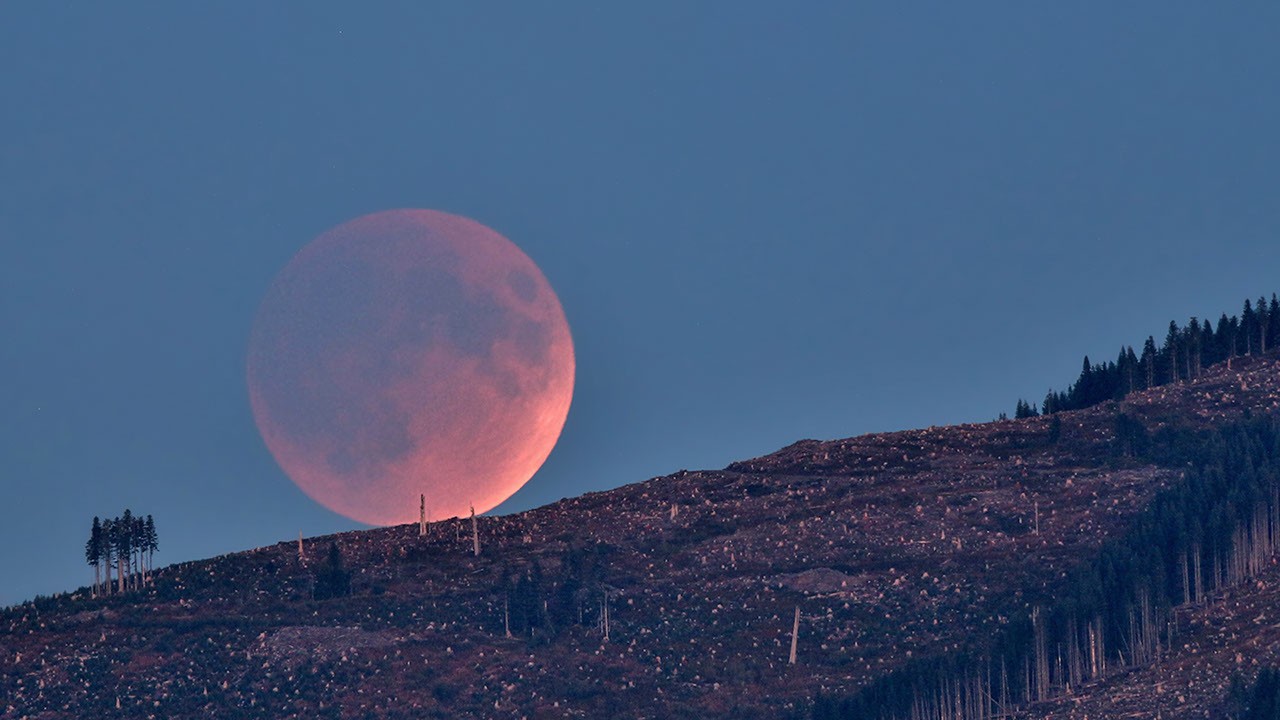
NASA’s August guide ends with another eclipse, this time of the Moon. On August 27 and 28, a deep partial lunar eclipse will be visible from much of North and South America and parts of Europe and Africa. Lunar eclipses are easier to observe than solar eclipses because they require no special eye protection. They unfold more slowly, giving viewers more time to watch the Earth’s shadow move across the lunar surface.
The phrase “deep partial” is important. This is not a total lunar eclipse, but it is expected to be substantial enough to make the shadowing effect obvious. That makes it a strong public event in its own right, especially for observers who may miss the solar eclipse or the Perseid peak earlier in the month.
Because the viewing footprint spans multiple continents, the lunar eclipse also gives astronomy clubs, science centers, and media outlets a late-month opportunity to bring broad audiences back into the conversation. In a month already crowded with sky events, it helps ensure the finale is not anticlimactic.
A month built for both specialists and first-time observers
NASA’s August outlook stands out because it combines rarity, visibility, and variety. There is a solar eclipse with international reach, a major meteor shower favored by moon phase, a brilliant planetary target in the evening sky, and a widely visible lunar eclipse before the month ends. For experienced observers, that is a packed schedule. For newcomers, it is an unusually forgiving one, with several opportunities that do not require advanced equipment.
The larger significance is cultural as much as scientific. Skywatching moments become public science events when they are easy to share, easy to photograph, and easy to understand. August 2026 appears set up exactly that way. NASA’s guide suggests a month in which celestial mechanics will not stay confined to astronomy circles, but will spill into mainstream public attention night after night.
This article is based on reporting by science.nasa.gov. Read the original article.
Originally published on science.nasa.gov