NASA is turning Artemis II from a mission concept into a timed operational sequence
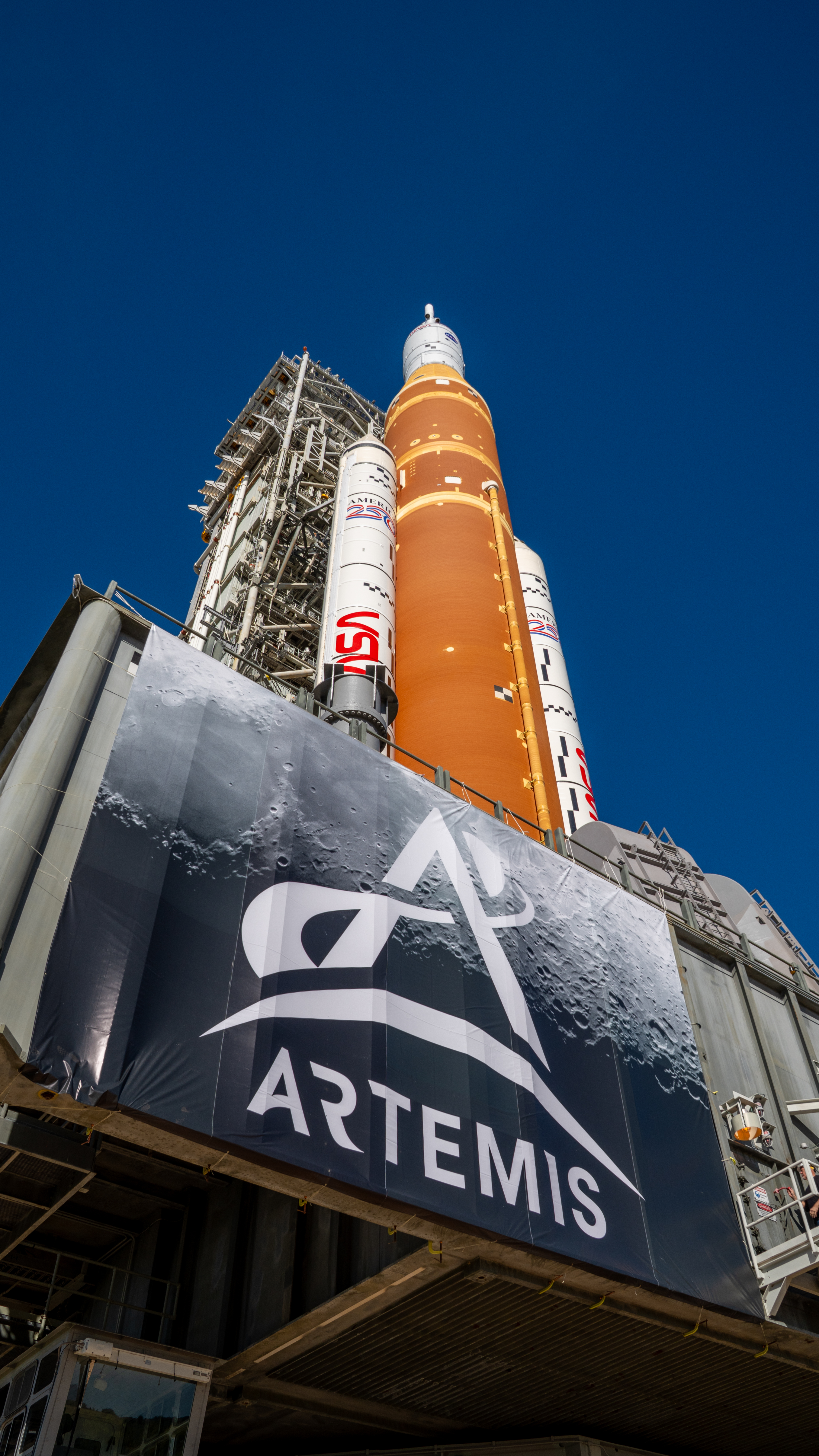
NASA has released the formal launch countdown for Artemis II, giving the clearest public look yet at how the agency plans to move its first crewed Artemis mission from pad operations to liftoff. The countdown begins about two days before launch and lays out the sequence of milestones that teams at Kennedy Space Center and across the country will work through before sending four astronauts around the Moon.
The mission will carry Reid Wiseman, Victor Glover, Christina Koch, and Canadian Space Agency astronaut Jeremy Hansen aboard Orion atop the Space Launch System rocket. While the broader Artemis program has long been framed around lunar exploration, crew readiness, and deep-space capability, the newly released countdown underscores a simpler reality: every major mission eventually becomes a tightly choreographed operational exercise measured in hours, minutes, and hold points.
NASA’s release matters because it translates a highly visible exploration program into concrete launch mechanics. It also shows how much of a lunar mission is decided before the engines ignite.
What the countdown reveals
NASA explains that the sequence uses both “L minus” and “T minus” time. “L minus” marks how far liftoff is from the current point in hours and minutes, while “T minus” governs the sequence of built-in launch events. Planned holds can stop the countdown clock to help the team target a specific launch window and preserve margin for critical tasks without changing the overall mission timeline.
That distinction is more than procedural jargon. It reflects the complexity of a modern launch campaign, especially one involving a crewed Orion spacecraft and the heavy-lift SLS system. A countdown is not a single uninterrupted march to zero. It is a managed process with decision points, pause points, subsystem checks, power cycles, fueling preparations, and room for the launch team to absorb issues without immediately slipping the mission.
NASA begins the sequence at L minus 49 hours and 50 minutes, when the launch team arrives at their stations. Ten minutes later, the countdown clock starts. From there, teams move into preparations for liquid oxygen and liquid hydrogen system loading, while Orion is powered up and the rocket’s stages are brought online in sequence.

The first day is about preparing the vehicle
In the early portion of the timeline, NASA lists a series of activation and preparation steps stretching across the better part of a day. Orion is powered up between L minus 45 hours 30 minutes and L minus 44 hours. The SLS core stage follows, then the interim cryogenic propulsion stage. Final preparations for the four RS-25 engines continue through the first major phase of work.
Battery charging is also central to the sequence. NASA says Orion’s flight batteries are charged to 100 percent between L minus 33 hours 30 minutes and L minus 29 hours 30 minutes, while core stage flight batteries are charged over a longer window from L minus 31 hours 30 minutes to L minus 24 hours 30 minutes.
These details emphasize that a launch countdown is not just a spectacle visible at the pad. It is a layered systems-integration exercise. Each step confirms that a vehicle assembled from multiple major elements can be powered, monitored, conditioned, and synchronized under launch conditions.
The approach to fueling is deliberate and heavily gated
NASA’s schedule shows how carefully Artemis II will transition into tanking operations. Around L minus 13 hours, the countdown enters a built-in hold lasting two hours and 45 minutes. During that period, the launch team works toward a go or no-go decision to begin tanking.
That alone highlights the seriousness of the transition. Cryogenic fueling is one of the most sensitive phases of any launch campaign, and on Artemis II it comes only after a long sequence of preparatory work. NASA’s timeline places Orion cold soak and transfer line chilldown around this period, along with chilldown operations for both liquid oxygen and liquid hydrogen systems in the core stage.
Once those conditions are met, the count moves into slow fill and then the larger sequence of propellant loading operations. Even in the excerpt NASA provided, the structure is clear: the team is not simply filling tanks, but carefully bringing the system to the thermal and procedural state required for launch.
Why publishing the countdown matters
For NASA, releasing a countdown like this serves several purposes. At the most practical level, it informs the public and the press about the key milestones that will shape launch coverage. But it also performs a subtler function. Artemis has often been discussed through its long-term goals, from returning humans to the Moon to preparing for future deep-space missions. A countdown document anchors those ambitions in operational credibility.
It tells observers that the mission has advanced to a stage where the agency is detailing when teams report, when spacecraft systems power on, when non-essential personnel leave the pad, when the ground launch sequencer activates, and when tanking decisions are made. Those are the signs of a program working through real launch preparations rather than only high-level planning.
The document also reinforces how many organizations and people are involved. NASA refers not only to Kennedy Space Center’s launch team in Florida, but to teams across the country participating in the process. Artemis II is often presented through its crew, but the countdown makes visible the broader machinery needed to support a crewed lunar mission.
A crewed lunar flyby remains a high-stakes systems test
Artemis II is not just another launch. It is the mission meant to carry astronauts around the Moon and back, validating the integrated performance of Orion, SLS, ground systems, and mission operations in a crewed deep-space context. That makes the countdown more than a checklist. It is part of the test itself.
Every power-up, hold, battery charge, chilldown, and fueling milestone contributes to proving that the system can support humans safely beyond low Earth orbit. NASA’s publication does not dwell on that rhetoric, but the implication is unavoidable. A mission of this scale depends on disciplined execution long before ascent.
The inclusion of planned holds is especially revealing. Rather than presenting precision as a matter of speed, NASA presents it as a matter of control. The countdown is built to create flexibility where it is needed and certainty where it is possible. That philosophy is common to launch operations, but on a flagship crewed mission it becomes even more important.
The countdown is a milestone in its own right
Space missions often generate attention through images, hardware rollouts, and launch dates. But the publication of a detailed countdown is its own signal of maturity. It means the program is now communicating not only what Artemis II is supposed to achieve, but how the final hours before launch are expected to unfold.
For the public, the release offers a clearer way to follow the mission. For industry and spaceflight observers, it provides another sign that Artemis II is advancing through the demanding operational steps required for a crewed Moon mission. And for NASA, it marks the point where long-range exploration goals must resolve into tightly managed execution.
When Artemis II finally lifts off, the launch will appear sudden. The countdown NASA has published is a reminder that nothing about it is sudden at all.
This article is based on reporting by NASA. Read the original article.
Originally published on nasa.gov