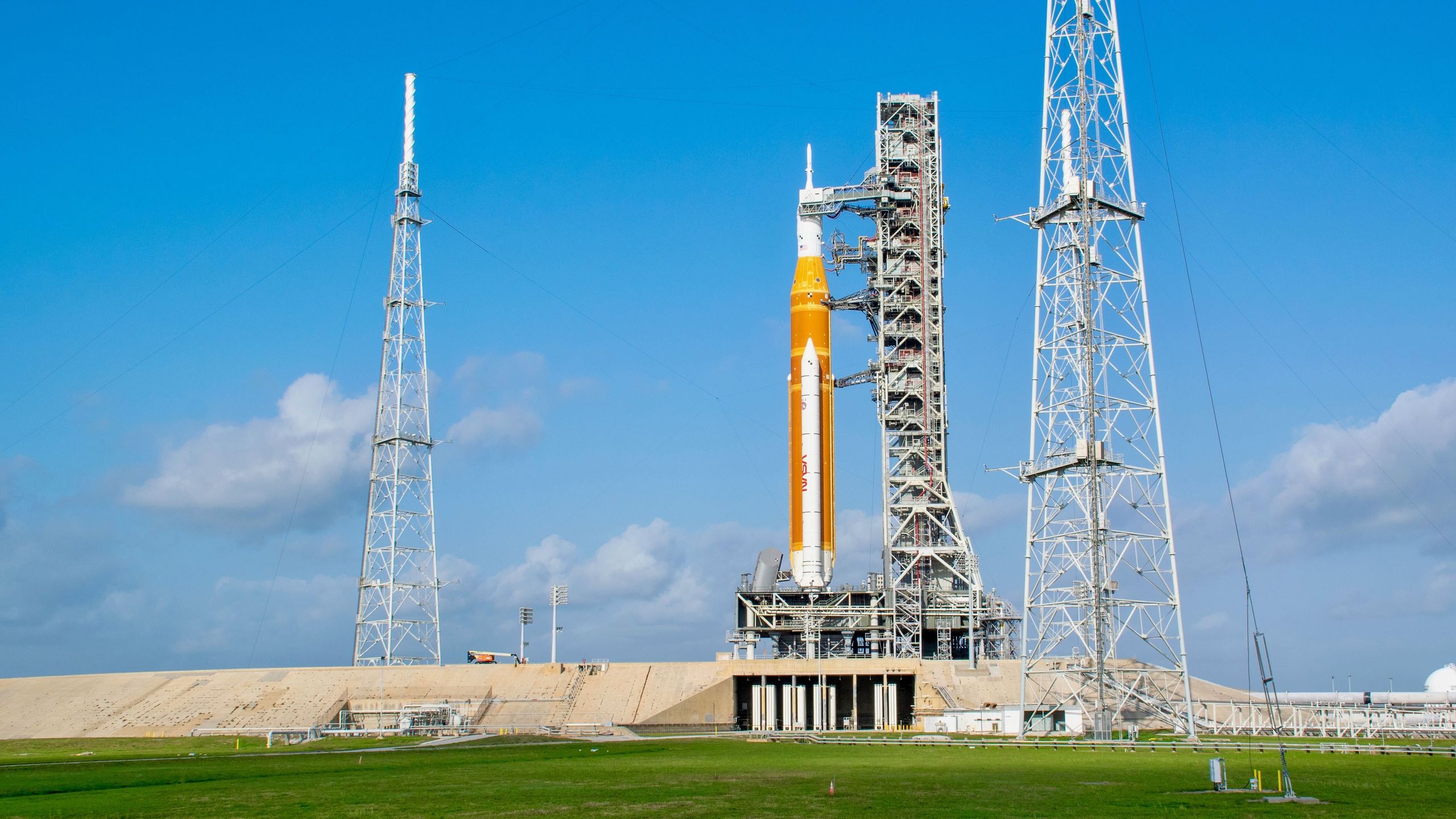
NASA is still targeting April 1 for Artemis 2
NASA says it remains on track to launch Artemis 2 on Wednesday, April 1, with the two-hour launch window opening at 6:24 p.m. EDT. The mission, which will send astronauts around the moon and back, is the first crewed flight of the Artemis program and one of the agency’s most important tests before a future lunar landing attempt.
In updates from Cape Canaveral, agency officials said they currently have a high degree of confidence in the launch timeline. NASA reported that teams are tracking zero technical issues threatening the mission at this point, a notable statement for a program that has drawn intense scrutiny over schedule pressure, hardware complexity, and the legacy of the Space Launch System’s long development cycle.
The message from the agency is not that the vehicle is free of routine work, but that the remaining items are being handled within normal launch preparation. NASA described the remaining issues as minor matters found during operations rather than problems that jeopardize the opening launch opportunity.
A major test for the Artemis program
Artemis 2 is designed to prove that NASA’s exploration hardware can safely carry a crew beyond low Earth orbit. The mission will fly astronauts aboard the Orion spacecraft on a lunar flyby rather than a landing, serving as a full-up systems demonstration for the rocket, spacecraft, mission operations, and recovery plans needed for deeper human spaceflight.
That makes the flight much more than a symbolic return to lunar missions. It is the mission intended to validate the core transportation architecture of Artemis with people onboard. NASA has already completed uncrewed testing through Artemis 1, but a crewed mission introduces another layer of operational discipline, risk management, and public accountability.
The agency said its flight readiness review was completed before the Space Launch System rolled to the launch pad on March 20. Since then, NASA says operations have moved smoothly and no new risk acceptances or unresolved technical concerns have emerged that would need to be closed out before launch approval.
If the mission launches on schedule, it will mark one of the biggest moments in U.S. human spaceflight since the end of the Apollo era. The flight is meant to show that NASA can move from test missions to sustained lunar operations, even if the broader Artemis campaign still faces future milestones and dependencies.

Backup opportunities already built into the schedule
NASA is also signaling that it has operational flexibility if weather or other last-minute issues force a delay. The agency said there are additional launch opportunities available through April 6 if the April 1 attempt is scrubbed.
That does not reduce the significance of the current target date, but it does help frame the agency’s confidence. Launch teams are not approaching the first opportunity as a one-shot event. Instead, they appear to be moving through a standard decision process with a set of backup windows already accounted for in the planning.
In practical terms, that means the coming days will focus on the familiar final sequence of launch preparations: closeout work, systems monitoring, weather checks, and final go-no-go decisions. Public attention will likely focus on whether NASA’s confidence holds as the clock counts down and whether any late issues emerge during the last phase of pad operations.
Space launch campaigns often change quickly, especially for heavy-lift rockets and first-of-kind crewed missions. But based on NASA’s latest assessment, Artemis 2 is entering its final stretch with the agency publicly emphasizing readiness rather than caution.
What success would mean
A successful Artemis 2 launch and flight would do more than send astronauts around the moon. It would restore a form of deep-space human exploration that has not happened for decades and provide NASA with the operational evidence it needs for later crewed lunar missions.
It would also serve as a public validation of the Artemis strategy at a time when large government space programs are regularly judged against commercial launch progress, budget pressure, and geopolitical competition. NASA is effectively making the case that its long, methodical architecture is now approaching a point where it can deliver visible milestones.
The April 1 target therefore matters both technically and politically. Technically, it is the moment when years of design, integration, and review are put to the test with people aboard. Politically, it is a chance for NASA to demonstrate momentum in a program meant to define U.S. leadership in human exploration beyond Earth orbit.
For now, the agency’s position is clear: Artemis 2 is ready to proceed unless new issues emerge. NASA says current operations are going smoothly, no technical issue is threatening the first launch window, and the teams responsible for clearing the mission are seeing no unresolved blockers ahead of liftoff.
That does not guarantee an on-time launch. Spaceflight rarely offers guarantees. But heading into the final days before April 1, NASA is presenting Artemis 2 not as a mission in doubt, but as one approaching the pad with confidence.
This article is based on reporting by Space.com. Read the original article.
Originally published on space.com