A heavy world at the edge of planetary definitions
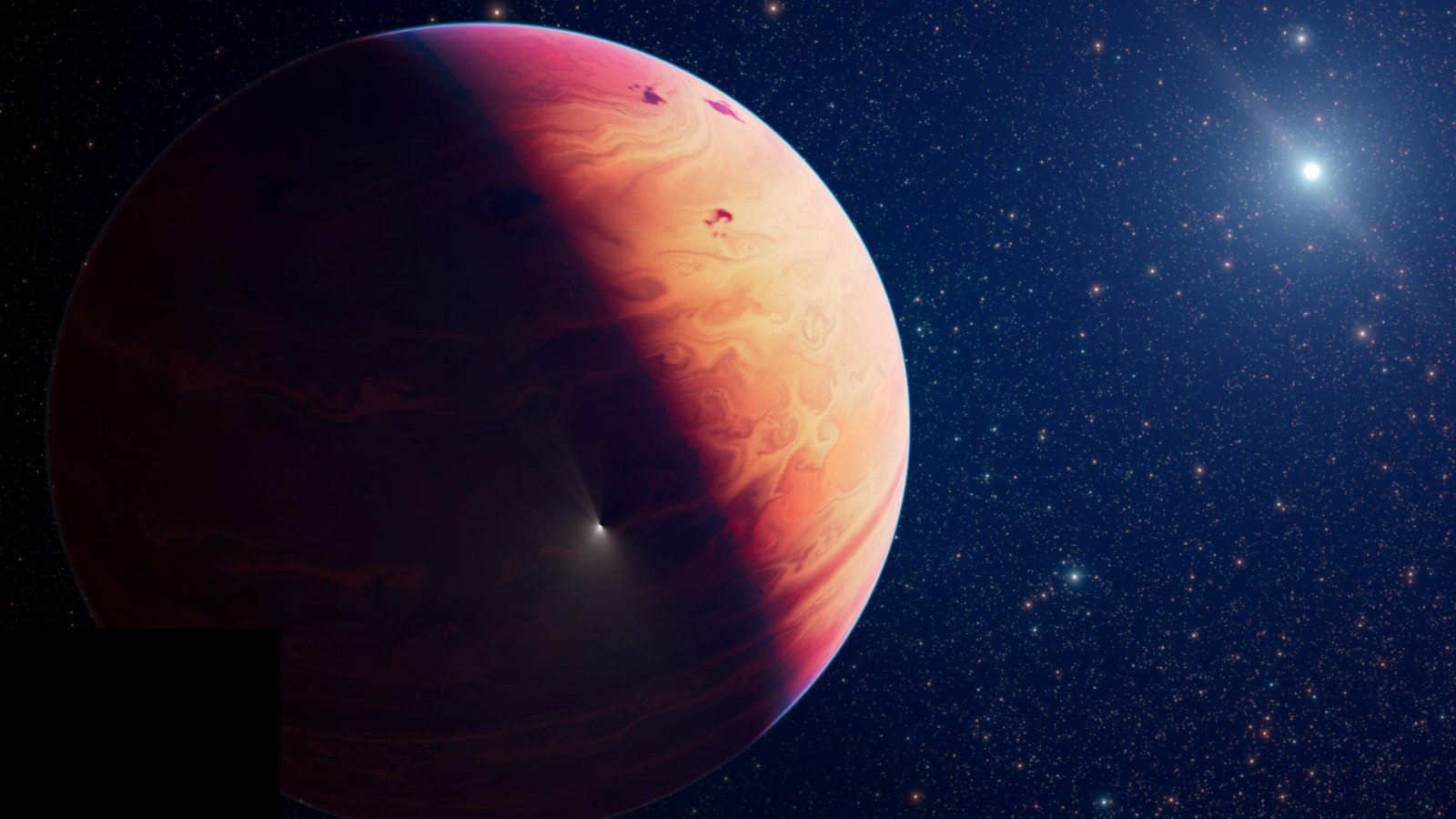
Astronomers using the James Webb Space Telescope have turned their attention to 29 Cygni b, an unusually massive gas giant that may help clarify how the biggest planets come into being. The object lies about 133 light-years from Earth and has a mass around 15 times that of Jupiter, placing it close to the blurry boundary where giant planets start to resemble failed stars.
That boundary matters because planetary science still lacks a settled explanation for the formation of the most extreme gas giants. Smaller worlds are generally thought to emerge through a bottom-up process in which particles of rock and ice gradually stick together, building larger bodies over time. But that model becomes harder to sustain for worlds as massive as 29 Cygni b. When a planet approaches the upper range of what is usually considered planetary mass, astronomers have to ask whether it formed like a planet at all.
The new Webb-based analysis does not merely add another exoplanet to the catalog. It goes directly at one of the field’s more consequential questions: whether the biggest gas giants are the products of standard planet-building, or whether some of them form in a more star-like way through direct collapse.
Bottom-up versus top-down formation
The source text frames the problem as a competition between two broad formation paths. In the conventional bottom-up picture, small solid clumps gather into larger cores and eventually accumulate thick gaseous envelopes. This process is widely used to explain many planets, especially in systems where solids and gas are available long enough for the architecture to assemble in stages.
For a world like 29 Cygni b, however, that route may be strained. At roughly 15 Jupiter masses, the planet sits in a regime where sheer size complicates gradual growth models. That is why astronomers often consider a top-down alternative for such objects: the direct collapse of dense material in a protoplanetary environment. In that scenario, a massive body forms more abruptly, more like a stellar object emerging from gravitational collapse than a classic planet accreting layer by layer.
The real scientific value of 29 Cygni b comes from the possibility that its atmosphere preserves clues about which path dominated. Webb’s sensitivity makes it especially useful for this sort of work because atmospheric composition can reveal how and where a world accumulated its material.

Why composition is the key clue
According to the supplied report, 29 Cygni b is enriched with heavy elements at a level about 150 times that of Earth. That kind of enrichment is central to the formation debate. If a massive gas giant carries a pronounced signature of heavy elements, astronomers can use that information to test whether the object more likely assembled from solid-rich building blocks or emerged through a collapse-driven process that would produce a different chemical pattern.
Composition does not answer every question on its own, but it narrows the plausible stories. Exoplanet science increasingly depends on this style of inference: use atmospheric fingerprints to reconstruct the hidden history of formation. The James Webb Space Telescope is particularly well suited to this because it allows researchers to probe worlds that are too distant, too faint, or too complex for earlier observatories to characterize in similar detail.
In that sense, 29 Cygni b is valuable not only as an individual curiosity but as a calibration point. If researchers can understand how one supergiant world formed, they improve the framework used to interpret others that occupy the murky zone between giant planets and brown-dwarf-like bodies.
The planet-star dividing line is still unsettled
The interest in 29 Cygni b also reflects a larger taxonomic problem. Astronomy often relies on categories that are useful but imperfect, and the label “planet” becomes less stable as masses rise. At around 15 Jupiter masses, an object pushes into a range where the distinction between very large planet and substellar object is no longer obvious from mass alone.
That is why the article emphasizes that Webb’s observations may help define the line between planets and stars. The point is not that 29 Cygni b is suddenly being reclassified as a star. Instead, its properties force astronomers to think more carefully about what category names are supposed to capture. Are they primarily labels of mass? Of formation history? Of internal physics? Worlds like this make those choices visible.
As exoplanet discoveries continue, that problem will become more common, not less. Telescopes are now finding enough diverse objects that the edge cases are no longer rare exceptions. They are shaping the underlying definitions of the field.
Why Webb keeps changing exoplanet science
The James Webb Space Telescope was built for broad astronomy goals, but one of its strongest impacts has been in exoplanet characterization. Instead of only detecting that a planet exists, Webb can help show what it is like and how it may have formed. That transition from counting planets to understanding them is one of the major scientific shifts of the current decade.
In the case of 29 Cygni b, Webb’s role is to turn a broad theoretical dispute into something more testable. The telescope allows astronomers to connect atmospheric evidence to formation models in a way that older instruments often could not. The result is not a final answer to how every supergiant world forms, but a sharper, more evidence-driven argument.
That is often how science advances in practice. A single object rarely resolves an entire field’s biggest uncertainty. But certain objects, observed with the right instrument at the right time, can force theories to become more precise. 29 Cygni b appears to be one of those cases.
Why this story matters
- 29 Cygni b sits near the fuzzy boundary between giant planets and star-like objects.
- Its composition could help astronomers distinguish between gradual core growth and direct-collapse formation models.
- Webb is pushing exoplanet science beyond detection toward detailed physical interpretation.
This article is based on reporting by Space.com. Read the original article.
Originally published on space.com