A mission milestone arrives in a single image
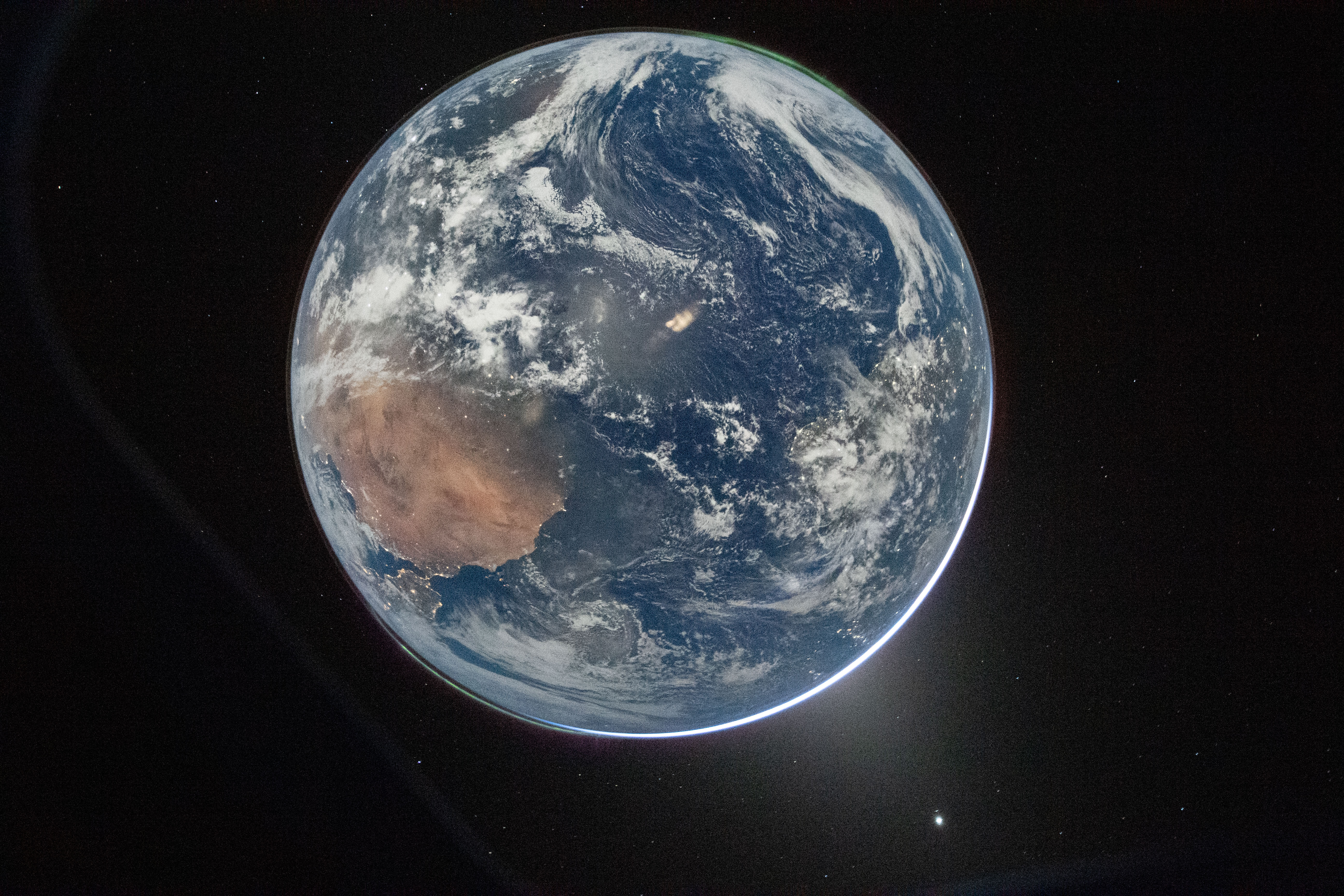
NASA has released what it says are the first downlinked images from the Artemis II astronauts, offering an early visual marker for the agency's return to deep-space crewed exploration. The newly published photograph was taken by Artemis II commander Reid Wiseman from Orion's window after the spacecraft completed its translunar injection burn, the maneuver that set the mission on its path toward the Moon.
The image is notable for more than its timing. It shows Earth eclipsing the Sun, with zodiacal light visible at the lower right and two auroras visible at the top right and bottom left. In a short image article published April 3, NASA presented the photograph as both a technical and symbolic moment: a human view outward from the spacecraft carrying the first Artemis crew to travel beyond low Earth orbit.
Why the first downlinked images matter
Space missions create their public memory through hardware achievements, mission logs, and imagery. The first downlinked images from a crewed mission are especially resonant because they turn abstract progress into a visible, shareable fact. In this case, the images confirm not only that Orion is transmitting from deep space, but that Artemis II is beginning to build its own visual record instead of borrowing history from Apollo.
That matters because Artemis is not being sold as a one-off stunt. NASA is positioning it as the opening chapter of a long-duration return to the Moon, one meant to support later surface missions and a sustained human presence. Every successful transmission, maneuver, and public-facing artifact therefore carries extra weight. The image is beautiful, but it is also institutional evidence that the new lunar program is generating its own milestones in real time.

The view from Orion is doing more than inspiring audiences
The photograph's composition helps explain why NASA released it so quickly. Earth, partially silhouetted against the Sun, gives scale to the mission in a way no technical update can. The auroras add a reminder that even from increasing distance, planetary processes remain visible and dynamic. The zodiacal light, faint but present, underscores that this is not a standard orbital snapshot but a view shaped by deep-space geometry and timing.
For public audiences, that combination is compelling. For NASA, it also reinforces a broader communications goal: Artemis must feel both operationally credible and emotionally legible. Images from inside Orion bridge those needs. They demonstrate crew activity and spacecraft function while also making the mission tangible to people who will otherwise encounter it only through press briefings and mission commentary.
An early marker in the Artemis timeline
The release comes after Orion completed translunar injection, one of the key propulsion events in any lunar mission architecture. NASA's note does not elaborate further on mission operations in the supplied text, but the placement of the photograph directly after that burn makes the image a timestamp as much as a portrait. It captures the moment after the spacecraft was committed to the next phase of its journey.
That timing matters because Artemis II is expected to validate procedures, systems, and crew operations essential to later missions. Even small public milestones acquire operational significance in that context. The first downlinked images are not only keepsakes. They reflect a functioning communications chain, a working crewed spacecraft, and a mission profile progressing through planned stages.
Why NASA's framing is intentional
NASA's brief description is careful and visual: Orion's window, the completed burn, the Earth eclipsing the Sun, the auroras, the zodiacal light. It reads like a caption because the agency wants the image to circulate widely on its own terms. That is common in spaceflight communications, where single visuals often do as much work as formal statements. An image can capture confidence, distance, and momentum without requiring extended explanation.
In Artemis, that strategy matters even more because the program carries high expectations and persistent scrutiny over schedule, cost, and execution. Releasing a crew-taken image from this stage of the mission helps ground those debates in something immediate and real: astronauts are aboard, Orion is beyond Earth orbit, and the Moon campaign is active now, not only in planning documents.
Artemis begins writing its own iconography
The Apollo program remains one of the most visually defining projects in modern history, and any lunar return effort inevitably lives in that shadow. Artemis will need its own images, its own phrases, and its own moments if it is to establish itself as more than an echo. The first downlinked Earth pictures from Artemis II are modest compared with a landing, a moonwalk, or a sample return, but they matter for exactly that reason. They are early and original.
In the months and years ahead, Artemis will be judged on technical outcomes. But space programs also depend on narrative endurance. They survive by showing the public what progress looks like before the biggest milestones arrive. With this release, NASA has provided one of the first clear answers to that question for Artemis II: progress looks like Earth framed through Orion, already receding, while the crew heads outward.
This article is based on reporting by NASA. Read the original article.
Originally published on nasa.gov