A spring comet peaks near the Sun
Comet C/2025 R3 Pan-STARRS has reached the key turning point in its 2026 appearance, arriving at perihelion after a short but striking run in the dawn sky. According to Universe Today, the comet has been developing well, reaching about magnitude +4.3 and raising hopes that it might approach naked-eye visibility before solar glare closes the observing window from Earth.
The timing makes it both exciting and frustrating for skywatchers. The comet’s closest pass to the Sun came on April 19 at a distance of 0.499 astronomical units, or about 75 million kilometers. But from Earth’s perspective, it is also moving extremely close to the Sun in the sky, limiting direct observation for ground-based viewers.
That combination is common in comet observing. Some of the most visually dramatic objects are also the hardest to catch because they brighten only when they dive into awkward solar geometry.
Why R3 Pan-STARRS drew attention
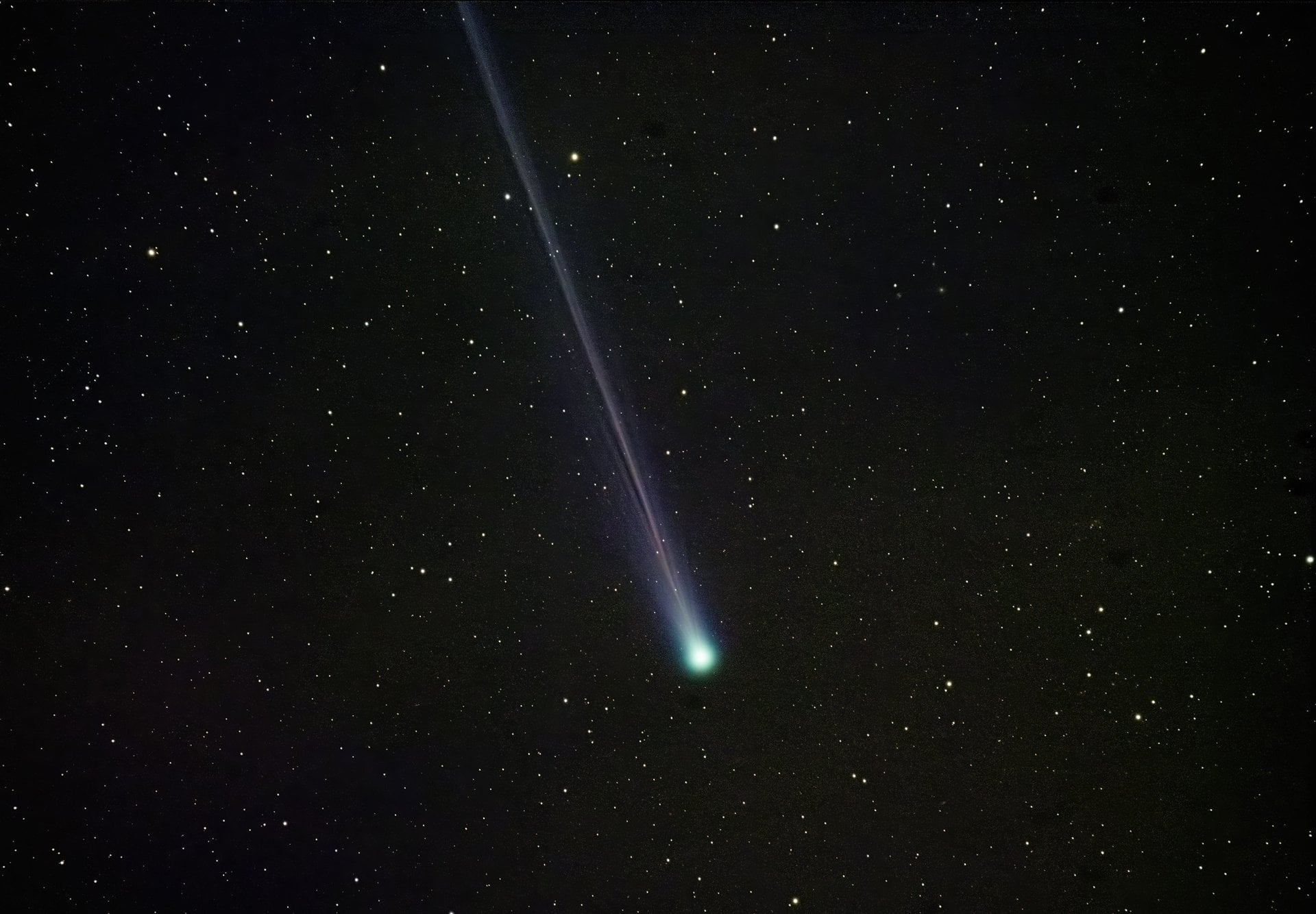
This comet earned unusual attention because it became one of the brighter and more photogenic targets of the northern spring. Universe Today describes a needle-thin dust tail and a greenish coma produced by cyanogen gas, features that helped it stand out in astrophotography captured during the narrow pre-sunrise window available to mid-northern observers.
The source text says the comet was discovered on September 8, 2025 by the Pan-STARRS sky survey and entered 2026 as one of the year’s comets to watch. It arrived with some uncertainty, but recent observations appear to have exceeded the more modest baseline expectations.
That mattered even more because another anticipated spring comet, C/2026 A1 MAPS, disintegrated during its close perihelion passage on April 4. With that object lost, R3 Pan-STARRS became the season’s main comet story.

How close it came, and what happens next
R3 Pan-STARRS is described as arriving from a roughly 170,000-year orbit, moving toward the inner solar system before swinging back outward after perihelion. Universe Today notes that the comet passed just outside Mercury’s orbit, close enough for heat and solar radiation to shape its appearance but not necessarily so close that destruction was expected.
That survival question is always central near perihelion. Sungrazing or near-sungrazing comets can brighten spectacularly and then fragment or vanish. In this case, the source text suggests R3 Pan-STARRS had relatively good survival prospects compared with more extreme sungrazers. It also notes that the comet’s closest approach to Earth comes on April 26, when it will be 0.523 astronomical units away.
For ground observers, however, proximity alone does not guarantee visibility. The geometric problem remains severe because the comet lies close to the Sun in the sky. As a result, the best follow-up views may increasingly come from space-based instruments rather than backyard telescopes.
The role of modern solar observatories
One of the quiet changes in comet watching is that perihelion no longer has to mean observational disappearance. Universe Today points out that modern space-based tools allow astronomers and the public to continue tracking comets through solar conjunction conditions that would once have hidden them almost completely.
That means the story of R3 Pan-STARRS does not end when dawn observers lose it in the brightening sky. Space-based imagers can continue to document how the tail evolves, whether the nucleus holds together, and how the comet behaves as it rounds the Sun and heads outward again.
This is especially useful for objects like R3 Pan-STARRS, whose most dramatic phase may coincide with the worst possible viewing geometry from Earth’s surface.

Why comet stories still matter
Comets occupy a peculiar place in astronomy. They are scientifically valuable because they preserve material from the solar system’s deep past, but they also remain one of the few astronomical phenomena that can feel immediate and public. A bright comet can turn ordinary observers into participants, even if only for a few mornings before sunrise.
R3 Pan-STARRS delivered some of that experience in April 2026. Even with the limited viewing window, it generated strong imagery and revived the familiar question that accompanies every promising comet: will it brighten a little more, or fall apart before the show is over?
For now, the evidence in the supplied source suggests a comet that performed well enough to justify the attention, survived into perihelion, and will remain worth following through remote instrumentation as it moves past the Sun.
What to watch
- Whether space-based observations show the comet remaining intact after perihelion.
- How its brightness and tail evolve as it moves away from the Sun.
- Whether any post-perihelion geometry creates a renewed observing opportunity.
- How R3 Pan-STARRS compares with other notable comets of 2026 later in the year.
Comet R3 Pan-STARRS may not become a truly easy naked-eye spectacle, but it has already become one of the most memorable sky objects of the season. In a year when one highly anticipated comet already failed to survive, that alone is enough to keep astronomers watching.
This article is based on reporting by Universe Today. Read the original article.

Originally published on universetoday.com