The Martian Dream Versus Martian Reality
For decades, science fiction has fueled humanity's fascination with Mars. From the pulpy adventures of Edgar Rice Burroughs to Ridley Scott's meticulous survival drama The Martian, popular culture has consistently presented the Red Planet as a hostile but ultimately conquerable frontier. Arnold Schwarzenegger memorably urged audiences to "get your ass to Mars" in Total Recall, and Elon Musk has spent the better part of a decade promising to make that a literal possibility. But how much of what we see on screen reflects the genuine science of Martian survival?
The answer, according to planetary scientists, aerospace engineers, and medical researchers, is not nearly enough. While films and television shows capture some of the drama of off-world living, they consistently underestimate or entirely ignore several existential threats that would confront any would-be Martian colonist. The gap between science fiction and science fact is not merely academic. It shapes public expectations, influences policy decisions, and even affects the billions of dollars flowing into private space ventures.
The Radiation Problem Nobody Talks About
Perhaps the most egregious oversight in science fiction depictions of Mars is the planet's radiation environment. Unlike Earth, Mars lacks a global magnetic field and possesses only a whisper-thin atmosphere, roughly one hundred times thinner than our own. This combination means the Martian surface is bombarded by both galactic cosmic rays and solar particle events with essentially no natural shielding.
The health implications are severe. Scientists estimate that astronauts on a round trip to Mars would face an additional cancer mortality risk of between one and nineteen percent, depending on the duration of surface exposure and the shielding technology available. That is just the journey and a short stay. Long-term habitation would compound these risks dramatically, potentially causing DNA damage, cataracts, cardiovascular disease, and cognitive decline.
In most science fiction, characters walk around Mars in relatively lightweight suits or even shirtsleeves inside habitats with seemingly ordinary walls. The reality would demand meters of regolith shielding, underground habitation, or advanced materials science that does not yet exist. Building a civilization on Mars would first require solving a radiation problem that no movie has bothered to honestly depict.

Gravity: The Slow-Motion Health Crisis
Mars has a surface gravity of 0.38g, roughly one-third of Earth's. Science fiction tends to treat this as either an afterthought or a fun novelty, showing characters bouncing around with slightly more spring in their step. The medical reality is far more concerning, though admittedly still poorly understood.
We know from decades of research aboard the International Space Station that microgravity causes muscle atrophy, bone density loss, fluid redistribution, and vision problems. What we do not know is whether 0.38g is enough to prevent these effects or merely slow them down. No human has ever lived in partial gravity for an extended period, making this one of the largest unknowns in space medicine.
Research suggests that Martian gravity would alter human gait, limiting comfortable walking speed to roughly half of what we manage on Earth. Over generations, the skeletal and muscular adaptations could produce humans who are physically incapable of returning to Earth's gravity well. Science fiction occasionally nods at this possibility, but rarely grapples with the profound implications for a species that might effectively split into two gravitational populations.
An Atmosphere That Wants to Kill You
The Martian atmosphere is composed of roughly ninety-five percent carbon dioxide, with traces of nitrogen and argon. It provides essentially no breathable oxygen and exerts so little pressure that unprotected exposure would cause a human's blood to boil at body temperature. This is not a metaphor. The low atmospheric pressure means the boiling point of blood drops below thirty-seven degrees Celsius.
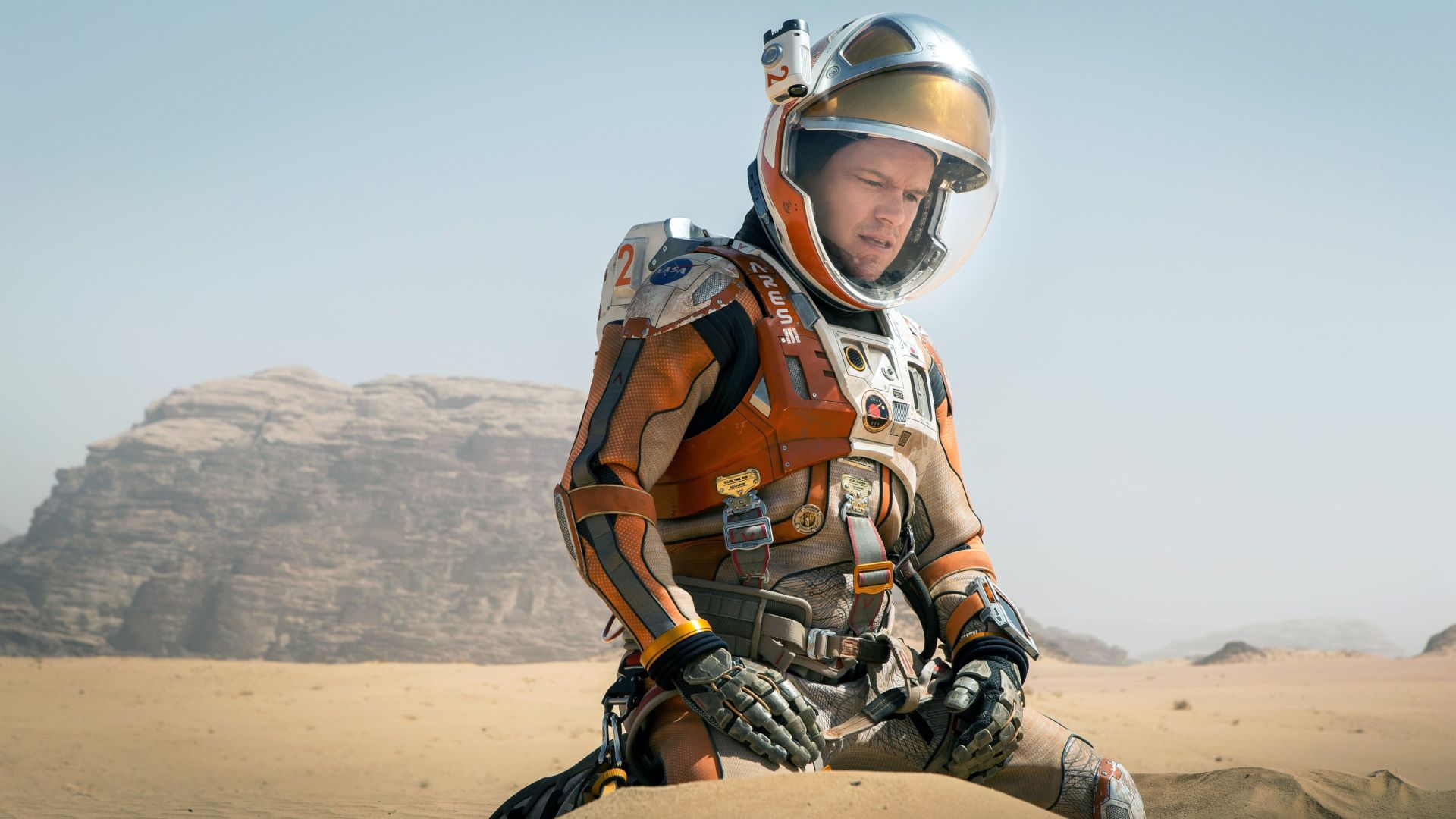
Films like The Martian get some of this right, showing the protagonist in a pressurized habitat and spacesuit. But they still take liberties, such as depicting a Martian dust storm capable of physically knocking over a spacecraft. In reality, Martian winds, even at their fastest, exert so little force due to the thin atmosphere that they would barely rustle a flag. The real atmospheric danger is not wind but the constant, invisible threat of depressurization.
Any habitat breach, however small, would be catastrophic. Maintaining a pressurized environment over years and decades, across multiple structures, with the constant abrasion of Martian dust, represents an engineering challenge that science fiction glosses over with a montage or a brief scene of patching a hole.

The Perchlorate Problem and the Dream of Martian Farming
One of the most beloved scenes in The Martian involves Matt Damon's character growing potatoes in Martian soil using a combination of Earth bacteria and human waste. It is a triumph of ingenuity and makes for excellent cinema. It is also deeply misleading.
Martian regolith is saturated with perchlorates at concentrations of roughly half a percent to one percent. These chlorine-based compounds are toxic to humans because they interfere with thyroid function, disrupting iodine uptake and metabolism. Simply planting crops in Martian dirt would not produce food. It would produce poison.
Researchers have explored methods of detoxifying Martian soil, including washing and scrubbing regolith combined with mycorrhizal fungi, which can remove up to ninety percent of perchlorates. Even with this treatment, yields are modest. Studies suggest treated Martian soil might produce about five kilograms of potatoes per square meter, which sounds promising until you consider the infrastructure required to process enough soil to feed even a small colony.
More realistic approaches involve aeroponics and hydroponics, growing plants without soil entirely, using nutrient-rich water or mist in controlled environments. These systems can theoretically provide about one kilogram of food per person per day, but they demand significant energy, water, and maintenance, all of which are scarce commodities on Mars.
Water: Abundant in Theory, Elusive in Practice
Mars does have water, primarily locked in subsurface ice deposits and polar ice caps. Science fiction typically presents water acquisition as a solved problem, perhaps involving a well or a simple extraction device. The reality is considerably more complicated.
Extracting water from Martian ice requires energy-intensive heating of regolith or direct excavation of ice deposits, followed by extensive purification to remove perchlorates and other contaminants. Every drop of water on Mars would need to serve triple duty as drinking water, agricultural irrigation, and feedstock for oxygen production through electrolysis. The recycling systems required would need to operate at efficiencies far beyond anything currently deployed on the International Space Station.
The Psychological Toll of Martian Isolation
Perhaps the most underexplored challenge in science fiction is the psychological impact of Martian living. Communication delays with Earth range from four to twenty-four minutes one way, meaning real-time conversation is impossible. Colonists would be truly isolated in a way no human community has ever experienced.
Analog studies, where volunteers live in simulated Mars habitats, have documented a fifteen percent cognitive decline during extended isolation periods. Depression, interpersonal conflict, and a phenomenon researchers call "third-quarter syndrome," a motivational collapse roughly three-quarters through a mission, are consistent findings across every long-duration isolation study ever conducted.
Virtual reality simulations of Earth environments have shown promise in restoring up to seventy percent of mood metrics, but these are stopgap measures. The fundamental question of whether human beings can maintain psychological health while living on a barren, hostile world millions of kilometers from everything they have ever known remains unanswered.
The Honest Path Forward
None of this means Mars colonization is impossible. It means it is vastly more difficult than science fiction has led us to believe. The challenges are real, interconnected, and in some cases still poorly understood. Solving the radiation problem is meaningless if the food supply fails. Perfecting water extraction is irrelevant if the colonists suffer psychological breakdowns.
What science fiction gets wrong about Mars is not the dream itself but the timeline and the difficulty. Getting to Mars is an engineering problem with known solutions. Surviving there for a lifetime, and building a civilization that can endure for generations, is a scientific, medical, and psychological challenge of a fundamentally different order. The experts agree that humanity will eventually reach Mars. They simply want us to understand what that will actually require.
This article is based on reporting by Space.com. Read the original article.
Originally published on space.com