Reading the Solar System's Oldest Diary
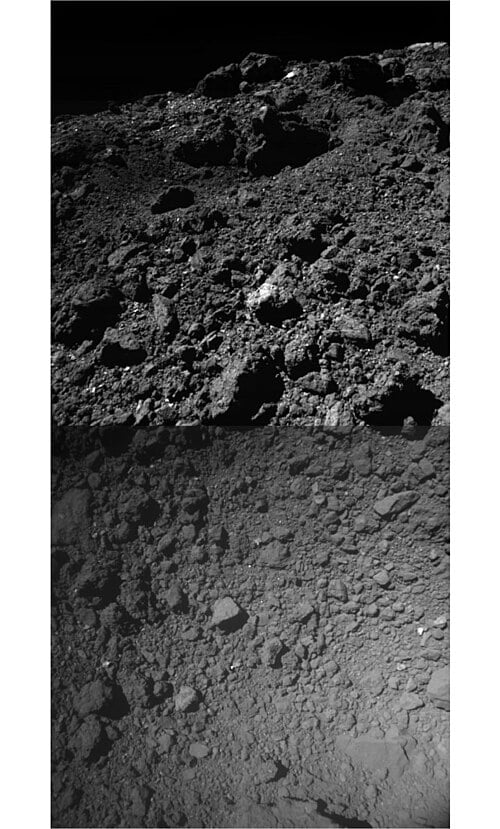
Deep within grains of dust collected from the surface of asteroid Ryugu, scientists have found something extraordinary: a magnetic record stretching back 4.6 billion years to the very formation of the solar system. The discovery, made possible by Japan's Hayabusa-2 sample return mission, provides an unprecedented window into the conditions that prevailed when the Sun was young and the planets were just beginning to coalesce from a swirling disk of gas and dust.
The research, published in JGR Planets by Masahiko Sato and colleagues at the University of Tokyo, resolves a puzzle that had vexed scientists since the first Ryugu samples were analyzed. Earlier studies of the asteroid's magnetic properties had produced contradictory results, with different research groups reaching different conclusions about the strength and origin of magnetic fields recorded in the dust. The new study, using significantly more samples, has finally produced a coherent picture.
What the Magnetic Record Reveals
When minerals form in the presence of a magnetic field, they can preserve a record of that field's strength and direction — much like a tape recorder capturing sound. The tiny magnetic domains within certain minerals align with the ambient field as the material cools or crystallizes, locking in a snapshot of magnetic conditions at that moment.
For Ryugu's dust, this means the samples contain information about the magnetic environment of the protoplanetary disk — the vast cloud of material that surrounded the young Sun before condensing into planets, asteroids, and comets. The strength of these ancient fields tells scientists about the physics of the disk itself, including how material was transported and how the disk eventually dissipated.
Why Ryugu Samples Are Special
- Ryugu is a primitive C-type asteroid that has undergone minimal alteration since formation
- Hayabusa-2 returned 5.4 grams of pristine surface material in 2020
- Unlike meteorites, these samples were never contaminated by Earth's atmosphere or magnetic field
- The samples preserve magnetic signatures from the earliest moments of solar system history
- Multiple sample analyses now provide statistically robust results
Resolving the Contradictions
Previous studies of Ryugu's magnetism had reached conflicting conclusions partly because they were working with very small amounts of material. Magnetic measurements on tiny samples are inherently noisy, and natural variations between individual grains can produce apparently contradictory results. By analyzing a much larger number of samples, the new study was able to identify consistent patterns that emerged from the statistical noise.
The resolution is significant for asteroid science beyond Ryugu. NASA's OSIRIS-REx mission returned samples from asteroid Bennu in 2023, and those samples are currently undergoing similar analyses. The methodology developed for Ryugu will directly inform how Bennu's magnetic history is interpreted, and comparisons between the two asteroids could reveal whether conditions varied across different regions of the early solar system.
A Window Into Planetary Formation
Understanding the magnetic environment of the early solar system is not merely an academic exercise. Magnetic fields played a crucial role in shaping how the protoplanetary disk evolved and how material accumulated into the bodies we see today. They influenced the movement of gas and dust within the disk, helped drive the accretion of material onto the growing Sun, and may have played a role in determining where planets formed and how large they became.
The Ryugu results add a critical data point to models of solar system formation that have been refined over decades. Each new measurement from pristine asteroid material constrains these models further, bringing scientists closer to a comprehensive understanding of how a cloud of interstellar gas and dust became the planetary system we inhabit today.
As the analysis of returned asteroid samples continues — with more missions planned for the coming decade — the 4.6-billion-year tape recorder hidden in cosmic dust may have much more to tell us about our origins.
This article is based on reporting by Universe Today. Read the original article.

Originally published on universetoday.com