A crewed lunar test flight has cleared a major milestone
NASA’s Artemis II mission has concluded with the safe return of its four-person crew, marking the first time astronauts have traveled around the Moon and back in more than half a century. NASA says the crew splashed down off the coast of San Diego on April 10 and returned to Houston on April 11, where standard postflight reconditioning, evaluations, and lunar science debriefs are now underway.
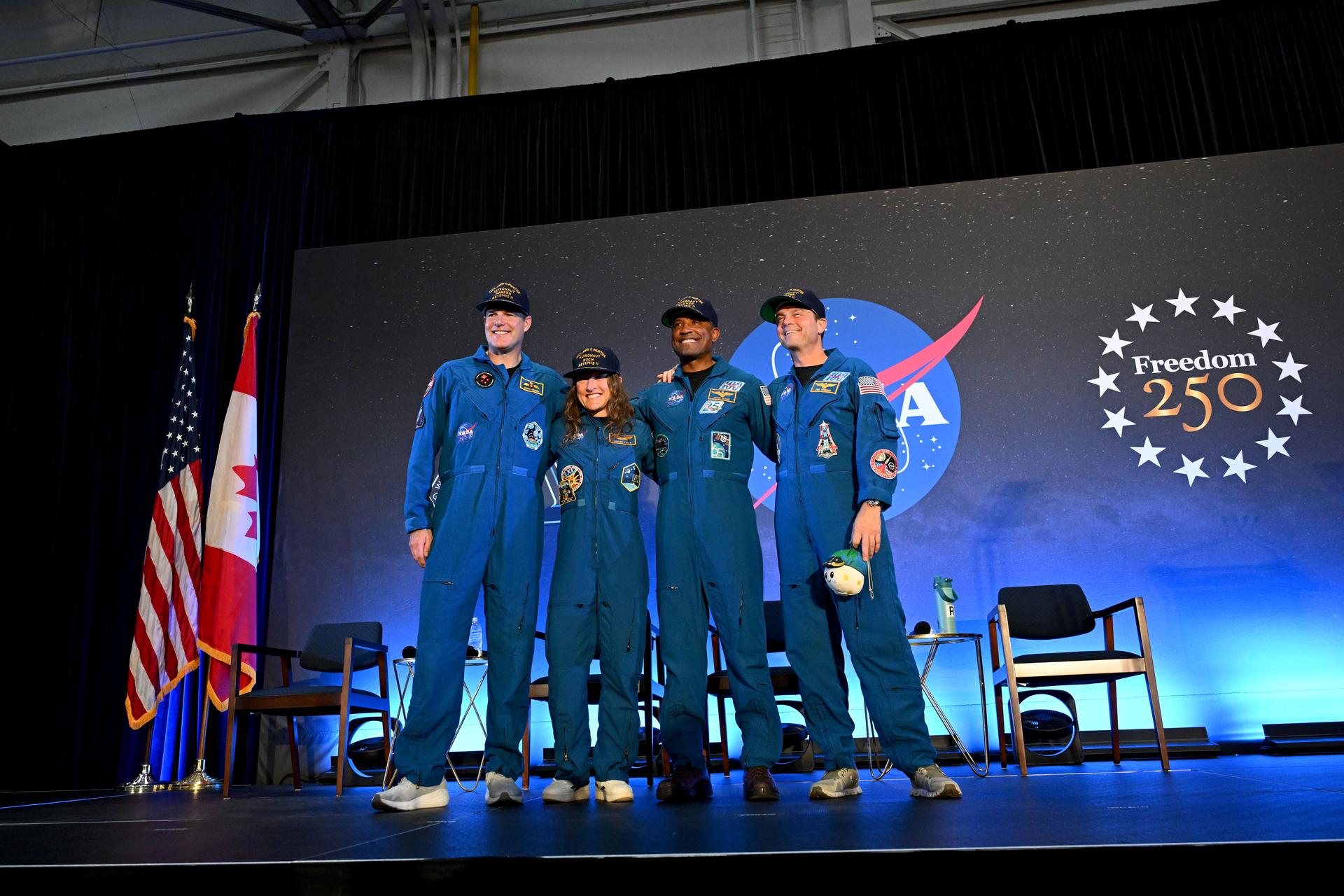
The crew, made up of NASA astronauts Reid Wiseman, Victor Glover, and Christina Koch, along with Canadian Space Agency astronaut Jeremy Hansen, is scheduled to discuss the mission at a NASA news conference on April 16 at Johnson Space Center. The briefing follows a flight NASA describes as a nearly 10-day test mission that achieved its primary objectives.
What Artemis II accomplished
According to NASA’s summary, Artemis II tested Orion’s life support systems, included manual piloting of the spacecraft, and carried out the maneuvers needed to send Orion toward the Moon and adjust its course. The mission also completed a lunar flyby that NASA says delivered unprecedented views of the Moon’s far side, followed by a safe re-entry and recovery. NASA further says the astronauts set a record for the farthest distance humans have traveled from Earth.
Those milestones matter because Artemis II was designed as a systems test with people aboard, not as a destination mission landing on the lunar surface. Its job was to validate the spacecraft, crew operations, and the broader architecture needed for increasingly ambitious missions. In that sense, the most important outcome was not spectacle but confidence: the deep-space system returned its crew safely after performing the functions NASA most needed to prove.

Why this mission carries strategic weight
NASA positions Artemis as more than a symbolic return to the Moon. The agency says the program is intended to support scientific discovery, economic benefits, an enduring human presence on the lunar surface, and future missions that lay groundwork for Mars exploration. Artemis II therefore sits at a hinge point. It is both a high-visibility demonstration and a practical gateway to more difficult missions to come.
The international makeup of the crew also matters. Jeremy Hansen’s role underscores that Artemis is not purely a U.S. national effort, even though NASA remains the central operator. By carrying a Canadian astronaut on a record-setting lunar flight, Artemis II reinforced the coalition model that has become increasingly important in space exploration.
What comes next after splashdown
- NASA will use postflight evaluations and debriefs to refine procedures and systems.
- The April 16 crew news conference will provide the first extended public account from the astronauts.
- Mission data will inform the next phases of Artemis planning.
- The successful return strengthens the case for more ambitious crewed lunar operations.
There is also a public dimension to this success. Artemis has had to carry the burden of proving that crewed lunar exploration can be operationally credible, politically durable, and relevant in a crowded space environment. A safe mission return does not resolve every future budgetary, technical, or scheduling question, but it changes the tone of the conversation. It turns Artemis from a promise into a demonstrated crewed capability.
That shift is especially important because deep-space programs are judged not only by launch but by recovery, performance, and what they unlock next. Artemis II now joins the short list of missions that have actually sent humans into lunar-distance space and brought them home. The accomplishment is therefore historical in the narrow sense and infrastructural in the broader one.
NASA’s upcoming crew briefing will likely focus on the human experience of the flight. But the institutional takeaway is already visible. Artemis II completed its central test mission around the Moon and returned safely to Earth. For a program built around restoring sustained human deep-space operations, that is the milestone that had to happen.
This article is based on reporting by NASA. Read the original article.
Originally published on nasa.gov