A major dinosaur discovery from northeastern Thailand
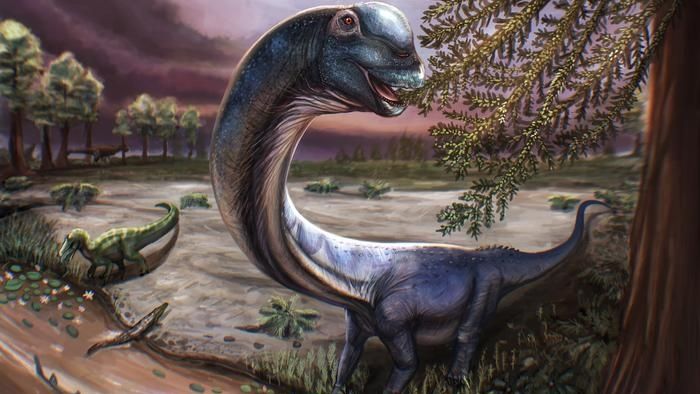
Fossils uncovered in Thailand have yielded a newly described long-necked dinosaur that researchers say is the largest sauropod yet identified in Southeast Asia. The species, named Nagatitan chaiyaphumensis, lived in what is now Thailand roughly 120 million to 100 million years ago and appears to have been an enormous plant-eater in the region’s early Cretaceous ecosystems.
According to the supplied reporting, the animal likely reached about 90 feet in length and weighed around 30 tons. That does not make it the biggest sauropod known globally, but it is enough to place it at the top of the regional record and to broaden the picture of how giant dinosaurs were distributed across ancient Asia.
What the fossils show
The remains were recovered from the Khok Kruat Formation in Chaiyaphum province in northeastern Thailand. A local resident first spotted the fossils in 2016 in a bone bed along the side of a drying pond, giving researchers a starting point for what became a notable paleontological find.
Among the material recovered were vertebrae, pelvic bones, leg bones, and a broken right femur. Even fragmented, the thigh bone was estimated to have been about 6.5 feet long. That single measurement helps convey the scale of the animal. A femur roughly as tall as a human underscores why the species stands out among Southeast Asian sauropods.

Why the discovery matters scientifically
The supplied report identifies the dinosaur as a somphospondylan sauropod. Finds like this matter because they help scientists map which dinosaur groups were present in particular regions and how body size, anatomy, and distribution changed over time. Southeast Asia has not produced as many globally famous giant sauropods as South America, so each well-preserved discovery can significantly sharpen the regional fossil record.
The new species also provides evidence that very large herbivorous dinosaurs were thriving in the environments of what is now Thailand during the early Cretaceous. The reporting says the region at the time was semi-arid, adding environmental context to the discovery and helping researchers think about how these animals lived and moved through their habitat.
Large, but not the world’s largest
The researchers were careful about scale. Study author Thitiwoot Sethapanichsakul said the dinosaur likely outweighed the famous Diplodocus specimen known as Dippy by at least 10 tonnes, but the animal still appears to have been much smaller than colossal South American giants such as Patagotitan and Argentinosaurus. That comparison is useful because it places the Thai dinosaur in a global hierarchy without overstating the find.
In other words, the significance of Nagatitan chaiyaphumensis is not that it rewrites the absolute upper limit of dinosaur size. It is that it expands the known diversity and scale of giant dinosaurs in Southeast Asia, a region where each major discovery can shift the scientific map.

A regional record with wider implications
New dinosaur species do more than add another name to a list. They help refine evolutionary relationships, confirm the spread of major lineages, and reveal how ancient ecosystems differed from one continent to another. This Thai discovery does all three. It introduces a new giant to the fossil record, strengthens evidence for large sauropods in Southeast Asia, and gives paleontologists a better window into the prehistoric life of the region.
This article is based on reporting by Live Science. Read the original article.
Originally published on livescience.com


