A rare overlap arrives with a major viewing problem
Skywatchers are getting a two-for-one meteor event at the end of July, with the Southern Delta Aquariids and the Alpha Capricornids both peaking overnight on July 30 into July 31. On paper, that kind of overlap should make for a memorable stretch of summer observing. In practice, 2026 brings a major complication: the showers reach maximum activity just one night after July’s full Buck Moon, and the bright lunar glare is expected to hide many of the faintest streaks.
According to the source material, the moon turns full on Wednesday, July 29, and will still be about 98% illuminated during the twin peaks. That matters because meteor showers depend not only on how many meteors are active, but also on how dark the sky is when observers try to spot them. A bright moon does not stop meteors from entering Earth’s atmosphere, but it can overwhelm the dimmer flashes that would otherwise be visible under darker conditions.
The result is a night that may still reward patient observers, but not with the kind of easy, broad display that many casual viewers imagine when they hear the phrase “meteor shower.” The setup favors people who know what to expect, are willing to stay out late, and can position themselves for the best possible conditions.
What each shower is expected to contribute
The Southern Delta Aquariids are the bigger of the two showers in terms of expected rate. The source text says the shower is active from July 12 through Aug. 23 and can produce about 25 shooting stars per hour under ideal dark skies. Those ideal conditions will not be present this year, which means the visible count is likely to come in below that headline rate for many observers.
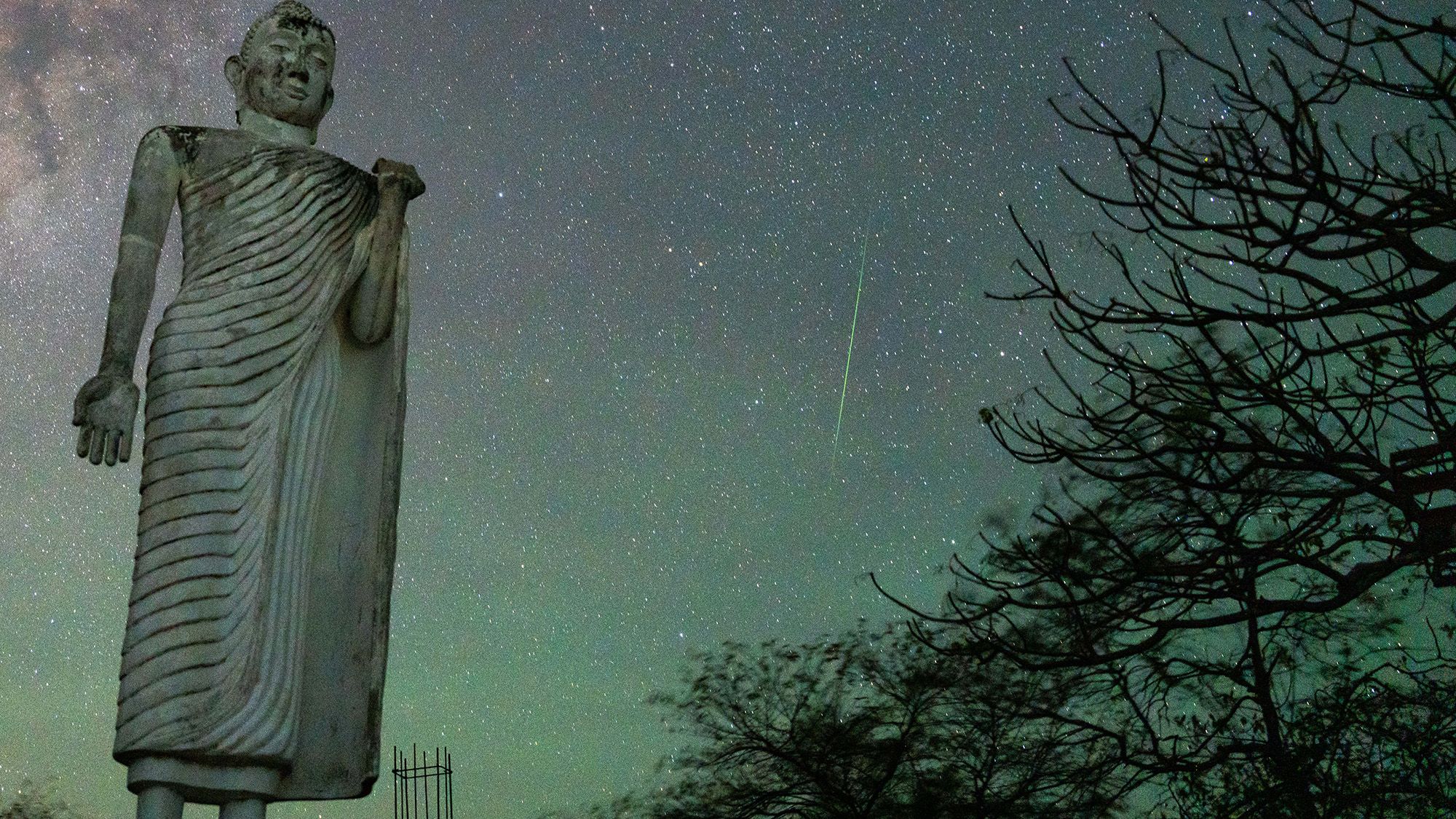
The Alpha Capricornids, active from July 3 through Aug. 15, are the smaller companion in raw hourly numbers, offering around five meteors per hour on the same peak night. But the smaller shower has a distinct advantage in spectacle. It is known for bright fireballs, which are much more luminous than ordinary meteors and therefore better able to stand out even when the moon is bright.
That difference gives the combined event an unusual character. The Southern Delta Aquariids may provide the broader meteor activity, but their fainter nature makes them more vulnerable to moonlight. The Alpha Capricornids may produce fewer meteors overall, yet some of those could be the brightest and most memorable sightings of the night.
For observers, that means expectations should be adjusted rather than abandoned. This is less likely to be a nonstop shower of visible streaks across the whole sky and more likely to be a selective session where a handful of brighter meteors, especially fireballs, become the main reward.
Why the timing still matters
Even with the moonlit challenge, the overlap is meaningful because it marks the start of a busier stretch in the annual meteor calendar. The source describes the Delta Aquariids as kicking off “meteor season,” putting this event in a wider seasonal context rather than treating it as an isolated skywatching opportunity.
The best viewing window is expected between midnight and dawn, when the radiant of the Southern Delta Aquariids, in the constellation Aquarius, is highest in the southern sky. That timing is standard for many meteor showers because the pre-dawn hours place an observer on the side of Earth that is moving more directly into incoming debris.
Location also matters. The source notes that observers in the southern United States, Mexico, and the Caribbean will be better placed than those farther north. That does not mean viewers at more northerly latitudes will see nothing, but it does indicate that southern vantage points should improve the odds of seeing more activity from the Delta Aquariids in particular.
Because the moon will remain bright for much of the night from North America, the main practical advantage will come from maximizing the contrast that is still available. A clear horizon, as little artificial light as possible, and patience over a sustained period all become more important when the sky is already working against the viewer.
How to approach the event realistically
This year’s overlapping peak is a reminder that celestial events are shaped as much by conditions as by the event itself. Two active showers peaking on the same night sounds dramatic, and in orbital terms it is. But the viewing experience depends on whether the darker background needed to reveal faint meteors is actually present.
For 2026, the moon is the dominant variable. The source explicitly notes that the Southern Delta Aquariids are often faint and typically lack fireballs, which makes them especially vulnerable to being washed out. That shifts the emphasis toward brighter meteors and toward the photography value of the evening. Even if the showers underperform visually for casual observers, the combination of moonlight, occasional meteors, and a long overnight window still makes the event appealing for practice sessions in night-sky imaging.
There is also a useful distinction here between disappointment and failure. A meteor shower does not have to produce a constant barrage to be worth watching. A small number of clear, bright meteors seen under a summer sky can still make the night memorable, especially when those meteors come from two separate streams peaking together.
What observers should keep in mind
- The peak runs overnight from July 30 into July 31.
- The moon will be about 98% full, sharply reducing visibility for faint meteors.
- The Southern Delta Aquariids can reach about 25 meteors per hour under ideal dark skies, but this year’s conditions are not ideal.
- The Alpha Capricornids produce fewer meteors, around five per hour, but are known for bright fireballs.
- The strongest viewing window should be between midnight and dawn.
For anyone planning to look up, the most important preparation may be mental rather than technical. This is a night to expect selective rewards, not a guaranteed skywide spectacle. The best outcome may be a few bright meteors, a fireball or two, and a firsthand look at how lunar phase can reshape an otherwise promising astronomical event.
That may be enough. Even compromised meteor showers reveal something fundamental about skywatching: the heavens do not perform on demand, and part of the experience is learning how timing, light, and geometry decide what becomes visible from Earth. The overlapping Delta Aquariids and Alpha Capricornids offer exactly that lesson at the threshold of the late-summer observing season.
This article is based on reporting by Live Science. Read the original article.

Originally published on livescience.com