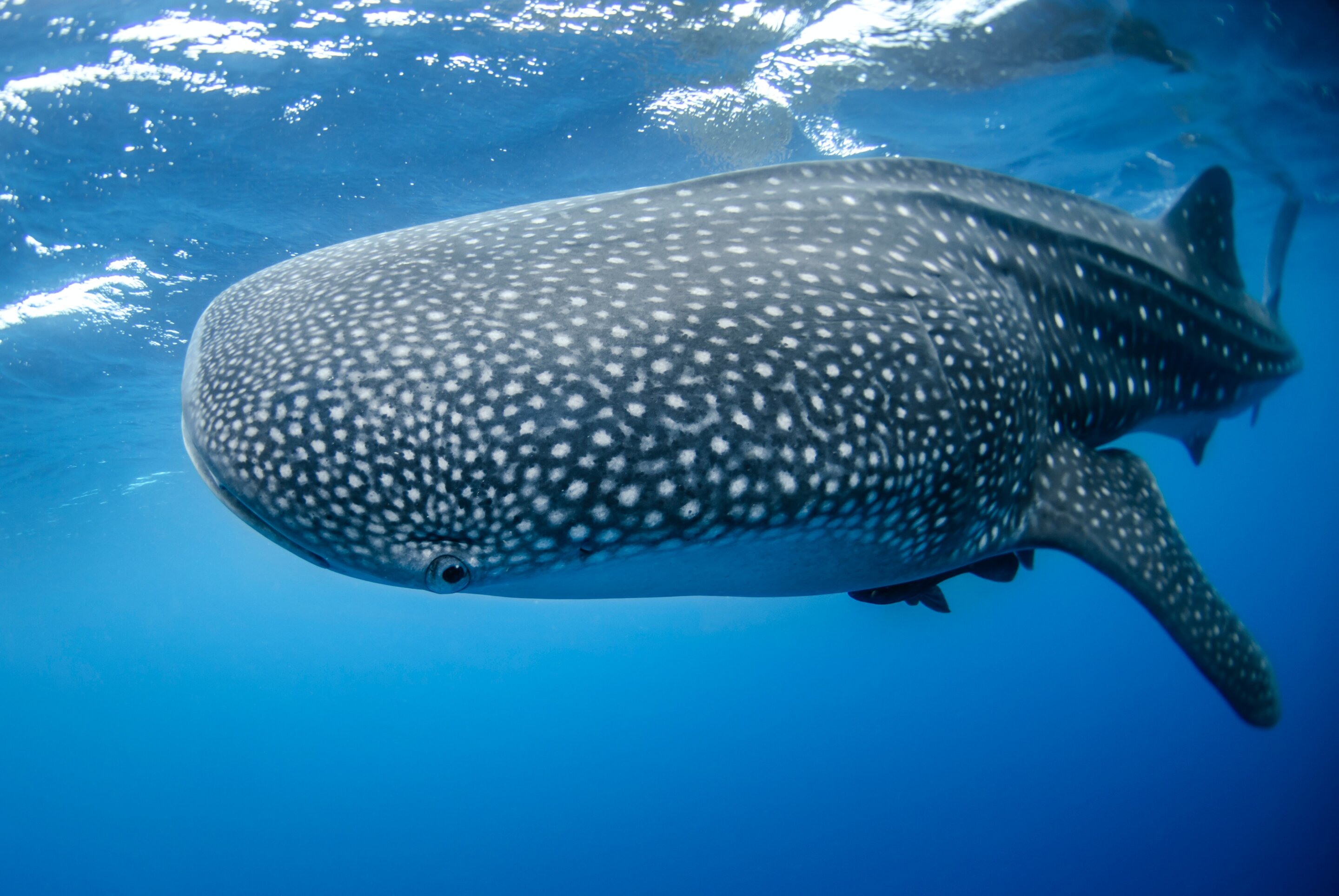
Whale shark cameras open a new window below the surface
Whale sharks are the largest fish on Earth, but much of their daily behavior has remained hidden for a simple reason: researchers usually only see them when they rise near the surface. A new study highlighted by Phys.org begins to change that by using cameras attached directly to whale sharks, allowing scientists to observe how the animals move and feed beneath the waterline in ways that had not been documented before.
The work, published in Marine Biology and described in an article based on research by Christine Barry and Luciana C. Ferreira, focuses on a longstanding gap in marine biology. Whale sharks live in tropical oceans where food can be patchy and difficult to track. Scientists have learned a great deal from boat-based observations and snorkeling surveys, but those methods only capture a narrow slice of the animals’ habitat. Once a shark dives, direct observation usually ends.
That limitation matters because whale sharks do not live only at the surface. Their habitat extends throughout the water column, and the ways they search for food likely shift with depth, prey availability, and changing ocean conditions. The new camera-based approach gives researchers a more complete picture of those decisions.
What the researchers saw
According to the source text, the study used cameras carried by whale sharks at a tropical coastal aggregation site. The footage revealed new behaviors and, crucially, offered what the researchers describe as the first more comprehensive view of whale shark foraging strategies from the surface down to the seafloor.
Among the most notable findings were previously unseen krill chases. That matters because it shows whale sharks pursuing prey in a more active and varied way than surface sightings alone had suggested. Rather than treating feeding as a behavior that is easy to infer from a shark’s presence at the top of the water, the footage indicates the animals are making tactical choices at different depths and in different settings.
The article emphasizes how difficult it has been to interpret whale shark behavior from existing tools. Electronic tags can show movement and depth, and they are valuable for tracking where an animal goes. But a movement trace does not show what the animal is actually doing. A dive could reflect feeding, transit, avoidance, or something else. The addition of video changes that equation by pairing location and movement with visible behavior.
That is a significant methodological step. In wildlife research, especially in marine systems, one of the hardest problems is distinguishing motion from motive. A path through the ocean only tells part of the story. Footage from the animal’s perspective can reveal whether a change in depth corresponds to a prey encounter, a social interaction, or a shift in environmental conditions.

Why this matters for conservation
Whale sharks are highly charismatic and popular with ecotourism operators, but that visibility can create a false sense that scientists already understand them well. In reality, many basics of their behavior remain uncertain. The Phys.org text notes that researchers have mostly been limited to a small part of the sharks’ full habitat. That means management decisions may have been built around incomplete information.
A better understanding of foraging is especially important as climate change alters ocean systems. The source text points out that food for whale sharks may become scarcer as marine conditions shift. If prey becomes less predictable, the animals may need to work harder, travel differently, or rely on habitats that are not yet recognized as critical.
That makes behavioral evidence more than a curiosity. It can inform where conservation measures should focus, when sharks may be most vulnerable to human disturbance, and which coastal or offshore zones support feeding activity that is easy to miss from the surface. For a species that ranges widely and depends on changing marine productivity, small improvements in ecological understanding can have outsized value.
The study also underscores a broader point in ocean science: visible behavior is often the exception, not the rule. Many large marine animals spend most of their lives beyond easy human observation. Conservation frameworks have historically depended on sightings, fisheries interactions, and tag records. Animal-borne cameras can bridge those datasets, helping researchers connect movement patterns with actual behavior.
A fuller picture of a giant fish
The appeal of this research is not only that it captured dramatic footage. It also addresses a structural blind spot in whale shark science. Surface observations have always been useful, but they can distort understanding when they become the default lens for a species that occupies a three-dimensional environment.
The source article describes earlier field observations that ended when sharks dove out of view, including a possible mating attempt that researchers could not follow. That example illustrates how often the story has simply stopped at the point where the animal left the visible world. The camera system offers a way to keep following.
There is still a long way to go. A few camera deployments do not solve every mystery around whale shark feeding, migration, or reproduction. Researchers will need more observations across seasons, locations, and age groups to determine how broadly these newly documented behaviors apply. But the principle is now established: the species can be observed directly in parts of its environment that had been functionally inaccessible.
That opens the door to better questions. Do whale sharks use different feeding tactics depending on prey density? How often do they target krill below the surface versus filter feeding near the top? Are some aggregation sites important because they support multi-depth feeding opportunities rather than just visible surface events? These are the kinds of ecological questions that become easier to answer once scientists can see what the animals are actually doing.
For a species that inspires public fascination yet still guards much of its life from view, that is a meaningful advance. The new study does not just add a vivid image to whale shark research. It expands the observational toolkit in a way that could reshape how scientists study one of the ocean’s most recognizable animals.
- The study used cameras attached to whale sharks at a tropical coastal aggregation site.
- Researchers reported newly observed krill-chasing behavior below the surface.
- The footage provided a broader view of foraging from the surface to the seafloor.
- The findings could help conservation planning as climate change affects prey availability.
This article is based on reporting by Phys.org. Read the original article.

Originally published on phys.org