A hidden resident in a familiar deep-sea recycler
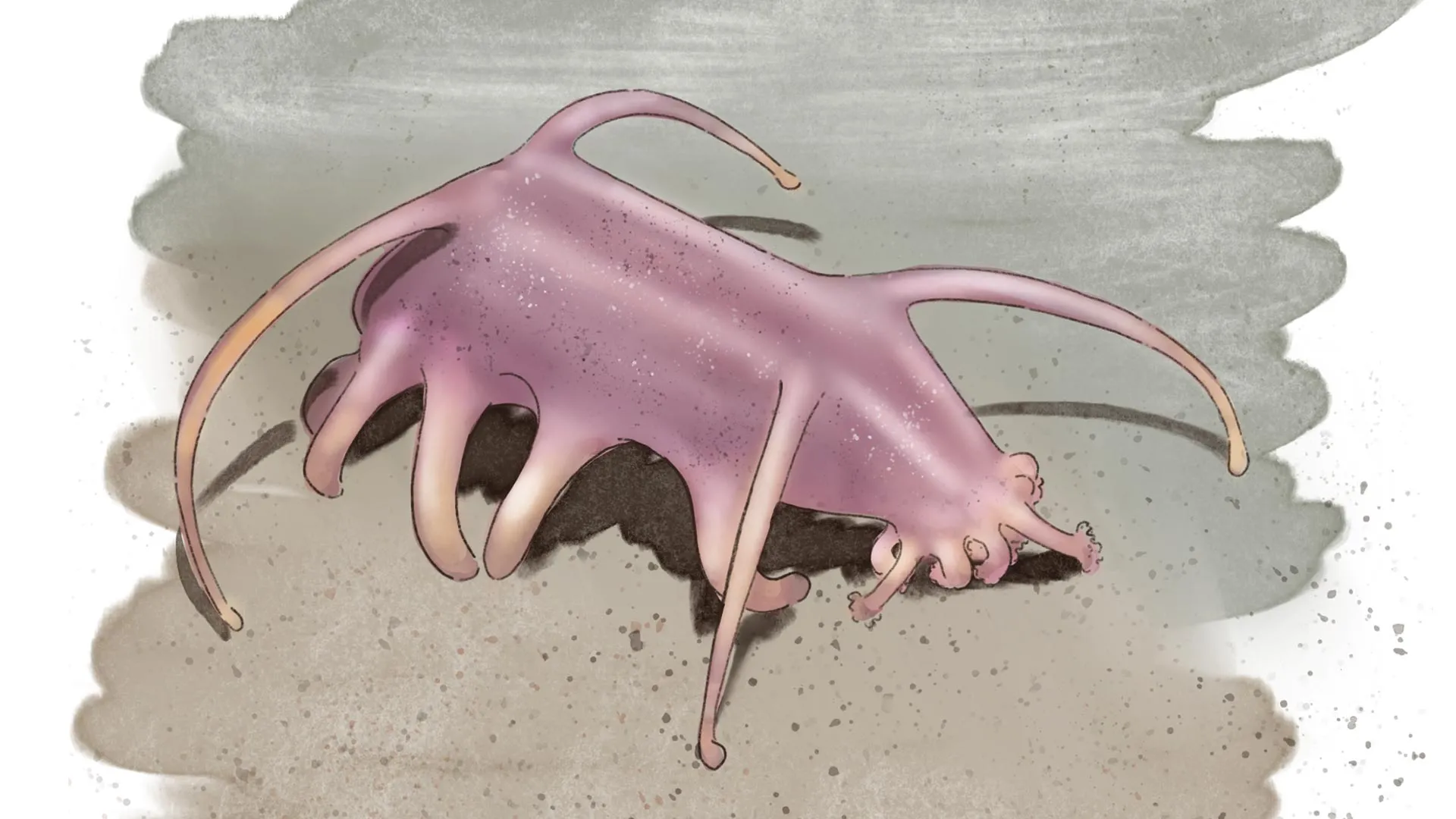
Sea pigs are among the more unusual animals on the ocean floor. These soft-bodied sea cucumbers move across deep sediments on enlarged tube feet, feeding on decaying organic material and helping recycle nutrients in deep-sea ecosystems. Researchers at the University of Tokyo have now found that the animals also host an unexpected microbial resident beneath their outer body wall.
The newly described bacterium, provisionally named Candidatus Abyssoplasma scotoplanesicola, was found inside sea pig tissues rather than simply on the animals’ surfaces or in surrounding sediment. The discovery points to a close biological association, but the nature of that relationship remains unresolved: the researchers do not yet know what, if anything, the sea pig receives in return.
That unanswered question is part of what makes the finding significant. Deep-sea environments are difficult to sample and study, and partnerships between animals and microbes can shape how organisms survive in nutrient-limited, high-pressure habitats. A bacterium that has become closely tied to a host can also provide a record of evolutionary tradeoffs: which genes it retains, which functions it loses and which features it invests in as its independence declines.
A remarkably compact genome
Genetic analysis showed that the bacterium has a genome of about 649,000 DNA bases. That is exceptionally small for a bacterium, suggesting that it may rely heavily on its host or its immediate environment for functions that more independent microbes carry out themselves.
Yet the genome is not merely reduced. More than a quarter of it is devoted to genes associated with proteins on the bacterial surface. Some of those proteins are especially large, exceeding 5,000 amino acids. For an organism with so little genetic material overall, that allocation is striking.
Surface proteins can be important where a microbe meets its surroundings. In this case, the proteins may help the bacterium interact with sea pig tissues or with other bacteria. The researchers also suggest they could contribute to clustering, allowing cells to gather together within the host. Those possibilities are hypotheses rather than established mechanisms, but the genome provides a clear reason to investigate them.

Pinpointing the microbe’s location
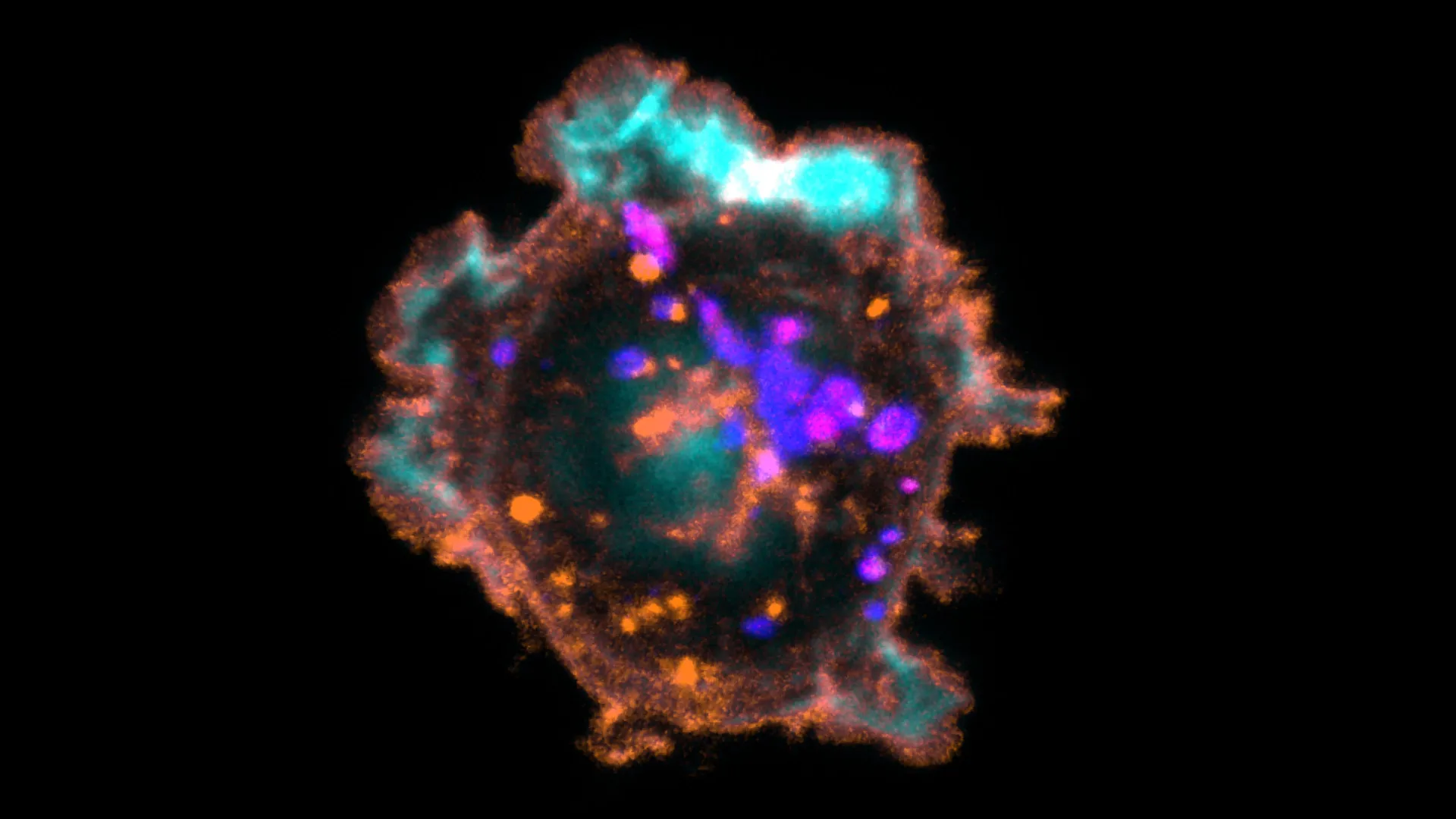
The team used fluorescence imaging to identify where the bacterium resides. Rather than detecting it only in material associated with the animals, the imaging placed it in the sea pigs’ body-wall tissues. That location supports the idea that the organism is living in a close association with its host.
Sea pigs are themselves well suited to reveal overlooked relationships. They can reach roughly 15 centimeters in length and may gather in groups on organic-rich seafloor sediments, including areas around whale falls. By consuming detritus, they help move nutrients through the deep-ocean ecosystem. Their soft body walls, meanwhile, appear to offer a habitat for microbes that would be missed by studies focused only on an animal’s gut, skin surface or surrounding water.
The finding does not establish that the bacterium is beneficial, harmful or neutral to the sea pig. A host-associated microbe can occupy any of those roles, and the available evidence does not yet show what substances are exchanged between the partners. It does, however, establish that the partnership exists and that it involves a bacterium with an unusually specialized genetic profile.
Why the protein-heavy genome matters
Microbes that become dependent on hosts often shed genes over evolutionary time. If the host or nearby community provides a resource reliably, maintaining the genetic machinery to make that resource can become less necessary. The sea pig bacterium’s small genome is consistent with that broad pattern of dependence.
Its extensive investment in surface-protein genes adds an important wrinkle. Rather than devoting its limited genome only to basic survival, it retains a substantial set of tools for engaging with its external environment. That could mean that attachment, recognition, interaction with host tissue or organization into groups is central to its life cycle.
The giant proteins are particularly intriguing because of their scale. Proteins made of thousands of amino acids can have complex structures and multiple interaction sites. The researchers have not assigned a definitive function to the sea pig bacterium’s proteins, so it would be premature to describe them as adhesion molecules or as host-control factors. But their abundance makes them a logical target for future functional work.
Questions for the next stage
- How widespread is Candidatus Abyssoplasma scotoplanesicola among sea pig populations?
- Does the bacterium obtain nutrients directly from host tissue, or from the wider microbial community?
- Do its giant surface proteins help it attach to tissues, communicate with other cells or form clusters?
- Does the sea pig gain any protection, nutrition or other benefit from carrying the bacterium?
Answering those questions will require work beyond genome sequencing and imaging, including studies that connect microbial activity with host biology. Even so, the new discovery expands the known complexity of life on the seafloor. Sea pigs are already important recyclers of deep-ocean organic matter; they can now also be viewed as hosts to a highly unusual microbial companion.
For researchers studying symbiosis, the lesson is straightforward. Some of the most consequential biological relationships may be concealed in places that are literally beneath the surface. In the deep ocean, an animal that looks simple from the outside may contain a tightly adapted ecosystem of its own.
This article is based on reporting by Science Daily. Read the original article.
Originally published on sciencedaily.com