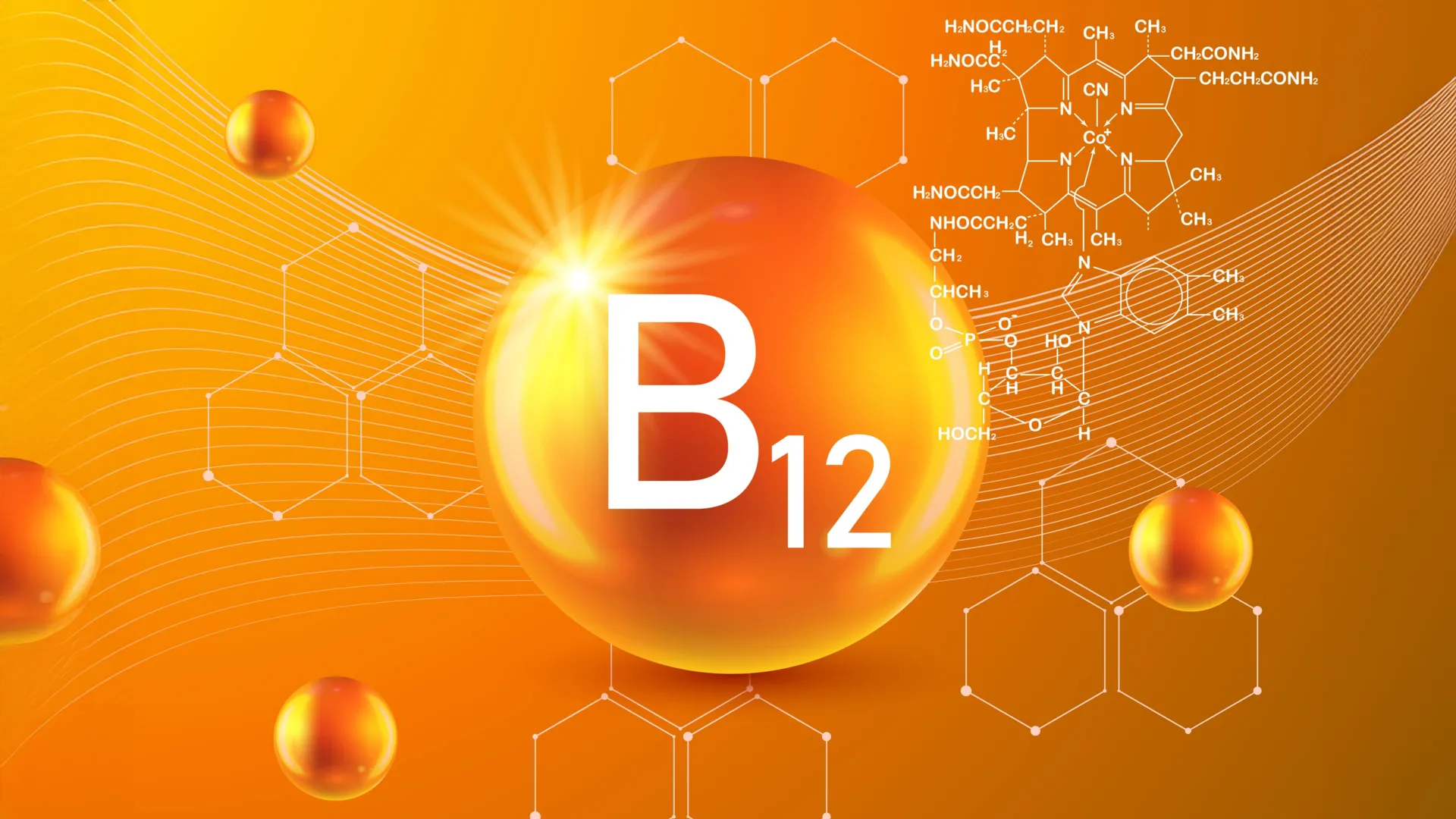
Vitamin B12 is best known as an essential nutrient, but researchers at the University of Córdoba have demonstrated another possible role for it: helping drive the reactions inside a rechargeable battery. Their prototype uses cobalamin, the chemical name for vitamin B12, as a catalyst in a zinc-air battery and completed up to 250 charging and discharging cycles.
The result is an early-stage energy-storage demonstration, not a replacement for lithium-ion batteries. Still, it points to a different design direction for batteries: using a biological molecule to support electrochemical reactions while relying on zinc and oxygen from surrounding air as the main active materials.
A biological molecule in an electrochemical system
The work was carried out by the Physical Chemistry research group FQM-204 at the University of Córdoba's Chemical Institute for Energy and the Environment, IQUEMA. In the prototype, vitamin B12 molecules were attached to single-walled carbon nanotubes.
That pairing matters because vitamin B12 contains cobalt in its molecular structure. The researchers used the molecule's cobalt(III) center to help facilitate the electrochemical reactions required for the battery to operate. Carbon nanotubes provide a surface on which the molecules can be supported within the battery's catalytic system.
Rather than storing energy through the same chemistry used in conventional lithium-ion cells, the reported device uses zinc and oxygen from the air to generate electricity. Zinc-air systems are attractive because zinc is widely available and because oxygen can be supplied from the surrounding atmosphere. The practical challenge is enabling the reactions at the air electrode to proceed efficiently and reversibly over repeated cycles.
Why 250 cycles is notable
The reported prototype survived up to 250 charge-discharge cycles. That is a meaningful proof point for a laboratory rechargeable battery, because it shows the catalyst can participate in repeated operation rather than only in a single discharge experiment.
It does not, by itself, establish that a vitamin-B12 battery is ready for consumer electronics, electric vehicles, or grid storage. The supplied research summary does not provide energy density, power output, charging speed, cost, operating conditions, or a comparison with commercial cells. Those measures will be central to assessing whether the chemistry can move beyond a prototype.
But cycle life is one of the basic tests that separates an interesting chemical reaction from a potentially useful rechargeable system. The result suggests that the B12-based catalyst was able to support the relevant processes through repeated charging and discharging in the demonstrated setup.
Part of a broader search for alternative catalysts
The Córdoba group had previously explored other natural molecules as battery catalysts. Its earlier work included hemoglobin and catalase, molecules associated with iron chemistry. Vitamin B12 is the group's third reported effort to use a biological molecule in this role, and the researchers describe it as an important advance because it enabled a rechargeable battery demonstration.
That approach is distinct from treating biological materials as a novelty ingredient. The research focuses on the chemical function of a molecule and the metal atom at its center. In vitamin B12, cobalt is coordinated within a complex molecular structure; the team used that structure as part of the catalyst system after attaching the molecules to carbon nanotubes.
The experiment also illustrates why researchers are interested in alternatives to the catalysts and materials commonly associated with battery technologies. A system based on zinc, oxygen, and a biologically derived molecular catalyst could, if it can be improved and scaled, offer a route toward storage technologies designed around different material and environmental tradeoffs.

What comes next
For now, the achievement is a prototype with a specific demonstrated capability: it operated as a rechargeable zinc-air battery for up to 250 cycles with vitamin B12 serving as a catalyst. The next questions concern durability, performance, manufacturing and whether the design can retain its behavior outside laboratory conditions.
Researchers will also need to determine how the catalyst behaves over longer cycling, how much material is required, and whether the complete battery architecture can deliver useful performance at a practical scale. A promising catalyst alone does not determine the performance of a finished battery; electrodes, air management, electrolyte behavior and cell construction all affect the outcome.
Even so, the work broadens the list of materials being considered for energy storage. Vitamin B12 is not being proposed here as a nutritional supplement for batteries. It is being used for its chemistry. By showing that cobalamin can support a rechargeable zinc-air design, the University of Córdoba team has added a new biological molecule to the search for safer, lower-cost and potentially more sustainable battery systems.
This article is based on reporting by Science Daily. Read the original article.
Originally published on sciencedaily.com