A new explanation for dangerous inflammation in MKD
Researchers at the Garvan Institute of Medical Research have identified a previously underrecognized immune-cell defect in mevalonate kinase deficiency, or MKD, a rare inherited inflammatory disorder. The findings, published in Immunity, challenge a disease model that for roughly three decades has centered largely on macrophages, cells that help coordinate inflammatory defenses.
MKD can cause repeated bouts of high fever, rash, joint pain and abdominal inflammation. In severe cases, episodes can bring potentially fatal complications. The condition affects hundreds of known children and adults worldwide, although the researchers suspect that some cases remain undiagnosed.
The new work points instead to malfunctioning natural killer cells, known as NK cells. These cells are normally part of the body’s rapid response to infected or otherwise abnormal cells. The Garvan team found that NK cells in people with MKD malfunction in a way that can trigger an excessive inflammatory response during infections.
How natural killer cells change the disease picture
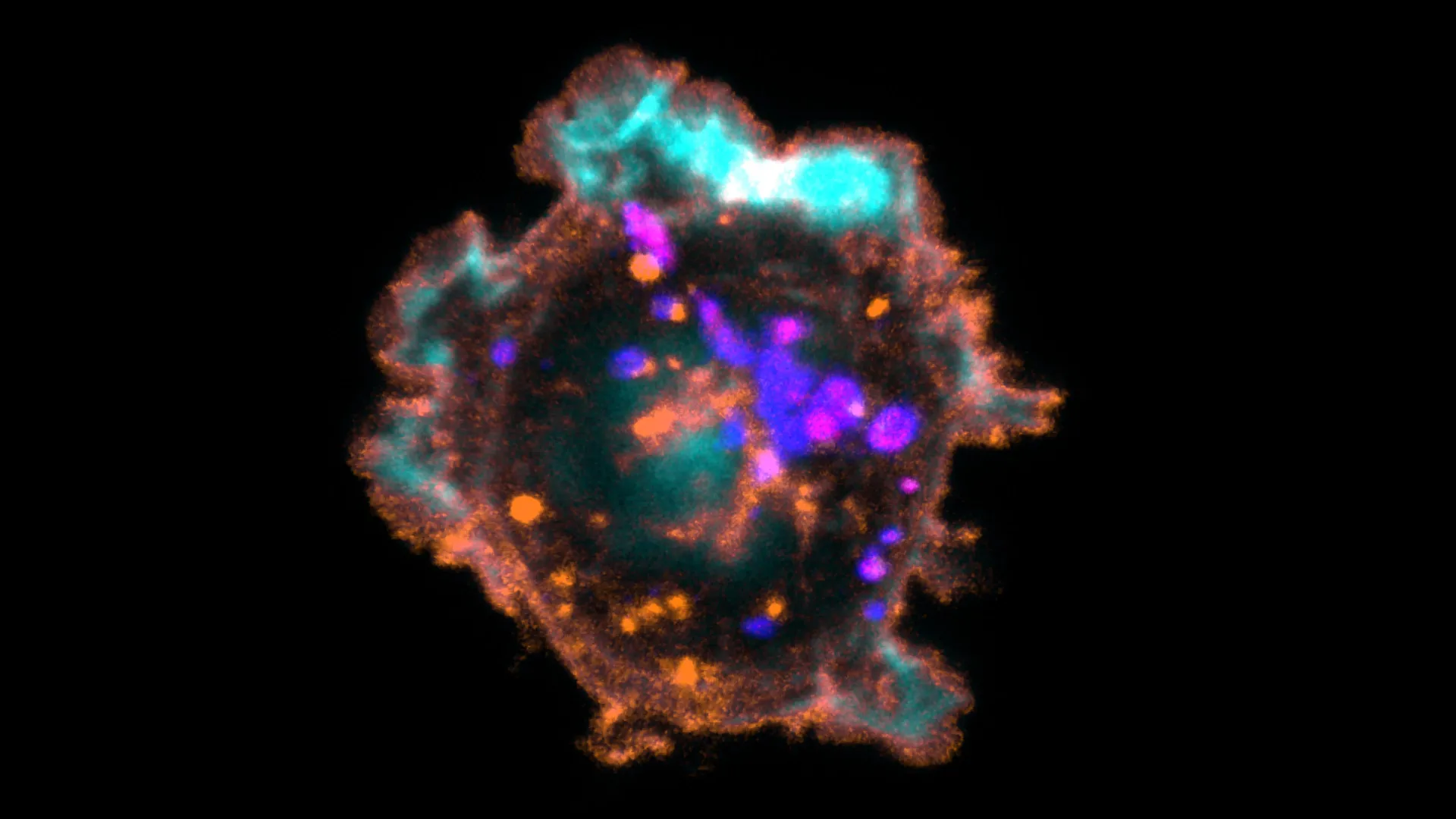
In a healthy immune response, NK cells deploy toxic granules to destroy infected cells. The study’s description says those granules remain trapped inside the NK cells of people with MKD. That failure affects the cells’ normal function and is linked to an inflammatory cascade when an infection occurs.
The result reframes an important question in a disease that has long been understood through a different immune pathway. Rather than viewing inflammation only through the role of macrophages, the findings identify a defect in cytotoxic immune cells that may help explain why infections can provoke severe episodes.
This does not erase the established role of inflammatory signaling in MKD. Instead, it adds a potentially important upstream target: the malfunctioning NK-cell response and the immune signals associated with it. The discovery is notable because rare-disease research often advances by revealing a specific biological failure that can be matched with an existing drug class or a new therapy.

Existing medicines offer a potential next step
The researchers say the study points to JAK inhibitors as a possible treatment option. These medicines already exist and could be particularly valuable for MKD patients who do not respond to current therapies. The report also identifies neutralizing interferon gamma as another therapeutic direction for future study.
Professor Mike Rogers, Garvan’s senior author, said the findings establish a new target for the disorder and create a basis for clinical studies of JAK inhibitors or drugs that neutralize interferon gamma. Importantly, that is a research lead rather than an established standard of care. The study suggests what should be tested next; it does not establish that all people with MKD should receive these medicines.
The source reports that one severely affected infant showed substantial improvement with the treatment approach. Such a result is encouraging, especially in a rare disease with serious inflammatory episodes, but a single clinical experience cannot answer questions about effectiveness, dosing, safety or which patients are most likely to benefit. Those answers require formal clinical studies.
Why rare-disease mechanism studies matter
MKD is lifelong, and its rarity makes it especially important to uncover mechanisms that are precise enough to guide treatment development. Broadly suppressing inflammation can help some patients, but a clearer account of the cells and signals driving an episode could enable more targeted intervention.
The Garvan study’s central contribution is therefore mechanistic: it identifies a defect in NK-cell function that was not previously the main focus of the disease model. By connecting that defect to excessive inflammation during infection, it provides a rationale for examining treatments that act on downstream inflammatory signaling.
For patients and families affected by MKD, the immediate implication is cautious optimism. Existing medications may shorten the path from laboratory finding to clinical trial, because their use and safety profiles are already understood in other contexts. But the appropriate use of JAK inhibitors or interferon-gamma-directed treatment in MKD remains a question for controlled research and specialist care.

What comes next
The next milestone is clinical validation. Researchers will need to test whether targeting this pathway consistently reduces inflammatory episodes, which groups of patients benefit, and how treatment risks compare with current options. They will also need to clarify how NK-cell dysfunction interacts with other immune processes already associated with MKD.
Even before those questions are resolved, the discovery shifts the research agenda. A disorder once primarily framed around macrophages now has a newly identified immune-cell vulnerability that may be actionable. For a rare condition with limited treatment options, that change in understanding can be as consequential as the prospective drug strategy it has revealed.
This article is based on reporting by Science Daily. Read the original article.
Originally published on sciencedaily.com


