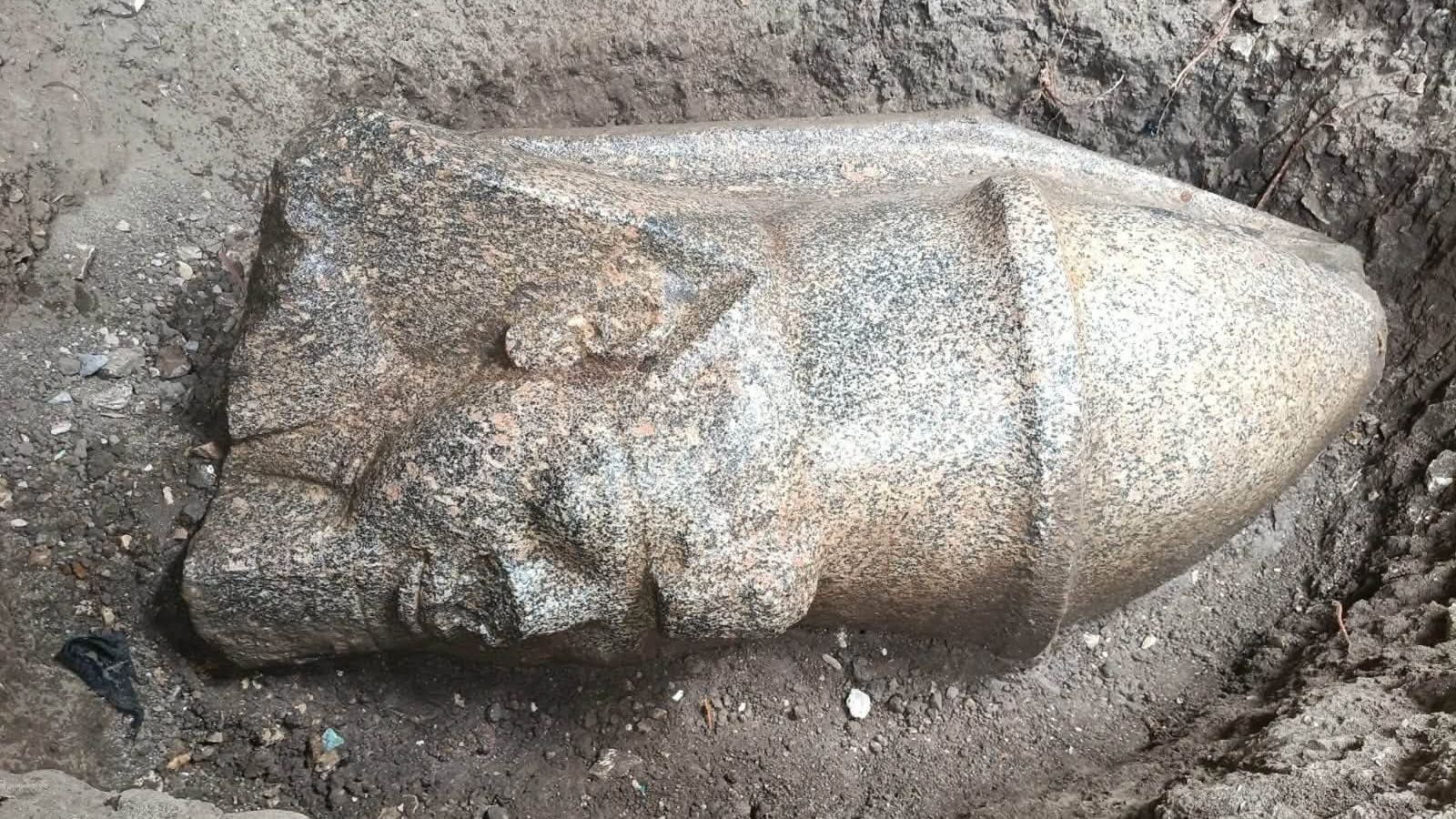
The remains of two monumental statues of the pharaoh Ramesses II have been found at Behbeit El Hagar in northern Egypt, adding new material to the long archaeological record surrounding one of ancient Egypt’s most prominent rulers.
The discovery began when Khaled el-Shahat, a local man working on his land in a village near the site, found the remains and notified Egypt’s Ministry of Tourism and Antiquities. The ministry then sent a team to excavate and study the statues.
Both statues were once larger than life. The larger of the two is thought to have stood nearly 28 feet, or 8.5 meters, tall when intact. Much of that monument has not survived, but its head is 5.2 feet, or 1.6 meters, tall. It depicts Ramesses II wearing the double crown associated with Upper and Lower Egypt.
A royal image on a monumental scale
Ramesses II ruled from about 1279 to 1213 B.C. and had one of the longest reigns in Egyptian history. During his 66 years on the throne, Egypt controlled an empire that extended as far northeast as modern-day Syria. He also commissioned major building projects across that empire, leaving behind an unusually extensive archaeological footprint.
Statues of Ramesses II have been recovered from numerous locations in Egypt, but the newly reported fragments are notable for their scale and setting. The larger statue’s surviving back pillar bears a hieroglyphic inscription that gives the pharaoh’s Horus name, “Strong Bull.” Such royal names and titles were part of the formal language used to present a ruler’s authority, power and connection to the gods.
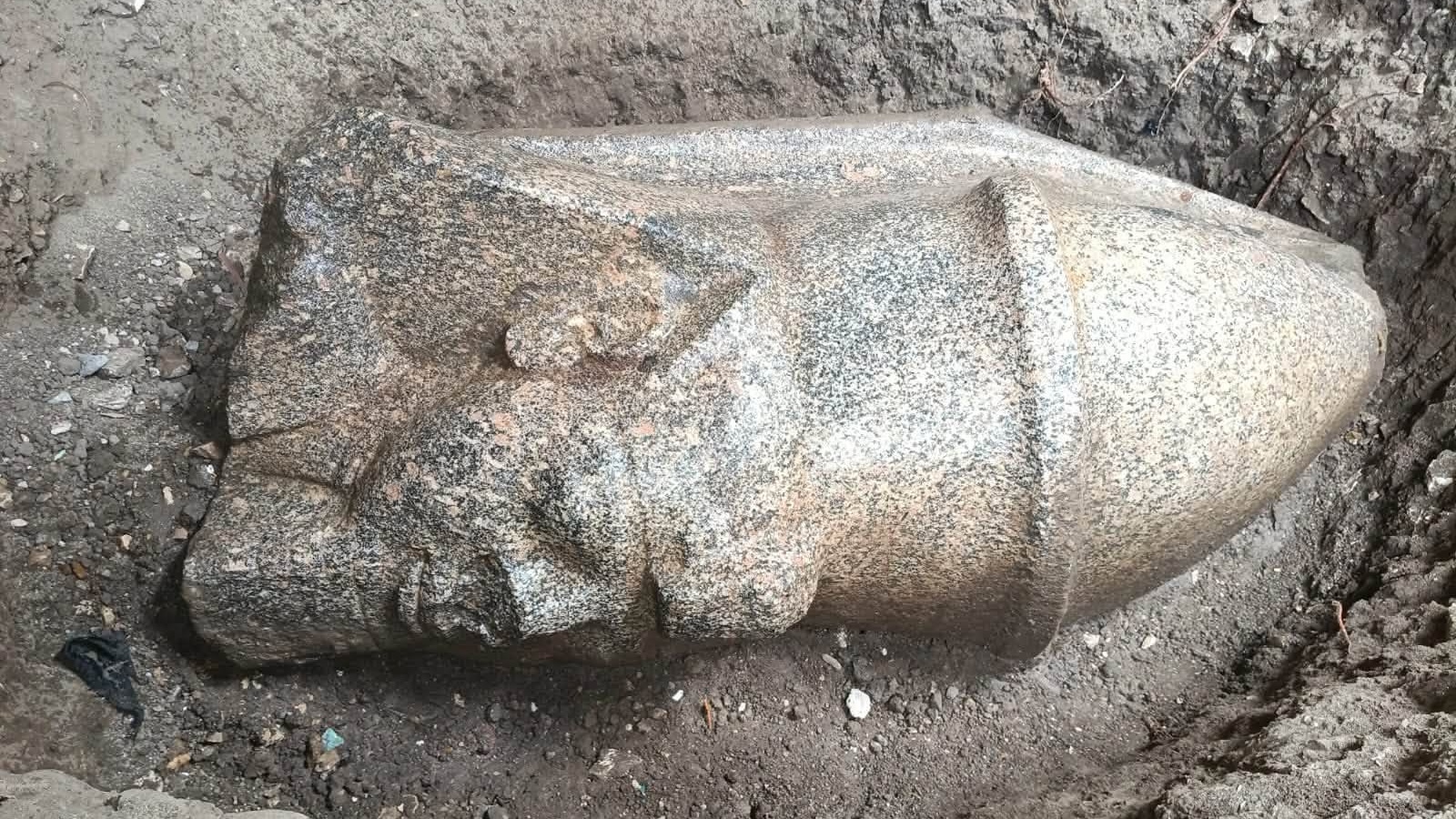
The double crown on the statue is also significant. Its paired form represented Upper and Lower Egypt, visually linking the king to the political unity of the land. Even in fragmentary condition, a colossal royal head wearing that crown communicates the scale at which Egyptian kingship was expressed in stone.

Connection to Behbeit El Hagar
Behbeit El Hagar is known for its temple dedicated to Isis, a goddess associated with healing and magic. Archaeologists had previously found architectural fragments at the site bearing Ramesses II’s name. Mahmoud Emam, an Egyptologist at Cairo University who has worked on remains from the site but was not involved with the new excavation, said the newly found statues were uncovered on the western side of the temple complex.
That context makes the discovery more than the recovery of isolated sculptures. It potentially strengthens the evidence that Ramesses II’s presence was represented at, or connected to, the wider temple area. Further excavation and study will be needed to establish the statues’ original positions, their relationship to surrounding structures and whether additional fragments remain nearby.
Large Egyptian statues were not simply decorative objects. They were designed to make royal power physically present in sacred and public spaces. Their placement near a temple could have tied the ruler’s image to the rituals and religious associations of the site, making the monument part of the landscape experienced by visitors and worshippers.
Fragments that preserve a larger story
The find also shows why local reporting remains important to archaeology. The statues were not first identified through a planned research survey, but by someone working on land near the ancient site who alerted the relevant ministry. The subsequent response enabled professional excavation and documentation of the material.
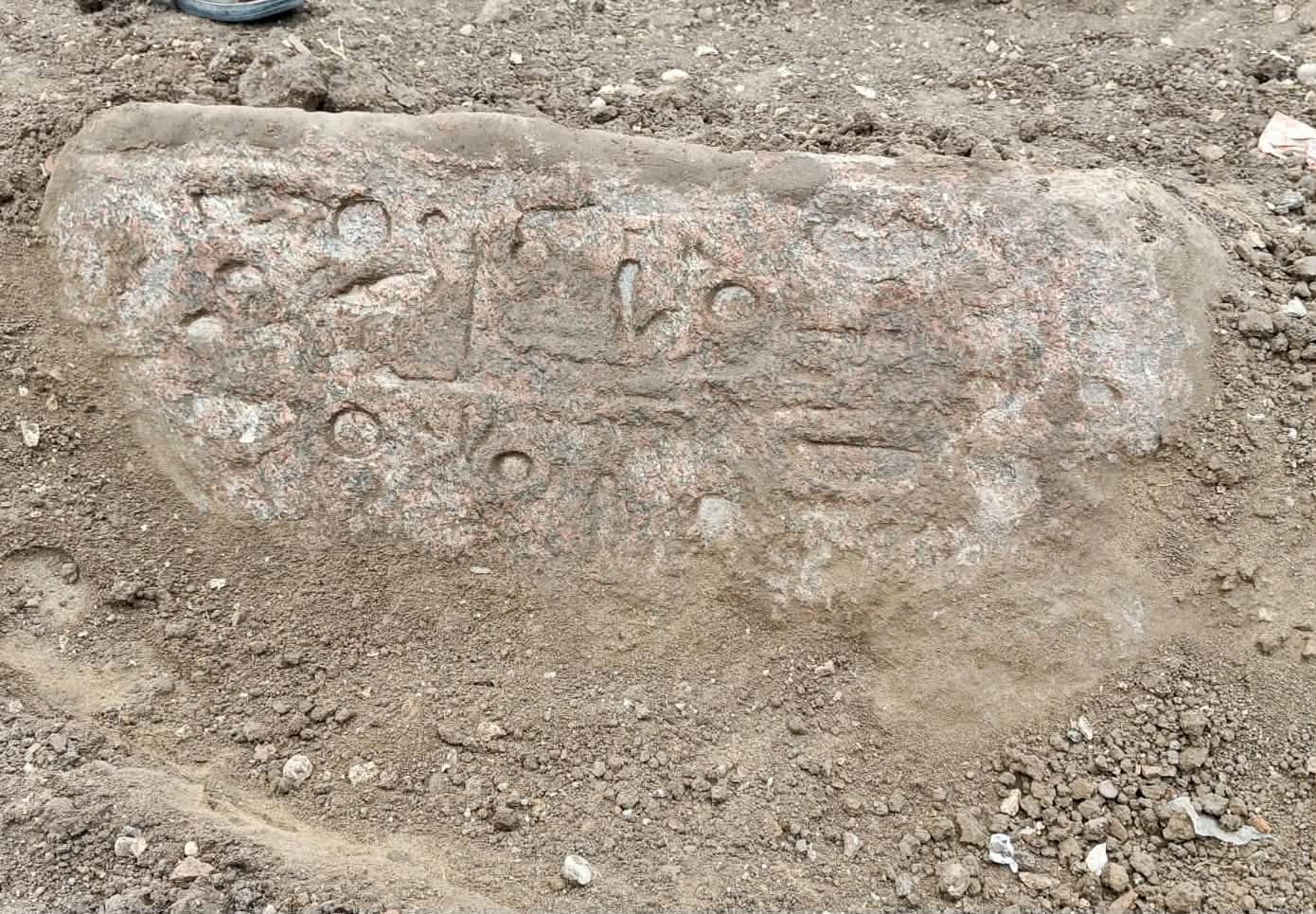
Colossal statues often survive as fragments because they have endured centuries of natural decay, reuse, movement and disturbance. Yet a single head, inscription or section of a back pillar can preserve information about a monument’s identity, iconography and original scale. In this case, the large head and its double crown provide a direct visual identification, while the inscription connects the sculpture to Ramesses II’s formal royal titulary.
The discovery is a reminder that Egypt’s ancient monumental landscape is still capable of producing major finds, including close to well-known temple sites. Behbeit El Hagar has long been associated with the cult of Isis, but the new statues add material evidence related to an earlier and exceptionally influential pharaoh.

What researchers will examine next
Archaeologists studying the statues can investigate their stone, carving technique, surviving inscriptions and the layers of soil in which they were found. These details can help establish whether the pieces belonged to monuments erected at Behbeit El Hagar or were moved there from elsewhere at a later date.
The immediate facts are already striking: two massive royal statues have been recovered, including one that originally approached 28 feet in height. But their broader value will depend on what continued excavation reveals about the western side of the temple complex and the statues’ archaeological context.
For now, the fragments offer a renewed view of Ramesses II’s monumental legacy. More than three millennia after his reign, his name, crown and royal image continue to emerge from the Egyptian landscape in forms large enough to make their original intention unmistakable.
This article is based on reporting by Live Science. Read the original article.
Originally published on livescience.com