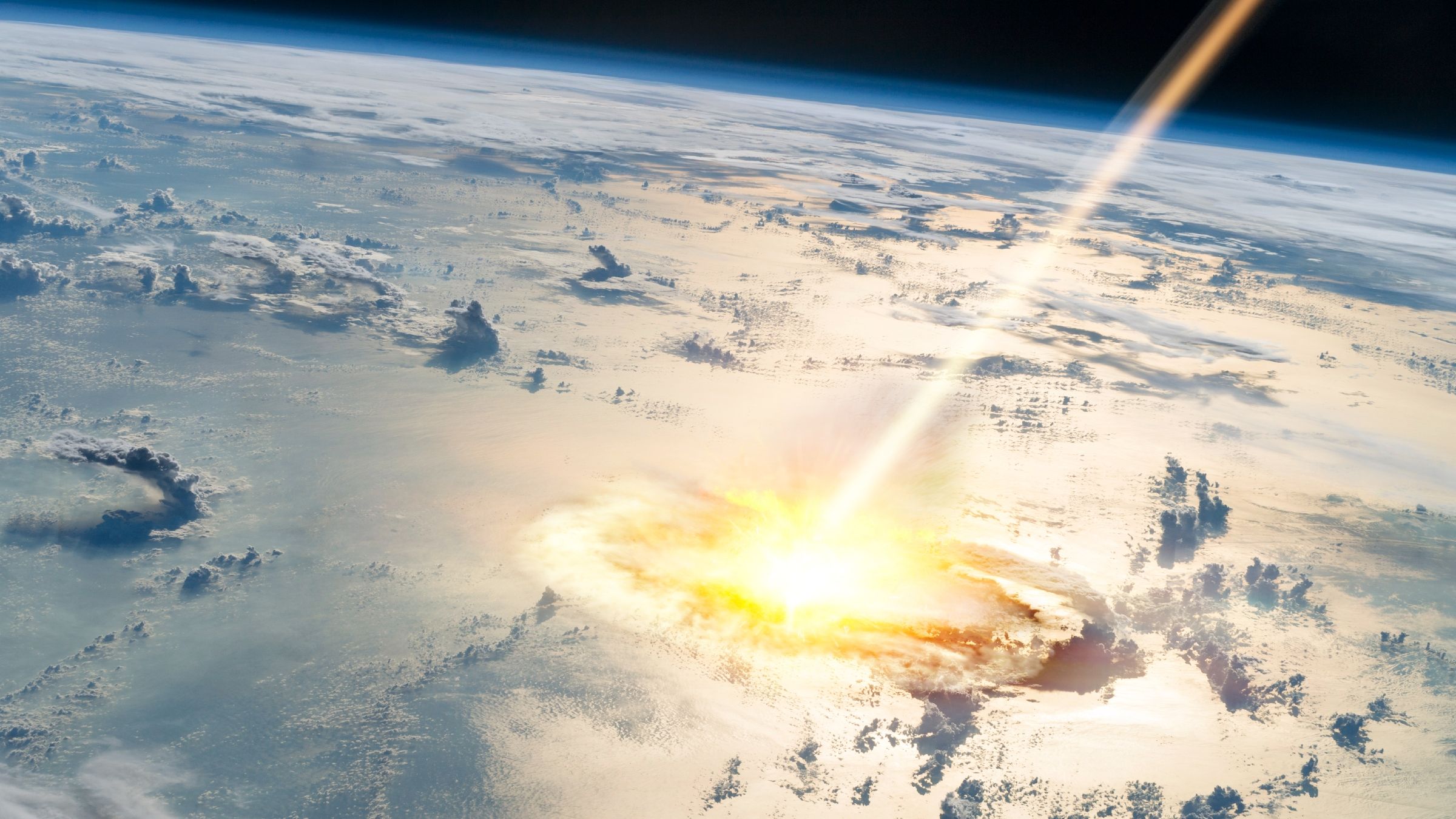
One of the largest known impact structures in the United States may be far younger than scientists previously believed. New analysis of zircon crystals from the buried Ames crater in northwestern Oklahoma dates the impact to about 370 million years ago, placing it near the Frasnian-Famennian mass extinction event.
The revised timeline changes the scientific context for the 10-mile-wide, or 16-kilometer-wide, structure. Ames crater had previously been associated with the Ordovician meteor event roughly 467 million years ago. The new date is about 97 million years later, meaning the impact may have coincided with one of the major global extinction intervals in Earth’s history.
The study does not establish that the impact caused the extinction. It does, however, put a substantial impact into the same broad period and raises the possibility that it contributed to environmental disruption at a time when marine life was under severe stress.
A crater hidden beneath Oklahoma
Ames crater is not visible from the ground. When the object struck, the region that is now Oklahoma lay beneath a shallow sea. Sediments later filled and buried the resulting depression, leaving no obvious surface feature for modern observers.
The structure was discovered only in 1991, when oil prospectors drilled into it. At roughly 10 miles across, it is the fourth-largest impact structure in the United States, according to the report. The impactor was estimated to be about the height of the Eiffel Tower and to have hit at more than 70,000 miles per hour, or 110,000 kilometers per hour.
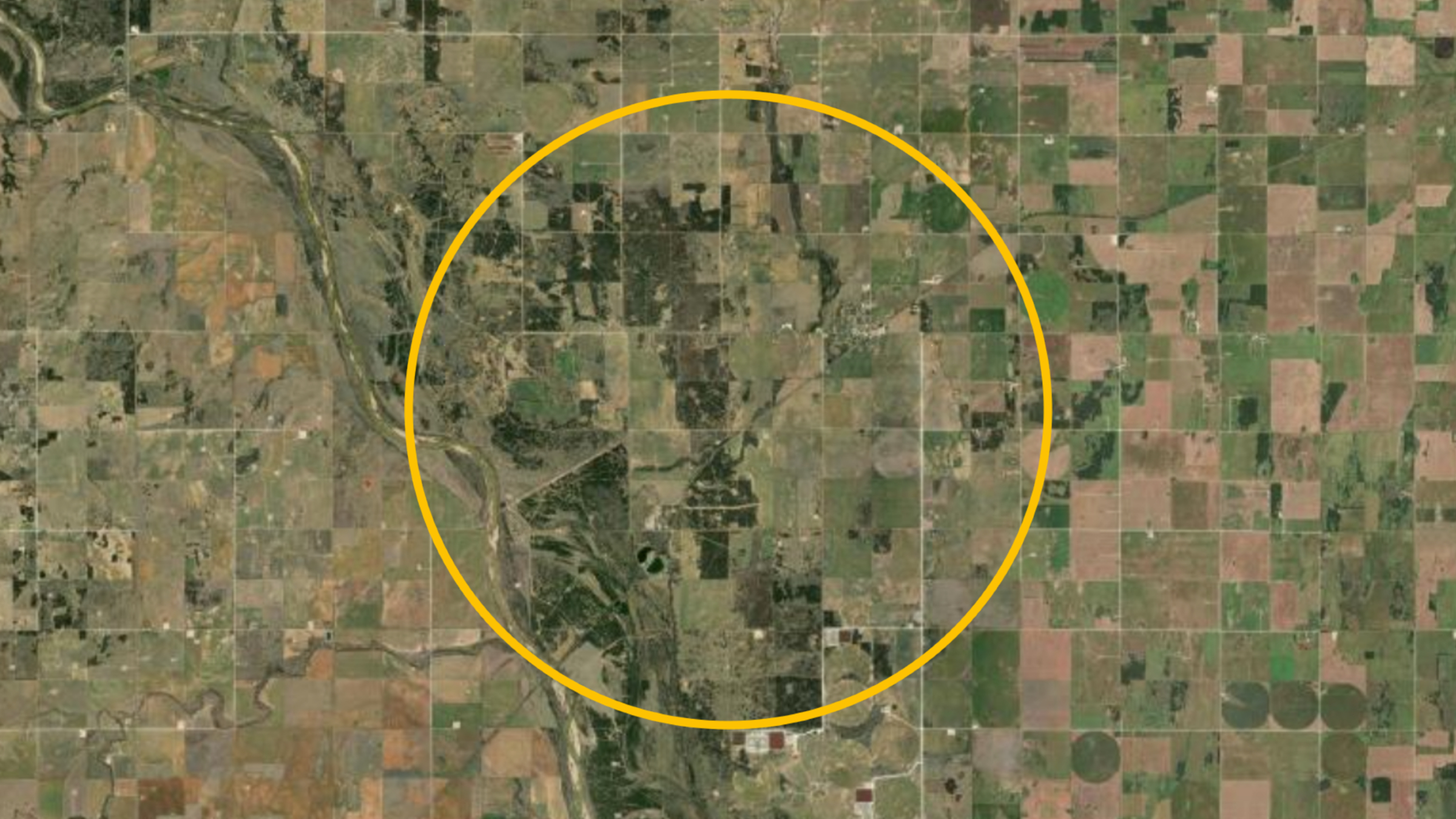
That description conveys the force involved, but the crater’s geology is what allows researchers to reconstruct its past. Rocks in and around an impact structure can preserve evidence of extreme shock and deformation even after the landscape has been covered by younger layers of sediment.

Why zircon crystals changed the date
The earlier age assignment came from fossils of marine animals found in and around the crater. Those fossils dated to the Ordovician meteor event, a period around 467 million years ago when an unusually high number of large objects are thought to have struck Earth. That pattern may have been linked to the fragmentation of a parent body in space.
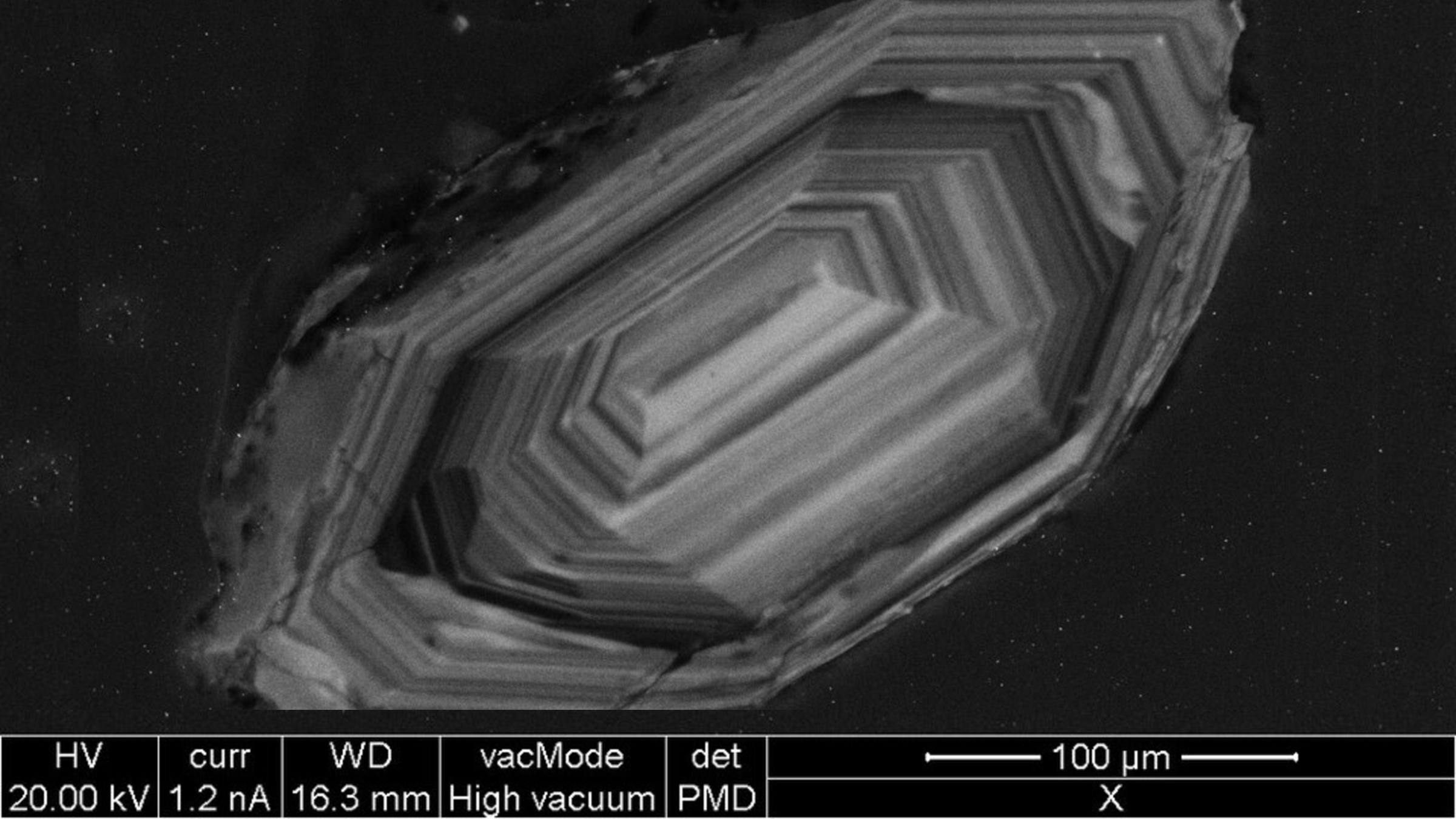
In the new work, published in July in Meteoritics and Planetary Science, researchers examined fracture patterns in tiny zircon crystals embedded in the underground crater. Zircon is a durable mineral that can retain a record of geological events. The crystal-scale damage examined by the team indicated that the impact occurred about 370 million years ago rather than during the Ordovician event.
The revised result is a reminder that rocks surrounding a crater can tell a more complicated story than fossils alone. Fossils may establish the age of sediments that were deposited in a region, but they do not necessarily provide a direct date for the moment of impact. A mineral record tied to the force of the collision can offer a more direct constraint.
New context: the Frasnian-Famennian extinction
The new age places the Ames impact during the Frasnian-Famennian mass extinction event. The source describes that interval as one of the largest global extinction events in Earth’s history. The coincidence is scientifically important because large impacts can produce abrupt regional and global consequences, depending on their size, location and the conditions of the planet at the time.
But chronological overlap is not proof of causation. Mass extinctions are often complex episodes that unfold amid changes in climate, oceans, ecosystems and atmospheric chemistry. The new analysis supports a re-evaluation of Ames crater’s place in that period; it does not settle how much, if anything, the impact contributed to the extinction.
That distinction matters. Impact craters can be tempting candidates for a simple explanation of biological crises, especially when their dates align with extinction boundaries. Establishing a causal link requires evidence beyond an age match, including a precise chronology and signs that the impact generated environmental changes capable of affecting life on a global scale.

What the new age means for impact history
The revision removes Ames from the Ordovician impact cluster where it had long been placed. It also adds a significant American impact structure to the late Devonian record. That shift could affect how researchers interpret both periods: the Ordovician event loses a member, while the Frasnian-Famennian interval gains a newly dated impact.
The broader value of the finding is methodological as well as historical. Buried craters are common challenges in planetary geology because their original form can be erased by erosion, sedimentation and tectonic change. Ames is a particularly clear example of how an impact can disappear from the surface while leaving a recoverable record below it.
As scientists continue to refine the ages of ancient impact structures, the timeline of Earth’s collisions will likely continue to change. Each revision can alter the apparent relationship between impacts and biological or climate events. In the case of Ames crater, a structure once thought to belong to an Ordovician bombardment now appears to sit alongside a much later extinction crisis.
The result turns a hidden Oklahoma crater into a new question for Earth-history research. The key next step is not to assume a direct cause, but to test what consequences this impact could have produced and whether those consequences are visible in the geological record of the late Devonian world.
This article is based on reporting by Live Science. Read the original article.
Originally published on livescience.com




