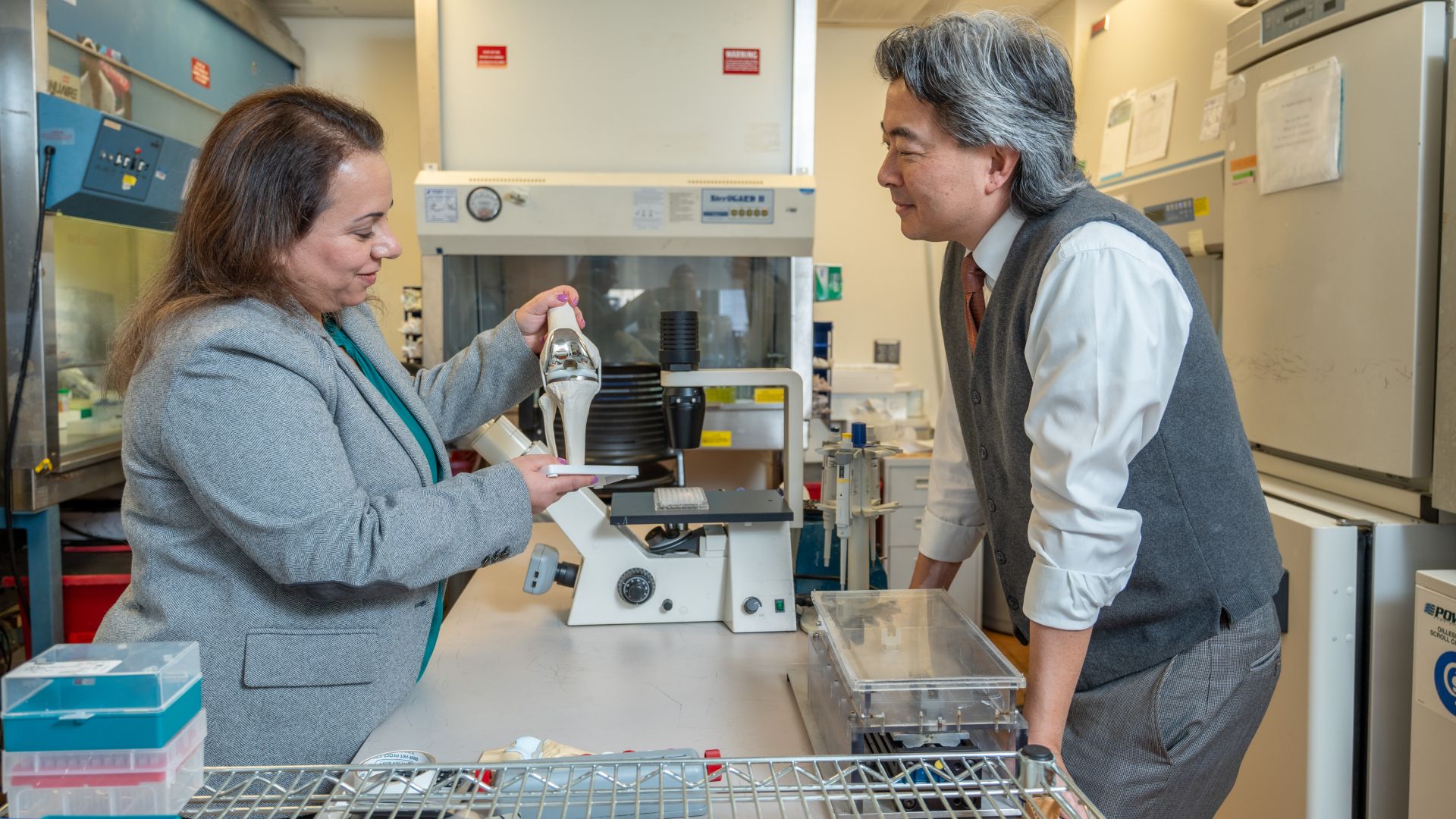
A new idea for one of medicine’s most common operations
Knee replacement is already a routine procedure for many older adults, but it remains an imperfect solution. Conventional implants are built from metal and plastic components that can restore movement and reduce pain, yet they are still foreign objects that do not become living tissue. That tradeoff matters for patients who are younger, more active, or otherwise poor candidates for the standard approach.
Researchers at Columbia University and the University of Missouri are now working on what they describe as a “living” knee implant, an approach intended to replace damaged joint structures with biologically active material rather than a purely mechanical device. In an interview published by Live Science, the developers said the goal is not simply to insert a prosthetic that functions well enough, but to create an implant that integrates with the patient’s body so completely that, over time, it effectively becomes part of them.
That distinction goes to the heart of why the project has drawn attention. Knee arthritis and other degenerative problems create a large and growing medical burden, yet current replacements are not ideal for every patient who needs relief. A biological implant that can merge with surrounding tissue could eventually reshape both who gets treated and how long those treatments remain effective.
Why current knee replacements leave a gap
Standard knee replacement technology has been a major medical success, but it also comes with practical limits. Artificial joints can wear down, loosen, or require revision surgery. Those risks are especially relevant for patients expected to live many years after the procedure or place high demands on the joint. In practice, that means some people who could benefit from intervention may be told to delay surgery because the existing hardware may not be the right long-term fit.
The appeal of a living implant is that it would not behave like a static machine part. Instead, the replacement would be made from living materials designed to interact with the body in a more natural way. The researchers told Live Science that this is the kind of technology they see as being desperately needed, precisely because it could address the mismatch between patient needs and the constraints of today’s implant designs.
The phrase they used, “eventually, it becomes you,” captures the ambition. A successful biological implant would not merely sit inside the knee; it would integrate, remodel, and potentially provide a more native experience than conventional replacements can offer.

What makes the implant ‘living’
Based on the source interview, the project centers on replacing knee structures with living materials rather than traditional prosthetic hardware alone. That suggests an effort to build a replacement that can support healing and biological incorporation instead of relying entirely on inert engineered parts.
The promise of such a design is straightforward even if the technical path is not. A living implant could, in theory, better match the way natural tissues distribute load, respond to movement, and interact with the surrounding bone and cartilage environment. If the implant truly integrates into the patient’s body, it may reduce some of the long-term complications associated with rigid artificial devices.
That does not mean the technology is ready to displace current surgical standards. The article frames the work as a development effort led by inventors explaining the concept and its potential. The significance lies in the direction of travel: orthopedic repair moving away from a purely mechanical model and toward regenerative, tissue-integrated reconstruction.
Why this matters beyond orthopedics
The idea of a living knee implant fits into a broader shift in medicine, where researchers are trying to combine materials science, tissue engineering, and surgery to create repairs that behave more like original anatomy. That trend can be seen across regenerative medicine, from engineered tissues to bioactive implants designed to support healing instead of simply replacing damaged parts.
If the approach succeeds, the payoff could extend well beyond knee surgery. The knee is one of the body’s most demanding joints, exposed to constant loading and complicated biomechanics. A biologically integrated replacement that works in that environment would offer a powerful proof point for using living materials in other orthopedic settings.
It also reflects a more patient-centered view of medical technology. Traditional implants are often judged by durability and function alone. A living replacement raises a different standard: whether the repaired body part can recover something closer to native biology, with fewer compromises imposed by artificial hardware.

The challenges ahead
The concept is compelling, but the hurdles are substantial. Any implant intended to become part of the body has to meet a demanding list of requirements. It must be safe, predictable, strong enough for real-world use, and durable over time. It must also work within the constraints of surgery, manufacturing, and regulation.
Orthopedic devices face especially high scrutiny because they endure repetitive stress for years. A living implant adds another layer of complexity, since biological materials can vary in performance and may behave differently across patients. That means the research path is likely to involve extensive testing before the technology could move into broader clinical use.
Even so, the interview’s underlying message is that incremental gains may not be enough for a field with so many unmet needs. For some patients, the problem is no longer whether surgeons can replace a knee with hardware. It is whether the next generation of treatment can offer something fundamentally better.
What to watch
For now, the project should be read as an early but notable signal in orthopedic innovation. The developers are making the case that knee replacement does not have to remain a choice between pain and a permanent metal-and-plastic solution. Their work points to a future in which joint repair could be biological, adaptive, and more deeply integrated with the patient’s own body.
Whether that future arrives soon will depend on how the technology performs as development continues. But the need described by the researchers is clear. Millions of patients live in the gap between damaged natural joints and imperfect artificial ones. A living implant would be valuable not because it sounds futuristic, but because it aims directly at that gap.
- The developers say the implant is designed to integrate with the body over time.
- The approach targets limitations of conventional metal-and-plastic replacements.
- If successful, it could widen treatment options for patients who are not ideal candidates for standard knee implants.
This article is based on reporting by Live Science. Read the original article.

Originally published on livescience.com