A larger genomic picture of migration into the Americas
A new DNA study of nearly 200 Indigenous genomes is adding both detail and mystery to the story of how people spread through the Americas. According to reporting on the work, researchers found evidence for three distinct waves of migration into South America over thousands of years and identified traces of ancestry from a previously unknown Asian source population, described as a “ghost” lineage.
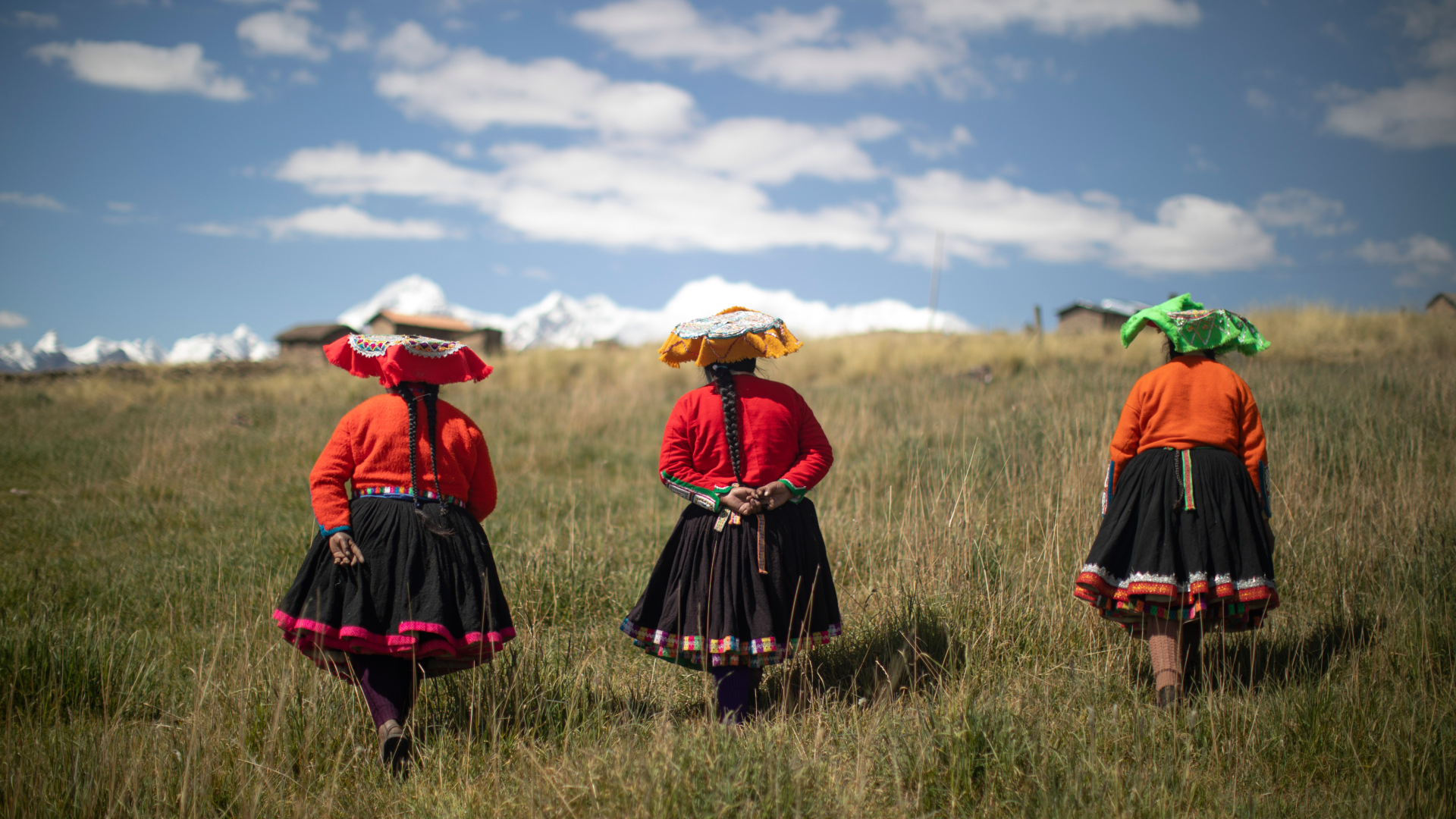
The analysis drew on DNA from modern Indigenous groups in the Americas, including Quechua communities in the Andes. The results suggest that the peopling of South America did not unfold as a single, uniform movement. Instead, human settlement appears to have been shaped by multiple migrations, including a more recent wave around 1,300 years ago.
That conclusion matters because the genetic history of the Americas has long been understood as complex, but often reconstructed from relatively limited datasets. By using a larger collection of Indigenous genomes, researchers were able to detect finer structure in the ancestry patterns and identify population signals that had not been clearly resolved before.
Three migration waves, not one simple dispersal
The study’s central claim is that people reached South America in three distinct waves over the course of millennia. That does not necessarily overturn the basic idea that populations entered the Americas from Asia and then spread southward. It does, however, add a more layered chronology to what happened after those initial movements.
For a long time, simplified models of migration could imply a single founding population gradually branching across the continents. The new results instead point to repeated population inputs, with later arrivals contributing to the ancestry of some groups in ways that remained visible in modern DNA.
One especially notable finding is that a previously unknown wave of people settled in South America around 1,300 years ago. That date places the migration relatively late compared with the earliest known settlement of the Americas, suggesting that population movement into or within South America remained dynamic long after the first peopling of the continent.
Exactly how that movement occurred, and how widely it reshaped existing populations, will require further work. But the study indicates that the demographic history of the region cannot be fully captured by a single founding event followed only by local divergence.

The meaning of a “ghost” population
The term “ghost population” does not refer to a supernatural claim. In genetics, it describes an ancestral group that is inferred from the genetic patterns it left behind, even though direct DNA from that source population has not yet been identified. In this case, the study suggests that Indigenous Americans carry remnants of ancestry from an unknown Asian lineage not previously recognized in the standard reconstruction of migration into the Americas.
That inference is significant because it implies the ancestral landscape in Asia before migration into the Americas was itself more diverse than current models fully capture. If one source population has not yet been directly sampled, then the human prehistory of the region may still contain unsolved branches that contributed to later populations.
Ghost lineages are a reminder that ancient population history is often reconstructed indirectly. Researchers compare patterns across living and ancient genomes, look for mismatches with simple tree models, and infer where an unsampled ancestor best explains the data. The result is less like reading a complete archive and more like rebuilding a partially burned one from the surviving fragments.
Why Indigenous genomes matter in this research
The study also reflects a broader shift in human genetics toward using more representative datasets. For years, many genomic studies relied heavily on European-ancestry populations or small samples from Indigenous groups. Expanding the range of genomes included in analysis can reveal population structure that would otherwise stay hidden.
In the Americas, that is particularly important because migration history was shaped by deep time, local adaptation, isolation, exchange, and later colonial disruption. Modern Indigenous communities still preserve valuable information about that history in their genomes, even though those genomes also reflect many later events.
By working with DNA from nearly 200 Indigenous individuals, the researchers were able to identify patterns broad enough to speak to continental history while still capturing distinctions among populations. That scale strengthens the study’s ability to detect signals such as later migration waves or ancestry components that do not fit neatly into older models.

What the findings do and do not say
The new results suggest a more complex ancestry picture for Indigenous Americans, but they should not be read as replacing cultural history with genetics alone. DNA can illuminate migration and relatedness, but it does not map directly onto identity, language, or the full history of communities. Nor does the report mean that every unanswered question about settlement in the Americas has suddenly been resolved.
Instead, the study appears to sharpen several key points. First, South America was populated through multiple waves rather than one simple migration stream. Second, at least one of those waves occurred much later than the earliest settlement period. Third, some ancestry in Indigenous Americans traces back to an Asian source population that has not yet been directly identified.
Those are substantial revisions to the level of detail available in the story, even if the broad outline of migration from Asia into the Americas remains intact.
A reminder that human prehistory is still unfinished
One reason this study stands out is that it expands the known map without pretending the map is complete. A ghost lineage is, by definition, evidence of a gap in the record. A newly inferred migration wave is evidence that earlier reconstructions missed part of the story. Both findings point in the same direction: the human history of the Americas is richer and more episodic than older, simpler narratives allowed.
That is not unusual in genetics. As datasets grow and analytical methods improve, the clean lines of migration diagrams often give way to braided patterns of movement and mixture. South America, in this telling, was not merely the endpoint of a single continental expansion. It was a region shaped by repeated arrivals and by ancestral diversity that still has not been fully documented.
The study’s biggest contribution may be that it turns uncertainty into a productive signal. Rather than closing the case on Indigenous American origins, it shows precisely where the next questions now lie.
This article is based on reporting by Live Science. Read the original article.

Originally published on livescience.com