A Lost Range Beneath the Ice
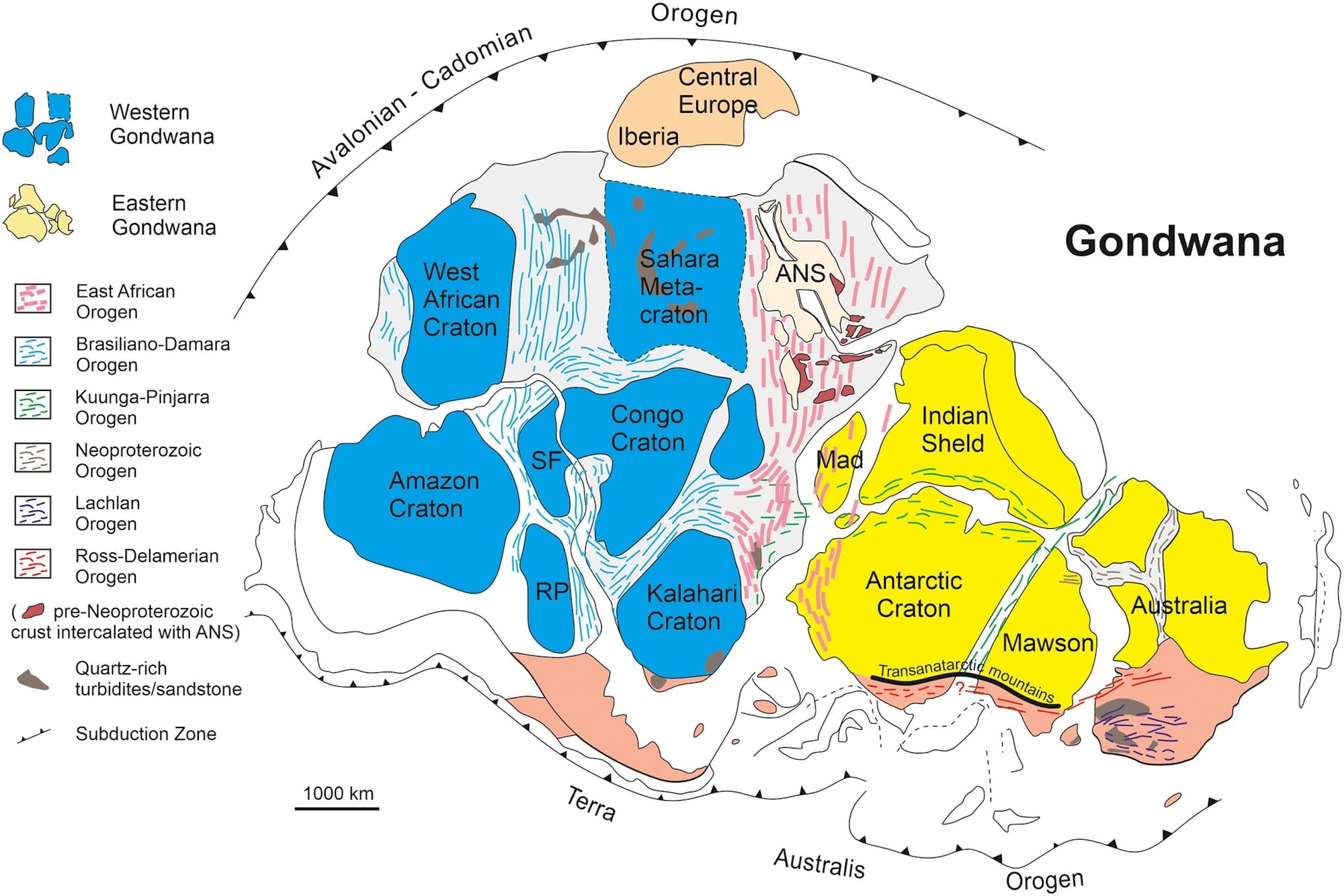
About 600 million years ago, the supercontinent Gondwana was in the mountain-building business on an almost unimaginable scale. According to a new examination of tiny ancient rocks, the assembly of that landmass threw up a colossal range — one that researchers describe as a belt of primordial "supermountains." The towering peaks that once defined this landscape have vanished from view, and much of what remains of the range now lies buried beneath Antarctica's ice sheet, which is a large part of why it stayed hidden for so long.
The discovery reframes Antarctica not simply as a frozen, static continent but as the resting place of a vanished geological giant. The mountains did not survive as scenery; they survived as evidence, locked inside mineral grains small enough to hold in the palm of a hand. From those fragments, scientists have reconstructed a picture of a mountain system that would have dominated the Gondwanan world during a pivotal chapter of Earth's history.
How Scientists Read Mountains That No Longer Stand
The case for the supermountains rests on evidence that is almost the opposite of spectacular. Rather than surveying peaks, researchers work with tiny ancient rocks that preserve chemical and physical clues about where they came from and how they were formed. When a mountain range is raised, it does not simply sit there — it sheds material, and that material travels. Grains washed out of high terrain eventually settle into sedimentary basins, where they can survive for hundreds of millions of years, long after the summits that produced them have been ground down to nothing.
That longevity is what makes the new work possible. A mountain range that existed roughly 600 million years ago is, in any ordinary sense, impossible to visit. But the rocks it generated are still with us, and examining them closely allows geologists to argue that a vast, primordial highland once existed where today there is only ice and bedrock. The fact that the range is described as buried under Antarctica adds a further layer of difficulty: the evidence sits beneath one of the most inaccessible surfaces on the planet.

Why a Mountain Range Matters for the Story of Life
The headline implication of the finding is not merely geological. According to the research, this Gondwanan supermountain belt helped set the stage for all modern complex life. That is a remarkable claim to attach to a range that no longer exists, and it places the mountains at the center of one of the deepest questions in science: why, after billions of years of mostly simple organisms, did complex life come to dominate the planet?
Mountains are not passive features of a world. They shape where water flows, what gets eroded, and what gets delivered into the oceans. A range on the scale of the Gondwanan supermountains would have been an enormous engine of geological change, operating over tens of millions of years while the planet's chemistry and climate were being reorganized. The new examination of ancient rocks adds weight to the idea that this lost landscape was part of the machinery that made a more biologically rich Earth possible.
It is a reminder that the planet's habitability is not a fixed property. It is the product of specific events, in a specific order, at a specific time — and some of those events are now invisible unless you know where to look.
Also in the Same Roundup: Venus, the Moon-Eater
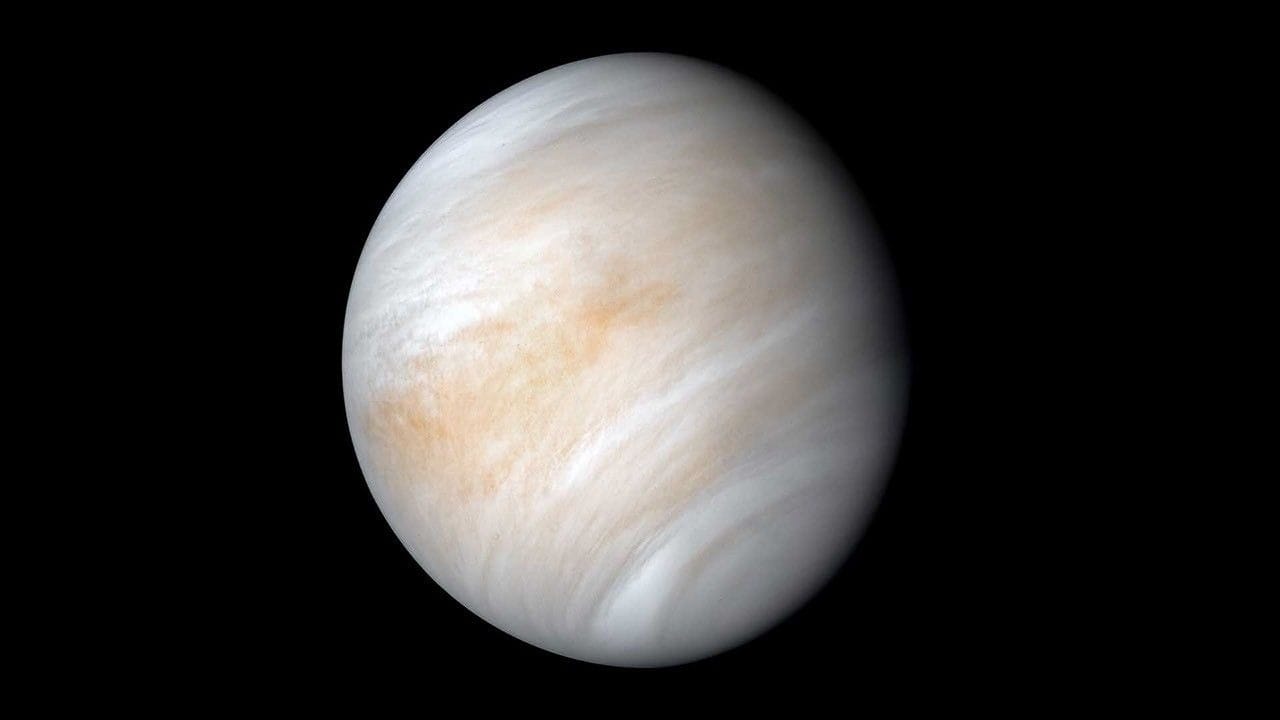
The supermountain study appeared alongside other research in a weekly science roundup, and one of its companions is nearly as dramatic. Scientists set out to explain why Venus has no moon — a puzzle, since Venus is the odd one out among the rocky planets apart from Mercury. The answer they propose is that Venus may once have had a primordial satellite and then destroyed it.
Using simulations of moons ranging from half to ten times the mass of Earth's Moon, the researchers found that most modeled satellites were drawn inexorably inward and ultimately crashed into the planet. The reason lies in Venus's extraordinarily slow rotation: a single Venusian day lasts 243 Earth days. Earth's comparatively rapid spin has the opposite effect, pushing our Moon away at roughly 1.5 inches per year.
As the team, led by Stephen Kane of the University of California, Riverside, put it, the absence of a Venusian satellite can be understood as a natural consequence of tidal evolution alone. The consequences could have been severe. The destruction of such a moon, the researchers suggest, would have delivered a massive pulse of energy to Venus's surface and atmosphere, with possible implications for the loss of surface water and the onset of a runaway greenhouse state. In other words, a moon's demise may help explain why Venus became so aggressively hostile while Earth remained a comfortable haven for life.
There may eventually be a way to test the idea. NASA's DAVINCI orbiter, scheduled for launch to Venus in 2029, could search for chemical signatures left behind by an ancient, obliterated moon.

Other Highlights From the Same Week
- The Venusian moon study, which links tidal decay to the planet's uninhabitable present.
- A "brain-space" study, part of the same collection of research that moved mountains and grew brains.
- Evidence of Tudor-era subterfuge, alongside work on the preservation of medieval texts.
Taken together, the roundup ranges from the deep geological past to the chemistry of a neighboring planet, and from the biology of the brain to the politics of the Tudor court. The through-line is the same: each item is an attempt to recover something that has been lost — a mountain range, a moon, a manuscript, a memory of how a world came to be the way it is.
What Comes Next
For the supermountains, the next steps are likely to involve more of the same painstaking work: extracting additional signals from ancient rocks, tightening the timeline of when the range existed, and refining what its existence meant for the planet's chemistry and climate. For Venus, the wait runs to 2029, when DAVINCI is due to launch and possibly put the moon-eater hypothesis to the test.
What both stories share is a lesson about scale. A mountain range built 600 million years ago, then erased and entombed under Antarctic ice, can still shape the story of every complex organism alive today. A moon that no longer exists can help explain why a whole planet turned hostile. The past, it turns out, rarely disappears completely. It just gets buried — and waits for someone to read the tiny rocks it left behind.
This article is based on reporting by 404 Media. Read the original article.

Originally published on 404media.co