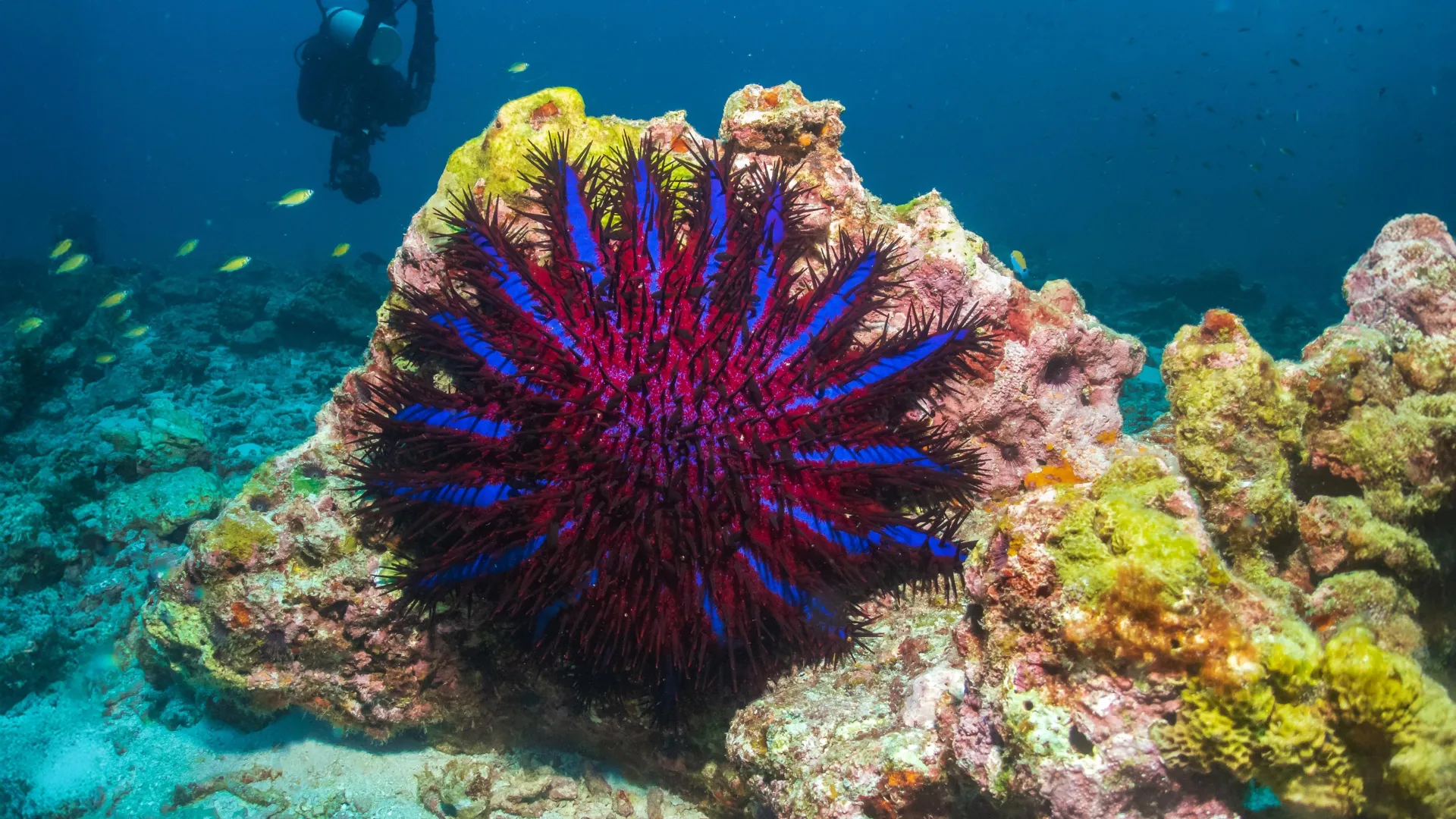
A feared reef predator may have a more complicated role
Crown-of-thorns starfish have long been treated as one of the Great Barrier Reef’s most damaging coral predators. Their toxin-filled spines and coral-eating habits make them especially alarming during population outbreaks, when they can leave broad areas of reef badly damaged. But research highlighted by the University of Sydney points to a more nuanced conclusion: when their numbers are kept low, these starfish may help maintain more diverse coral communities.
The finding does not recast crown-of-thorns starfish as harmless. Population explosions remain destructive, and the Great Barrier Reef has experienced four major outbreaks since the 1960s, roughly one every 15 years. Instead, the study distinguishes between those outbreaks and the ecological role of the native predator at controlled population levels.
That distinction matters because reefs are not simply collections of coral colonies. They are communities in which fast-growing corals can dominate available space, while slower-growing species compete to persist. A predator that preferentially feeds on dominant corals can, under the right conditions, change the balance of that competition.
Coral often survived observed feeding events
Researchers investigated what happens to coral after crown-of-thorns starfish feed. The work examined feeding scars and remaining living tissue at the University of Sydney’s One Tree Island Research Station on the Great Barrier Reef. The sites were in protected areas with healthy fish populations and relatively low numbers of crown-of-thorns starfish.
The team found that living coral tissue remained after nearly 75% of the observed feeding events. In other words, many observed encounters did not end with a coral colony being completely consumed. The research team reported that, at One Tree Reef, the starfish appeared to consume a relatively consistent amount of coral in each meal and then move on.
That observation is central to the study’s interpretation. A feeding scar is still damage, but damage that leaves living tissue behind has different ecological consequences from the wholesale loss of a colony. Where coral can survive and recover, the starfish’s feeding may function less like a complete removal and more like a pressure on the corals that are most abundant or fastest growing.

Keeping dominant corals in check
The research suggests that crown-of-thorns starfish can create room for slower-growing corals by feeding on fast-growing, dominant species. That could increase biodiversity within coral communities, rather than allowing a small number of vigorous corals to monopolize reef space.
It is an important qualification to the familiar image of the species as a straightforward coral killer. In areas where outbreaks occur, crown-of-thorns starfish are still associated with severe reef damage. But in protected places where fish populations help keep starfish numbers under control, the same animal may contribute to a more varied coral assemblage.
The study therefore reinforces the importance of population level. The potential benefit described by the researchers depends on crown-of-thorns starfish remaining part of a balanced reef system. It does not suggest that uncontrolled outbreaks should be tolerated, nor does it erase the damage the species has caused during past explosions.
A case for managing ecosystems, not single species in isolation
The work also highlights the broader role of reef protection. The study sites were protected areas where healthy fish populations help limit crown-of-thorns starfish abundance. The researchers contrast those settings with reefs more vulnerable to outbreaks, where declines in natural predators such as tritons and several reef fish species have reduced the checks on the starfish population.
That relationship means management cannot be reduced to a single question of whether crown-of-thorns starfish are good or bad. The effect of the species depends on the condition of the wider ecosystem: predator populations, the number of starfish present, the coral community and whether feeding remains limited rather than escalating into an outbreak.
For reef managers, the study adds support for strategies that preserve ecological controls. Maintaining healthy fish populations may do more than protect individual species. It may help sustain the conditions under which native predators, including crown-of-thorns starfish, remain part of a functioning and diverse reef community.

What the finding does and does not change
The new evidence should not soften concern about crown-of-thorns outbreaks. The Great Barrier Reef’s history shows the scale of harm that can follow when their numbers surge. The study instead challenges an overly simple assumption that every feeding event has the same outcome and that the species has only one ecological effect.
At One Tree Reef, most observed feeding events left living tissue behind. By feeding on dominant, fast-growing corals, the starfish may give other coral species a better chance to survive. That is a potentially valuable form of ecological pressure in a reef system already shaped by competition among corals.
The result is a reminder that conservation decisions are often about thresholds and relationships. A native predator can be damaging in excess while still playing a constructive role at lower abundance. Understanding where that balance lies could be crucial for protecting coral diversity as reefs face continued environmental pressure.
This article is based on reporting by Science Daily. Read the original article.
Originally published on sciencedaily.com