An exceptional fossil assemblage in central Colombia is giving researchers a different lens on how major evolutionary change can unfold. Scientists studying the Paja Formation found evidence of an ancient marine ecosystem in which animal groups nearing extinction lived alongside newer groups that would later expand and diversify.
The researchers call the pattern a “Biotic Inflection”: an evolutionary turning point marked by coexistence between declining older lineages and rising newer ones. Their proposal challenges the simpler idea that major transitions in life’s history must be driven by widespread destruction in a mass-extinction event.
The finding comes from work by scientists at McGill University and Colombia’s Centro de Investigaciones Paleontológicas, or CIP. Their study focuses on fossils preserving a diverse marine community that included giant marine reptiles, sharks, turtles, crustaceans and other organisms.
An ancient ecosystem at a turning point
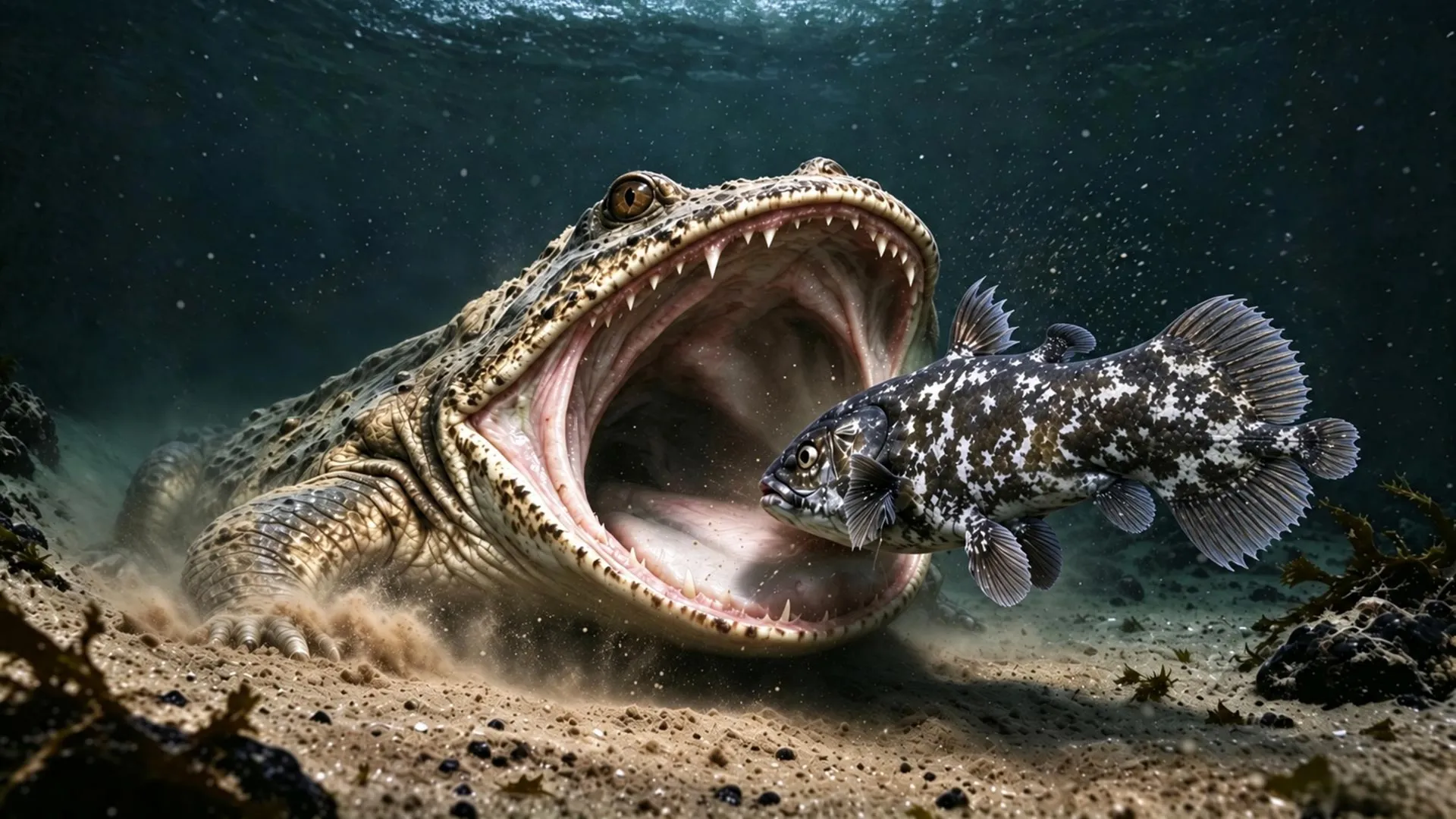
The Paja Formation records an ancient sea that supported what researcher Dirley Cortés described as one of the most ecologically complex marine communities identified to date. Among its inhabitants were long-necked plesiosaurs and marine crocodile relatives, as well as turtles, sharks and smaller organisms.
What makes the collection especially valuable is not merely the presence of large predators. It is the mixture of lineages represented in the same ecosystem. Groups with roots in the Jurassic, which were approaching extinction, persisted alongside groups associated with the emerging Cretaceous fauna. The fossils therefore provide a rare view of biological turnover while both the old and the new were still present.
According to the researchers, that coexistence is the defining feature of the proposed Biotic Inflection. Rather than a clean break between two eras of life, the record suggests an interval in which evolutionary replacement and diversification could overlap.

Change without a mass extinction
Mass extinctions are among the best-known mechanisms for reshaping ecosystems. They can remove dominant groups and open ecological opportunities for survivors. The Colombian fossils suggest that another kind of large-scale transition may also occur: one in which changing environmental conditions allow older and newer groups to share an ecosystem during a prolonged handover.
The researchers do not argue that mass extinctions are unimportant. Instead, they propose a term for a different pattern apparent in the Paja fossils. A Biotic Inflection describes a moment when groups close to extinction coexist with lineages that are beginning to flourish. It is intended to capture a major reorganization of life without requiring widespread catastrophic loss as the immediate driver.
That interpretation rests on the unusually rich record from the formation. Fossils from many parts of an ancient food web make it possible to see more than a single surviving species or isolated predator. They reveal a community containing different types of marine reptiles, fishes, sharks, turtles and invertebrates.
Why Colombia may have supported such diversity
The team links the ecosystem’s diversity to a convergence of environmental conditions. The ancient world was characterized by warm greenhouse temperatures and elevated sea levels. Coastal waters in the region were rich in nutrients, potentially supporting a broad range of marine life.
Ocean geography may also have been crucial. The researchers point to the development of new connections between the eastern Pacific and the early Atlantic through the area that is now Colombia. Those connections could have created new ecological opportunities and helped different animal groups occupy the same marine system.
Together, warm conditions, high seas, nutrient-rich coastal waters and new ocean links formed what the report describes as a favorable combination for biodiversity. The result was a marine environment where lineages with different evolutionary histories could thrive at once.

Fossils as evidence of process, not just species
The Paja Formation’s importance lies in its ability to illuminate an evolutionary process. Fossils are often used to document when a particular group appeared or disappeared. Here, the researchers use the community as evidence that extinction and diversification can overlap in time and space.
That perspective can change the questions scientists ask of the fossil record. Instead of searching only for abrupt boundaries, researchers can also examine whether ancient ecosystems preserve extended periods of transition. In those periods, older groups may have been declining globally while still remaining locally important, and newer groups may have been diversifying before becoming dominant.
The term Biotic Inflection is therefore a hypothesis derived from the Colombian record, not a claim that every major transition follows the same path. Its value will depend on whether comparable patterns can be identified in other fossil assemblages and time periods.
A broader view of evolutionary transformation
McGill biology professor Hans Larsson and Cortés developed the concept while studying the Paja fossils. Their interpretation broadens the range of mechanisms that may explain transformative moments in Earth’s biological history.
The report also notes that environmental influences such as ocean connections and changing conditions remain relevant to biodiversity today. The ancient example is not a direct forecast for modern ecosystems, but it highlights how geography, climate and nutrient availability can shape the opportunities available to different forms of life.
For now, the fossils offer a vivid snapshot of a crowded ancient ocean: giant marine reptiles and sharks sharing waters with turtles, crustaceans and other organisms, while evolutionary eras overlapped. The researchers’ proposed Biotic Inflection gives that snapshot a name and a testable idea—major biological change may sometimes arise through coexistence and gradual reorganization, not only through collapse.
This article is based on reporting by Science Daily. Read the original article.

Originally published on sciencedaily.com