Every living cell relies on a boundary. A lipid membrane separates the cell’s internal chemistry from its surroundings, helps organize what enters and leaves, and gives reactions a confined place to happen. For researchers studying life’s beginnings, that apparently simple boundary raises a major possibility: perhaps the first essential step toward life was not a self-copying genetic molecule, but a bubble.
This idea is known as the lipid-first hypothesis. Its central claim is that membrane-like compartments could have helped transform dispersed prebiotic chemistry into systems capable of persistence, selection and, eventually, evolution. The hypothesis does not settle how life began. Instead, it changes the order of the question by asking whether a container had to come before the chemistry usually associated with life.
Why a container matters
At the core of modern life, a cell is chemistry enclosed by a membrane. Modern cells perform vast numbers of reactions and maintain their membranes with elaborate biochemical machinery. Early cells, if they existed, would have been simpler. But they would still have faced a basic physical problem: molecules spread out in open water.
Without a boundary, molecules that might participate in a useful reaction system can become too dilute or drift apart. A compartment can gather materials into a smaller volume, increasing the chance that they interact repeatedly. Bruce Damer, an astrobiologist at the University of California, Santa Cruz, summarizes the logic plainly: chemistry needs a container before it can become sufficiently organized.
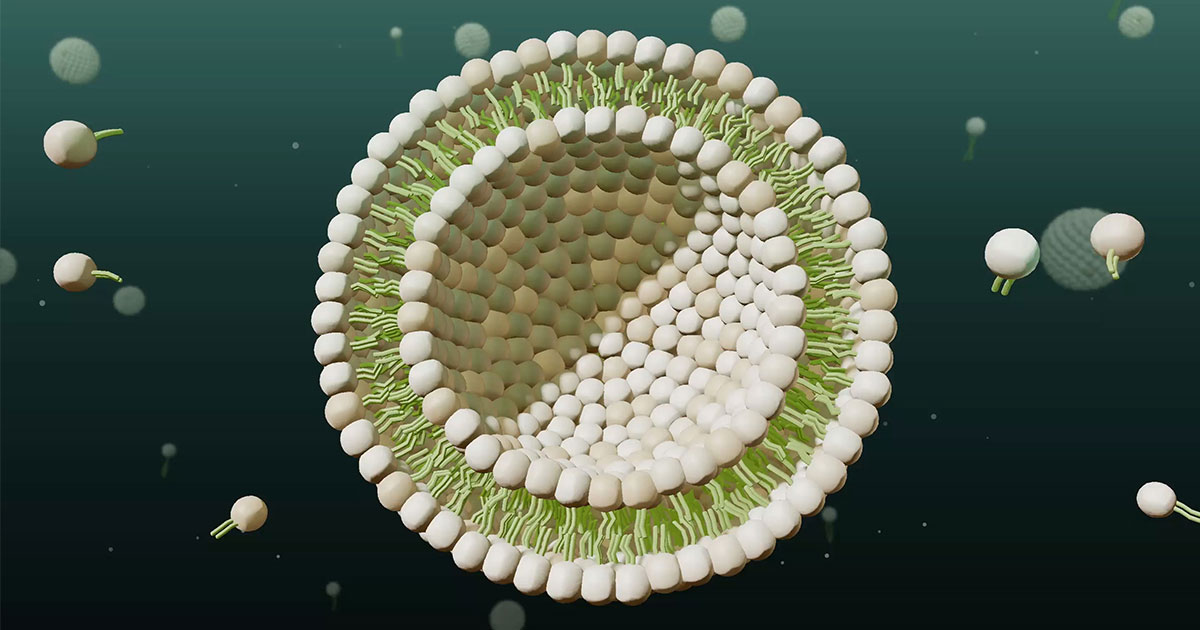
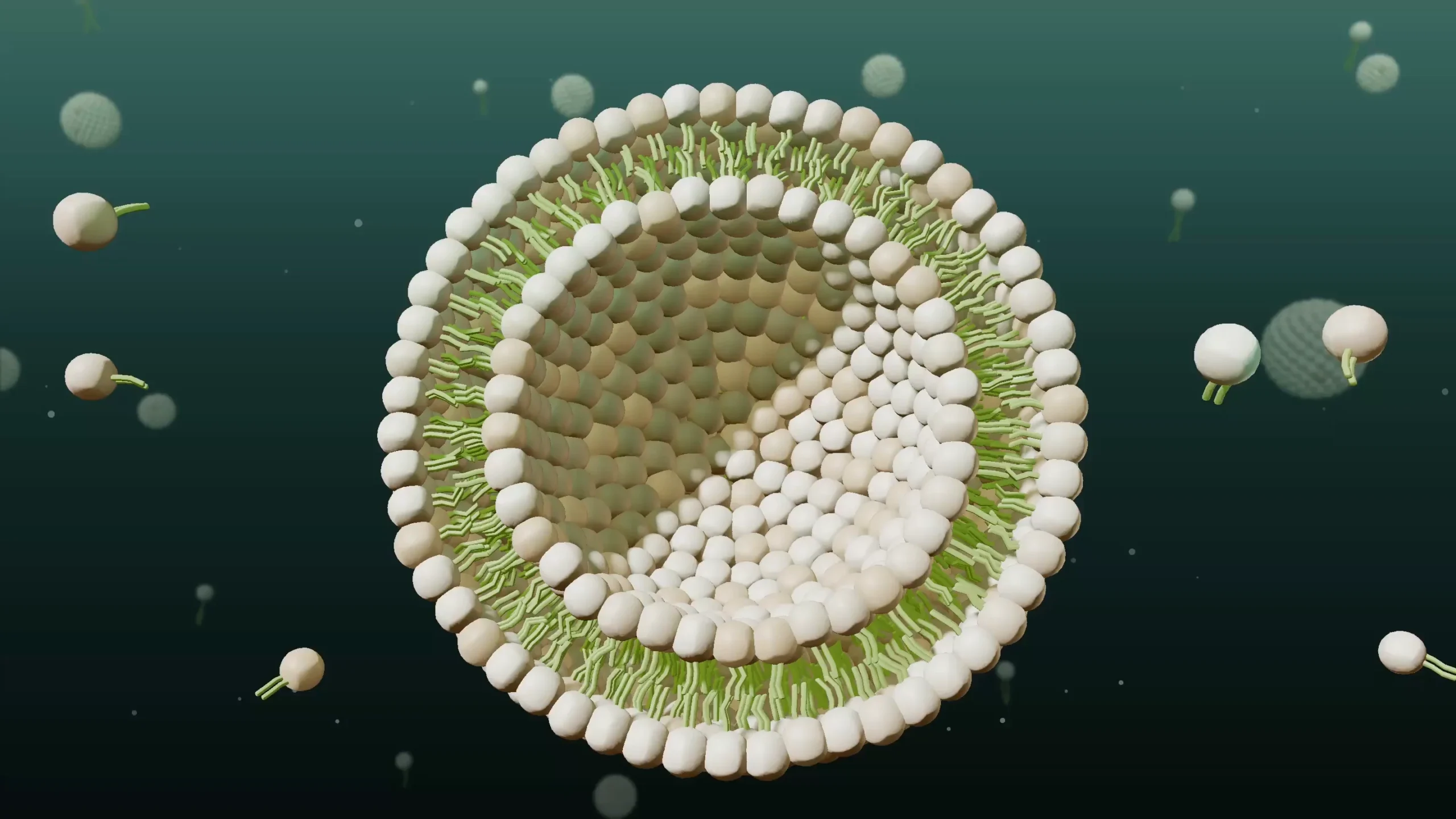
Lipids are promising candidates for such containers because many have two contrasting properties in the same molecule. One end is attracted to water, while another is repelled by it. In watery environments, this arrangement can drive lipids to assemble into membrane-like structures. Those structures can form bubbles, often called vesicles, with an inside distinct from the outside.
The lipid-first proposal
The lipid-first framework treats these early bubbles as active participants in life’s emergence rather than as passive bags holding more important molecules. A membrane can concentrate chemicals, protect some reactions from the surrounding environment and create a local setting in which different chemistry becomes possible.
Some advocates of the idea go further: they argue that systems of bubbles might have displayed a primitive form of heredity. Modern organisms pass information through molecules such as DNA and RNA, whose sequences can be copied. In the lipid-first view, however, a larger chemical system could potentially carry traits across generations of compartments.
The question is whether the composition and behavior of a particular bubble could influence the composition and behavior of its descendants. If a kind of vesicle formed more readily, remained intact longer or favored useful internal chemistry, then those properties could become more common under the right conditions. That would amount to a route toward selection without requiring modern genetic machinery at the start.
From a puddle to a protocell
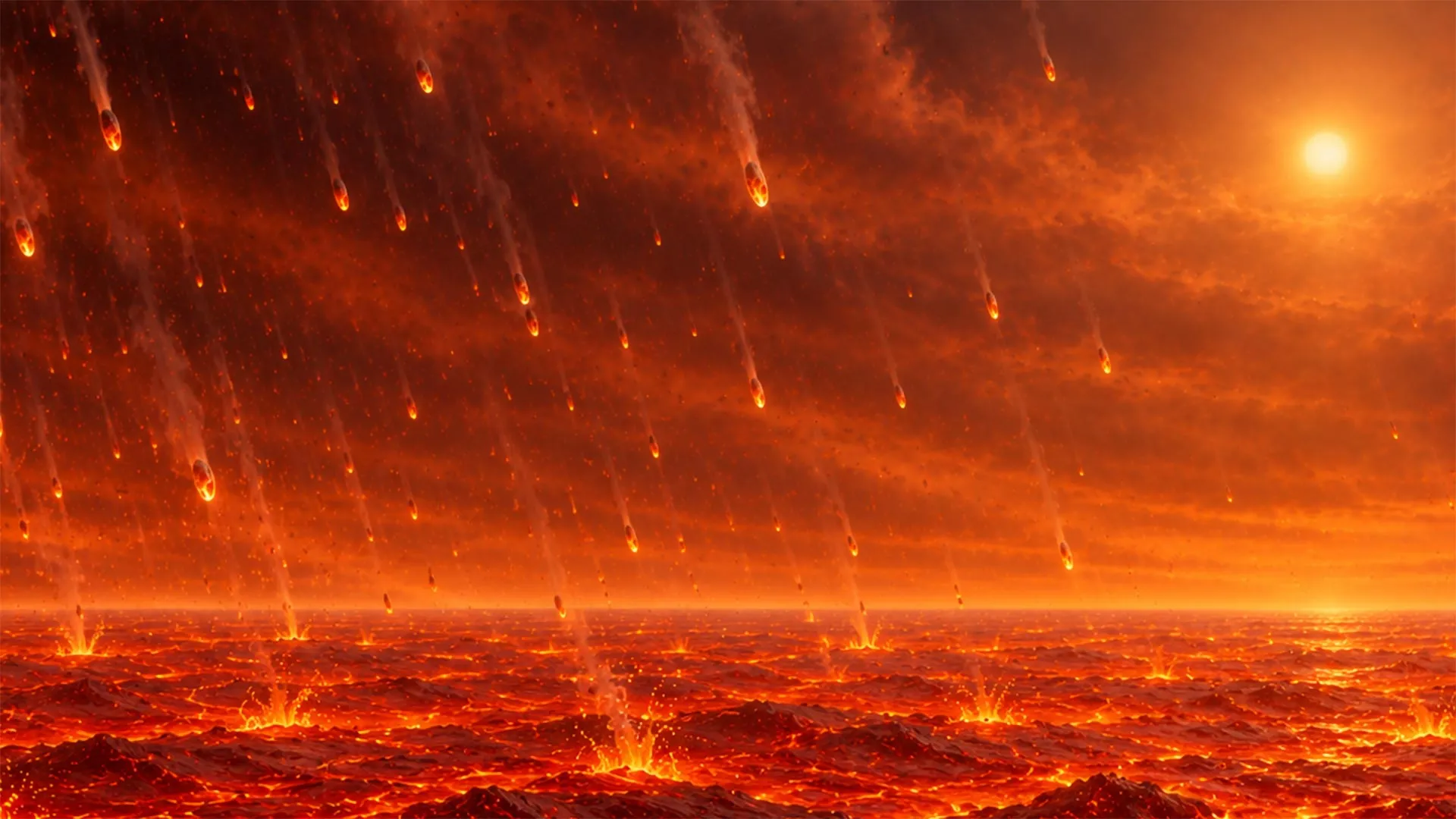
One way to picture the proposal begins with a watery environment on early Earth containing a diverse mixture of small organic molecules. Some might have been produced through local chemistry; others could have arrived in dust or meteorites. Among them are amphiphilic molecules, which have water-attracting and water-repelling portions.
As conditions change, these molecules can organize into membranes and closed compartments. The resulting bubbles may not be alive, and the hypothesis does not suggest that every vesicle is a proto-organism. The important point is that compartments create a setting in which chemistry is no longer uniformly dispersed.
A bubble’s particular mix of lipids and enclosed materials could affect how it behaves. It might be more or less stable, more or less likely to grow or divide, or more or less effective at retaining molecules. If those properties influence what later bubbles are like, researchers have a possible bridge between ordinary chemistry and systems that can undergo selection.
Evolution before genes?
Evolution needs variation, persistence and a way for traits to be passed on. Modern biology achieves this through highly sophisticated genetic systems. The lipid-first hypothesis asks whether an earlier, less precise form of inheritance could have existed at the level of compartments and chemical networks.
This is a demanding proposition. A membrane must do more than form a bubble; it must be connected to a plausible process by which beneficial features persist through growth and division. It also must coexist with the emergence of information-bearing chemistry. A lipid-first scenario therefore does not eliminate the importance of RNA, DNA or other candidate early polymers. It places membrane compartments at the beginning of the story or alongside those molecules in a mutually reinforcing process.
The concept also highlights that “life” may not have appeared in a single decisive event. Instead, multiple capabilities may have accumulated: compartmentalization, chemical concentration, energy use, reproduction and heredity. Different origin-of-life hypotheses emphasize different pieces of that transition.
A useful shift in perspective
The appeal of lipid-first thinking is that it focuses on an overlooked constraint. Life is not only a collection of reactions or instructions; it is an organized physical system separated from its environment. A membrane supplies that separation while still allowing exchange with the world outside.
Whether the first life began with lipids, genetic molecules or a combination of processes remains unresolved. The source material presents the lipid-first hypothesis as one answer to a foundational problem, not as a settled account. Its value lies in making the boundary itself scientifically central: before early chemistry could become life-like, it may have needed a place to gather.
This article is based on reporting by Quanta Magazine. Read the original article.

Originally published on quantamagazine.org