Palaeontologists have identified a previously unknown giant rodent from fossil teeth recovered in southern Thailand, adding evidence that unusually large rodents emerged earlier and across a wider geographic area than had been recognised. The species, named Yakamys sirindhornae, lived about 34 million years ago and may have weighed around 66 pounds.
The find comes from the Bang Mark Pit at the Krabi lignite mine in Krabi Province. Although the known remains are limited to a lower second molar and a lower incisor, researchers say the teeth are large enough to provide important clues about the animal’s body size and about the early history of rodent gigantism.
Two teeth, a new species
Fossils often arrive as incomplete traces rather than complete skeletons, and this discovery is an example of how distinctive teeth can still carry evolutionary significance. The newly identified animal is represented by two fossilised teeth described as remarkably large. Their size led researchers to infer that the rodent was substantially bigger than other known rodents from the same period.
Yakamys sirindhornae is estimated to have been about twice the mass of other known rodents of its time. The reported estimate of roughly 66 pounds would make it an extraordinary animal for the middle Paleogene, the interval in which it lived.
The genus name combines the Thai word “yak,” meaning giant, with the Greek “mys,” meaning mouse or rat. The species name honours Princess Maha Chakri Sirindhorn in recognition of her support for scientific research in Thailand.

Rethinking the history of large rodents
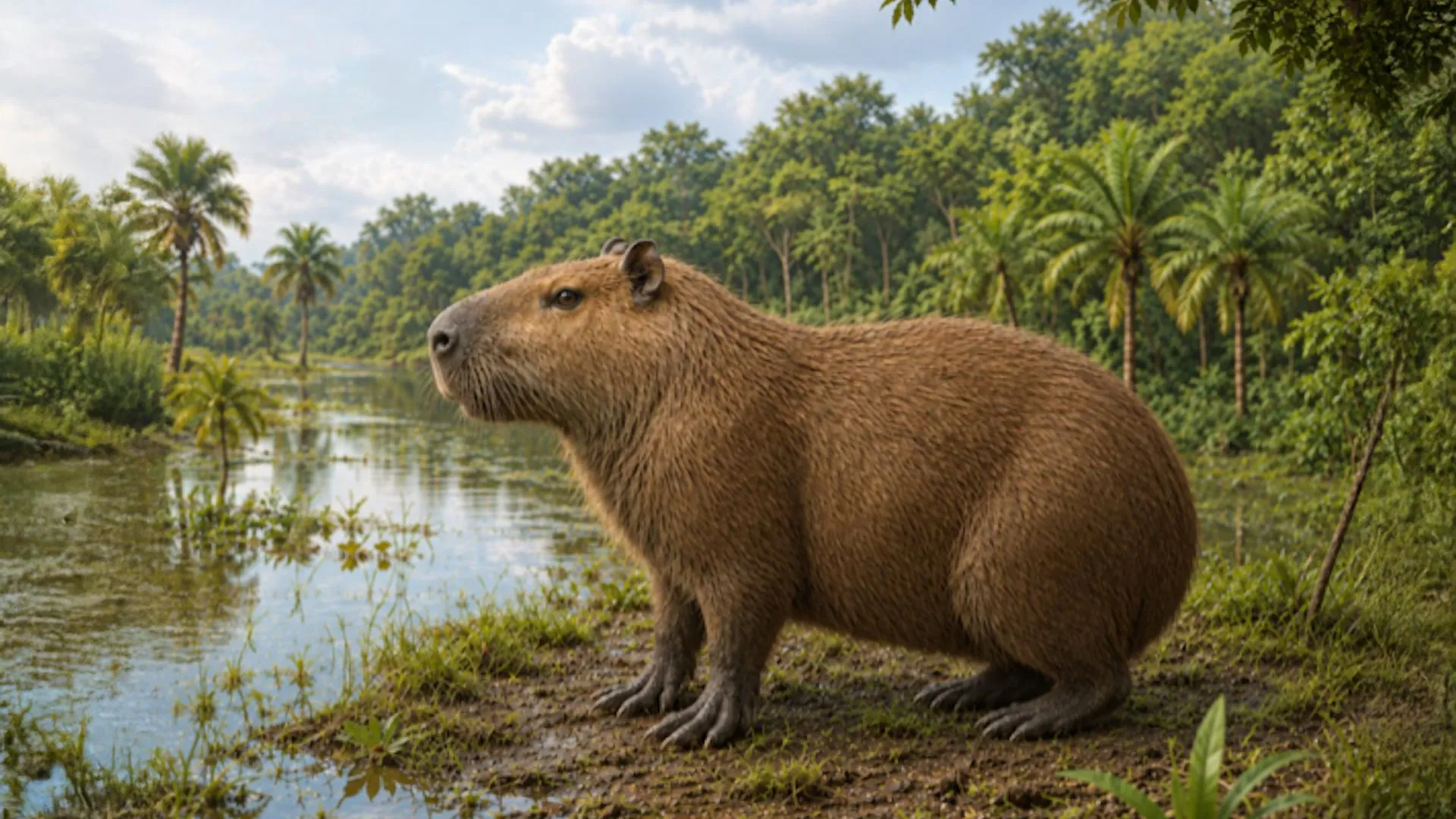
The largest living rodent is the capybara, but giant rodents are not limited to modern ecosystems. Large-bodied forms evolved repeatedly later in rodent history, particularly in South America. The Thai fossils point to a more important role for Southeast Asia in the group’s earlier evolutionary story.
Virginie Millien, a biology professor at McGill University and a co-author of the study, said the discovery indicates that Southeast Asia also played an important role in the early evolution of large-bodied rodents. That conclusion matters because the known record of giant rodents has often been associated with later examples from other parts of the world.
The new species does not establish a complete evolutionary tree by itself. With only two teeth currently identified, many details of its anatomy, ecology and relationships will remain open to further study. But its existence at this time and place expands the known pattern of rodent size evolution.
Why size matters in the fossil record
Body size is a central feature of an animal’s biology. It influences the food an animal can exploit, how much energy it needs, the predators it may face and the habitats it can occupy. In evolutionary research, changes toward unusually large bodies are often described as gigantism.
The Krabi fossils offer a rare data point for examining that process among early rodents. The researchers say the discovery shows that giant rodents appeared much earlier than previously believed. It also suggests that the emergence of large forms was not confined to a single later geographic centre.
That does not mean all the drivers of this size increase are known. The supplied account does not identify a specific diet, habitat or selective pressure behind the evolution of Yakamys. The significance lies instead in the age, size and location of the fossils: they reveal a large-bodied rodent in Southeast Asia 34 million years ago.

A Thai site with wider relevance
The fossils were recovered from the Bang Mark Pit in Krabi Province, a region of southern Thailand. Their discovery highlights the value of Southeast Asian fossil sites for reconstructing mammal evolution. Regions that are underrepresented in the fossil record can change broad scientific narratives when new material is found there.
For rodent evolution, the geographical point is especially important. Rodents are a highly diverse group, but the record of their early size evolution is uneven. Finding an outsized species in Thailand supports the idea that Southeast Asia was not simply a peripheral setting in the history of large-bodied forms.
It also demonstrates the scientific value of carefully examining fragmentary remains. A molar and an incisor may seem modest compared with a complete skull or skeleton, yet teeth preserve well and often contain features that allow palaeontologists to identify species and compare them with related animals.
What remains to be discovered
The current evidence provides a starting point, not a final portrait. Additional fossils could help researchers refine the animal’s body-mass estimate, identify its closest relatives and better understand its way of life. More material from the same site could also reveal whether Yakamys was part of a broader community containing other large mammals or rodents.
Future finds may test how widespread giant rodents were during the Paleogene and whether large size evolved independently in different lineages. They may also clarify how the Thai animal fits into the sequence of later giant rodents known from elsewhere.
For now, the discovery gives the scientific record a new benchmark: a rodent of striking size lived in what is now southern Thailand roughly 34 million years ago. From two exceptionally large teeth, researchers have added a new species to the fossil record and widened the map of early rodent gigantism.
This article is based on reporting by Science Daily. Read the original article.

Originally published on sciencedaily.com