An amphibian in an unlikely habitat
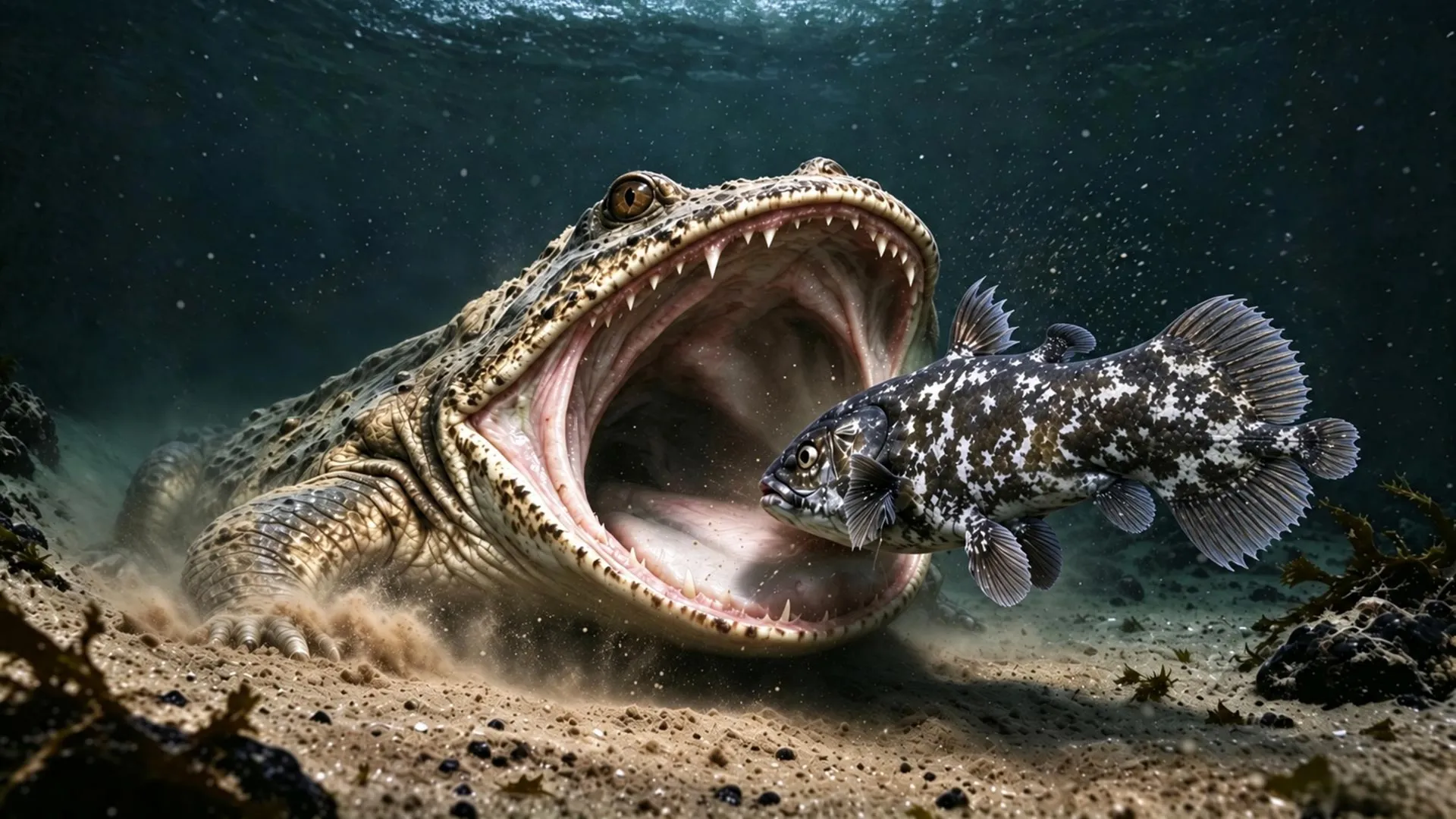
Two fossil skeletons from southwestern China are reshaping scientists’ picture of what amphibians were capable of during the Triassic. The animal, named Gerrothorax maritimus, lived about 237 million years ago and appears to have spent its life in a marine environment—a striking conclusion because no living amphibian is known to live entirely in the sea.
The fossils were found in Guizhou Province, in deposits that formed beneath an ancient ocean far from major landmasses. An international team involving researchers at the University of California, Davis, Peking University and the Geological Museum of Guizhou describes the animal as a giant-salamander-sized, broad and flattened amphibian with bony armor. Their study was published in Nature Ecology & Evolution.
The finding matters beyond the description of an unusual extinct creature. It adds evidence that, in the recovery and diversification of ecosystems after the end-Permian mass extinction, amphibian lineages could occupy ecological territory that has no modern equivalent.
Built for the seabed
The two skeletons are unusually complete, allowing researchers to reconstruct the animal in greater detail than fragmentary remains would permit. Gerrothorax maritimus had a wide, flattened body and protective bony armor. The team interprets its form as consistent with an animal that spent much of its time on the seafloor, likely waiting to ambush prey moving nearby.
Its environment is central to the claim. The fossil locality has been studied as part of an ancient marine ecosystem that has also produced marine reptiles and fish. The new skeletons place an amphibian within that offshore setting, rather than simply documenting a freshwater or coastal animal whose remains were transported after death.
Modern amphibians make the result especially surprising. Of more than 8,000 living species, none are known to complete their lives in marine conditions, and fewer than 2% can tolerate saltwater to any degree. Other vertebrate groups—including mammals, reptiles and birds—contain fully marine species. Until now, researchers had not identified convincing fossil evidence for an amphibian adapted to the same kind of life.

Why saltwater is such a barrier
Amphibians are generally associated with fresh water and damp habitats for physiological reasons. The study’s significance rests on that contrast: a group whose living members are not known to inhabit the open sea may once have included a lineage that did.
The research does not mean that every ancient amphibian was more salt-tolerant than modern ones. Instead, it identifies a distinctive animal whose anatomy, preservation and geological context together support a marine interpretation. The researchers describe it as the first fully marine amphibian on record, while noting how exceptional that status would be among both living and fossil amphibians.
That exception underscores a broader lesson in paleontology. Living diversity is an incomplete guide to the full ecological history of a lineage. Groups that now appear confined to a narrow set of habitats may have experimented with very different ways of life in the past, particularly during periods of rapid ecological change.
A fuller picture of Triassic seas
The Guizhou fossils come from the Late Triassic, a period when marine food webs included a mix of fishes, reptiles and other vertebrates. The addition of a large, armored amphibian suggests those communities were more varied than a reconstruction based only on better-known marine reptiles would show.
Ryosuke Motani, a professor at UC Davis and corresponding author of the study, said the locality is part of an ecosystem researchers have been working to reconstruct. The group had primarily studied marine reptiles and fish from the area; the amphibian is an unusual addition to that evolutionary and ecological record.
The discovery also demonstrates the value of exceptionally complete specimens. A few isolated bones might establish that a relative of Gerrothorax existed, but the preserved skeletons provide the anatomical context needed to assess body shape and likely behavior. Combined with the marine setting, that detail is what elevates the fossils from an unusual occurrence to evidence of a potentially unique lifestyle.

Questions the fossils open
The specimens give scientists a rare example of an amphibian apparently crossing a major environmental boundary, but they also leave important questions. How did this lineage deal with the salt balance that constrains modern amphibians? Was it restricted to a particular ancient marine basin, or did related animals occur elsewhere? And did it represent a brief evolutionary experiment or a longer-lived marine branch?
The current report establishes the animal and its setting; further fossils and comparisons will be needed to refine how it fit into the food web and how widespread its adaptations were. For now, the evidence expands the known range of amphibian history: nearly 237 million years ago, at least one armored, salamander-sized member of the group appears to have made the ocean floor its home.
This article is based on reporting by Science Daily. Read the original article.
Originally published on sciencedaily.com