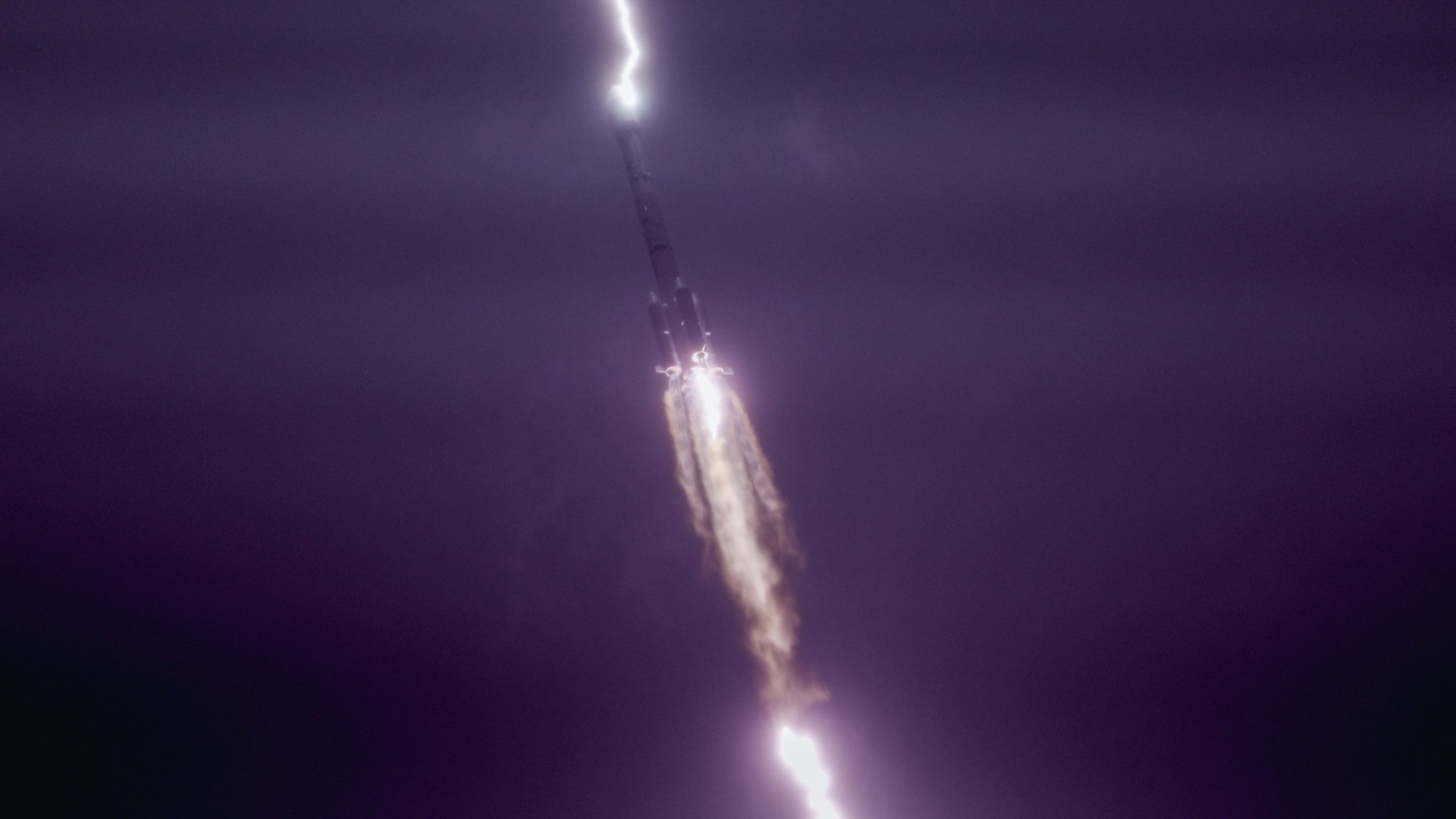
A rare launch-day shock in the sky
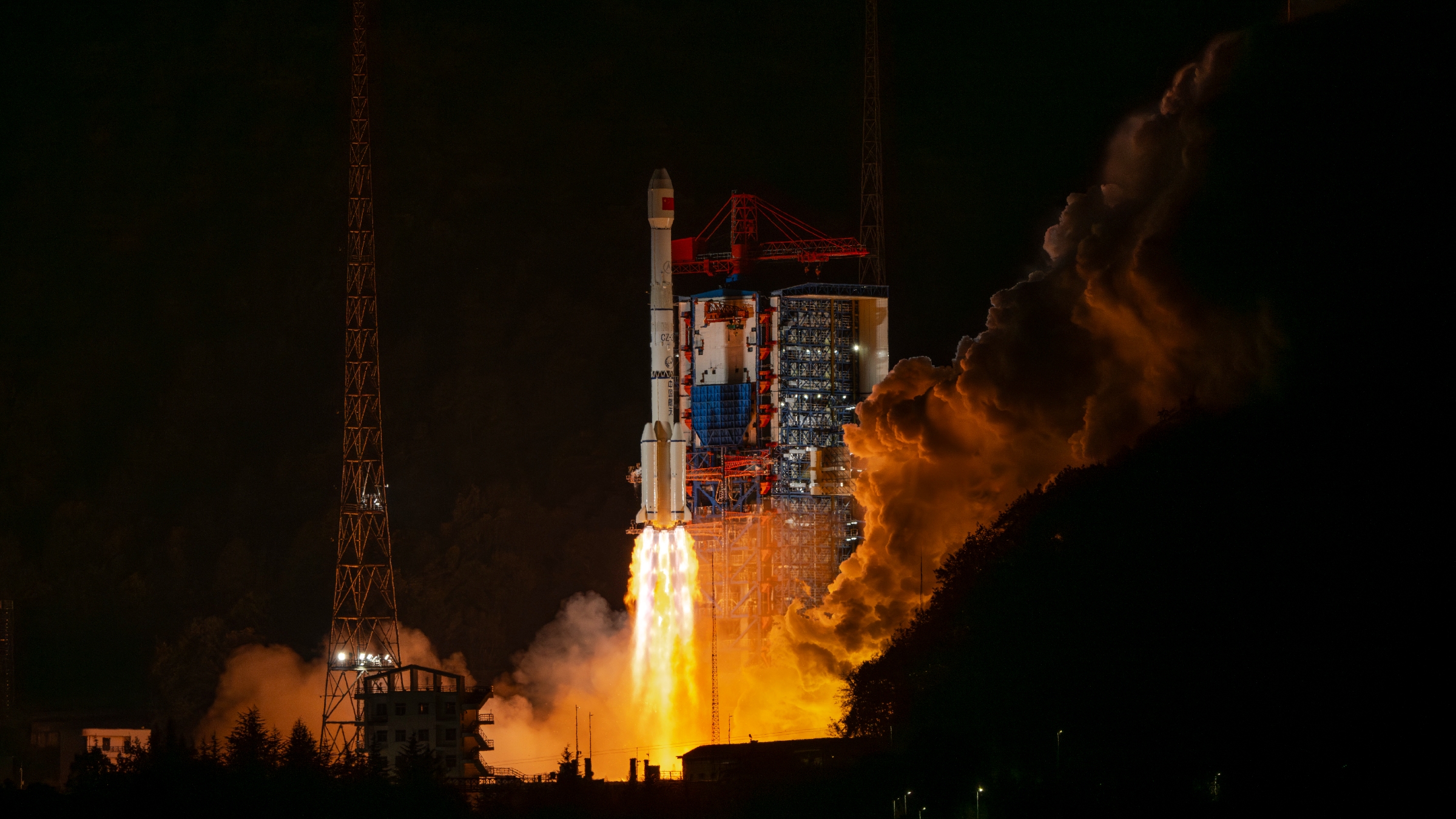
A Chinese Long March 3B rocket was struck by lightning roughly 30 seconds after liftoff and still completed its mission, delivering a vivid reminder of both the hazards surrounding launches and the engineering margins built into modern rockets. The event unfolded on July 23 after the vehicle departed Xichang Satellite Launch Center in southwest China at about 8 p.m. local time, according to the supplied source text.
Images and video described in the source show a jagged bolt connecting with the ascending rocket as it climbed through stormy conditions. Spectators watching from the ground reportedly gasped as the flash illuminated the sky, then cheered when the rocket continued upward without an obvious interruption. Despite the dramatic strike, the mission was later described as a complete success.
The vehicle’s payload was the Tianlian-2 (06) satellite, a geostationary relay satellite intended to help support China’s Tiangong space station. In practical terms, that means the launch was not a stunt or a minor demonstration. It was part of the infrastructure used to sustain a functioning human spaceflight program.
What happened after the strike
The key fact in the supplied account is not simply that lightning hit the rocket, but that the vehicle remained on course and successfully deployed its payload in orbit. The source text says the rocket endured at least 100 million volts of electricity. Even allowing for uncertainty around how such estimates are framed in media coverage, the central point stands: the strike was severe enough to be visually unmistakable and potentially mission-threatening, yet it did not stop ascent.
That outcome reflects an important aspect of launch system design. Rockets are built to operate in electrically noisy, mechanically violent conditions. They are exposed to acoustic loads, vibration, cryogenic fuels, stage separations, intense heating, and atmospheric stresses within minutes of launch. Electrical resilience is part of that picture, especially because rockets can interact with charged conditions in the atmosphere even when they are not directly hit by naturally occurring lightning.
Still, a clear midair strike remains unusual enough to attract broad attention. The reason is straightforward: during ascent, a launch vehicle is in one of the most vulnerable phases of flight. It is accelerating, traversing changing atmospheric layers, and relying on tightly coordinated avionics, guidance, telemetry, and propulsion systems. Any disruption in that window can have outsized consequences.

Why lightning and rockets are a serious combination
Lightning is a known launch hazard because it can interfere with electronics, sensors, communications, and power systems. Even if a vehicle is structurally robust, a major electrical event can inject noise or surges into systems that depend on precise timing and stable data. For crewed missions, those risks are intolerable. For uncrewed launches, they are still mission critical.
The supplied source text does not detail how the Long March 3B was protected or what exact path the current took through the vehicle and plume. But the fact that the rocket reached space suggests the relevant systems either resisted the strike, routed the electrical effects away from critical failures, or recovered without a loss of guidance and control. That is the engineering result that matters most.
The incident also demonstrates why weather rules are central to launch operations worldwide. Launch providers routinely delay missions because thick cloud, electrical fields, cumulus development, or nearby lightning can create unacceptable conditions. A rocket does not have to be destroyed to justify that caution; even a successful launch hit by lightning shows how little margin there can be when atmospheric electricity enters the equation.
A successful mission, but an incomplete official account
China Aerospace Science and Technology Corp., the state-owned aerospace group cited in the source text, released a translated statement later that same day saying the mission was a complete success and that the payload had been deployed correctly. Notably, the statement did not mention the lightning strike itself.
That omission is almost as revealing as the mission outcome. Public messaging around space launches often prioritizes mission success over anomaly discussion, especially when the anomaly did not prevent payload delivery. But from an engineering and operational standpoint, the lightning strike is exactly the kind of event that outside observers want explained. It raises questions about prelaunch weather constraints, ascent telemetry, vehicle hardening, and whether internal reviews found any damage or unexpected system behavior despite the nominal result.
Because the supplied material does not include those answers, they cannot be asserted here. What can be said is that the contrast between dramatic public footage and minimal official acknowledgment will likely fuel further interest in how the launch was assessed after the fact.

What the episode says about launch reliability
For the broader space sector, the incident is a reminder that launch reliability is not defined solely by clean, uneventful ascents. It is also measured by how systems behave when conditions become abnormal. The Long March 3B’s ability to continue after the strike and still deploy the Tianlian-2 (06) satellite points to significant resilience in the launch stack and mission architecture.
At the same time, success should not be confused with normalcy. A rocket surviving a lightning hit does not mean such conditions are acceptable or low-risk. If anything, the event reinforces the logic behind conservative weather rules and intensive launch commit criteria. Spaceflight remains a domain where rare events matter because the costs of failure are high, the timelines are compressed, and every ascent passes through a narrow corridor between acceptable risk and avoidable loss.
That is what makes this episode notable beyond the striking imagery. It was not just an atmospheric spectacle. It was an unplanned stress test of a working orbital mission, witnessed in real time by a crowd on the ground and validated only when the payload reached orbit. The Long March 3B passed that test on July 23, but the images of lightning wrapping the vehicle on its way skyward will endure as one of the more extraordinary launch visuals of the year.
This article is based on reporting by Live Science. Read the original article.
Originally published on livescience.com