A remote Antarctic station recorded one of the coldest readings on Earth in years
While large parts of Europe and North America have been dealing with heat waves, wildfires and unusually high summer temperatures, Antarctica has delivered a reminder that climate extremes do not move in a single direction everywhere at once. Concordia research station, deep in the Antarctic interior, recorded a low of minus 119.4 degrees Fahrenheit, or minus 84.1 degrees Celsius, on July 18. According to the source report, that is Earth’s coldest recorded temperature since 2012.
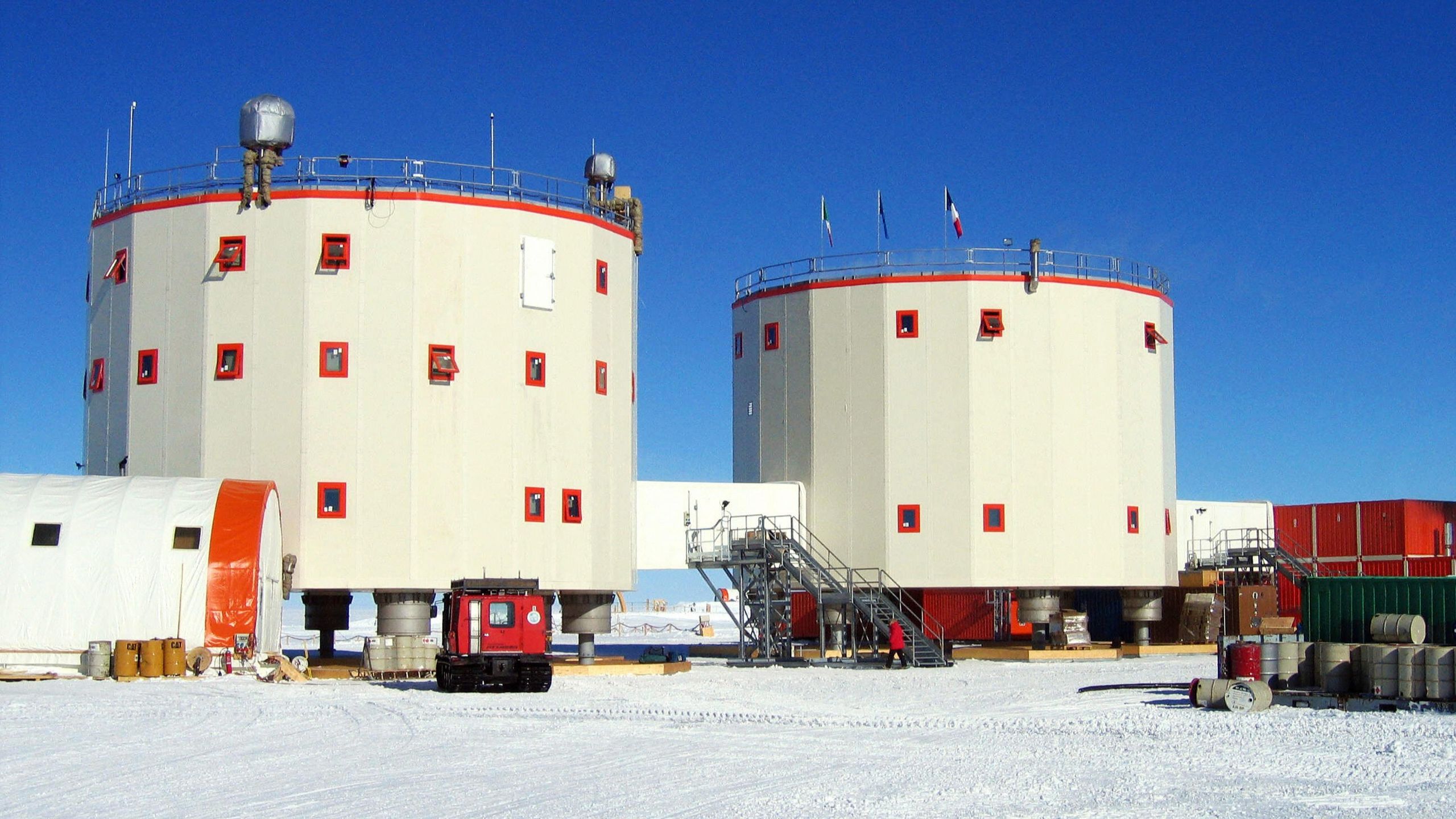
The reading came from one of the most isolated scientific outposts in the world. Concordia sits at high altitude on the Antarctic plateau and, at this time of year, in complete winter darkness. Conditions there are already severe by any standard. Temperatures regularly fall below minus 112 F, or minus 80 C, during winter. Even so, station leader Gabriele Carugati said temperatures below minus 84 C remain remarkable and show how variable Antarctic weather can still be.
Why Concordia is able to get so cold
The station’s geography helps explain why it produces some of the most extreme surface temperatures on the planet. It is in the interior of Antarctica rather than along the coast, which means it is cut off from the moderating influence of the surrounding ocean. It also sits at high elevation, where the air is thinner and colder. In polar winter, there is no incoming sunlight to offset heat loss, so the snow surface and the air above it continue to radiate energy away.
Those factors create the baseline, but the deepest cold usually depends on weather conditions lining up at the same time. Clear skies allow more heat to escape. Very dry air limits the atmosphere’s ability to retain warmth. Weak winds reduce mixing that might otherwise bring slightly less frigid air downward or move the coldest air away. On the Antarctic plateau, that combination can produce temperature plunges that have few equals anywhere else on Earth.
The raw data cited in the source show the station touched minus 84.1 C twice on July 18, at 6:25 a.m. and 6:34 a.m. local time. Repeated readings at the same level matter because they reinforce that this was not a fleeting sensor blip but part of a genuine cold event.

A cold record arriving in a month dominated by heat
The timing gives the reading broader resonance. July 2026 has been dominated in many regions by the opposite problem. Western Europe recorded its hottest June on record, according to the source text, and multiple countries have faced heat waves. Wildfires have been active in Canada, the United States, France, Spain and elsewhere. That contrast can make a record or near-record cold event sound contradictory in a warming world, but it is not.
Climate change shifts long-term averages upward by trapping more heat in the atmosphere, yet it does not eliminate weather variability or erase the role of local geography and seasonal darkness. Antarctica in winter remains one of the few places on Earth where the environment is fully optimized for extreme cold. A globally warmer climate does not prevent a place like Concordia from plunging to extraordinary lows during the right conditions.
That distinction matters because isolated cold events are often misunderstood in public debate. Weather is the short-term state of the atmosphere at a specific place and time. Climate is the longer-term pattern across years, regions and the planet as a whole. Concordia’s reading is significant as a meteorological event and as a reminder of Antarctic extremes, but it does not overturn the underlying warming trend described in the same source.
Why scientists pay attention to readings like this
Extremes at remote stations are not just curiosities. They help researchers understand the behavior of the polar atmosphere, the stability of winter air masses and the conditions under which the coldest near-surface layers form. Antarctica is a critical part of the global climate system, and measurements from places like Concordia can improve weather and climate modeling by showing how far temperature and atmospheric structure can shift under specific conditions.
Concordia is particularly important because of its isolation. The station is jointly run by the French Polar Institute Paul-Emile Victor and Italy’s National Antarctic Research Program. Its remoteness makes logistics difficult, but that same remoteness also makes it scientifically valuable. Data from the site reflect a region with minimal local interference and exceptionally harsh natural conditions.
There is also a human dimension. Concordia has sometimes been described as one of the most isolated field stations in the world. Living and working there during winter means operating in total darkness, with severe cold and limited access. That makes every verified environmental measurement the product not only of instruments but of a sustained scientific presence in one of Earth’s hardest environments.

The number is extreme, but not unprecedented
The source report is careful not to frame the July 18 reading as something completely outside Antarctic experience. Concordia often drops below minus 80 C in winter, and the latest value, while extraordinary, was described as significant rather than unprecedented for the station’s environment. That nuance is useful. Antarctica remains the coldest continent on Earth precisely because its winter baseline is already far beyond what most of the planet ever experiences.
Still, being the coldest reading recorded globally since 2012 gives the event real weight. These milestones are rare enough to stand out in the observational record, especially during a period when many global headlines are about heat. They show that the tails of the temperature distribution remain dramatic at both ends, depending on location and season.
A reminder of how uneven a changing planet can feel
The most revealing aspect of the Concordia reading may be the contrast it creates. On the same planet, during the same month, people have been coping with dangerous heat, wildfire smoke and record warmth while a tiny winter station on the Antarctic plateau logged nearly minus 120 F. That is not a contradiction. It is a measure of how complex Earth’s atmosphere remains.
For scientists, the event is a data point from one of the planet’s most extreme laboratories. For everyone else, it is a vivid example of why climate discussions need precision. A warming world still contains places where cold can become astonishingly intense. Antarctica, especially in deep winter, is one of them.
This article is based on reporting by Live Science. Read the original article.

Originally published on livescience.com