An early-warning signal for a disease that is usually found too late
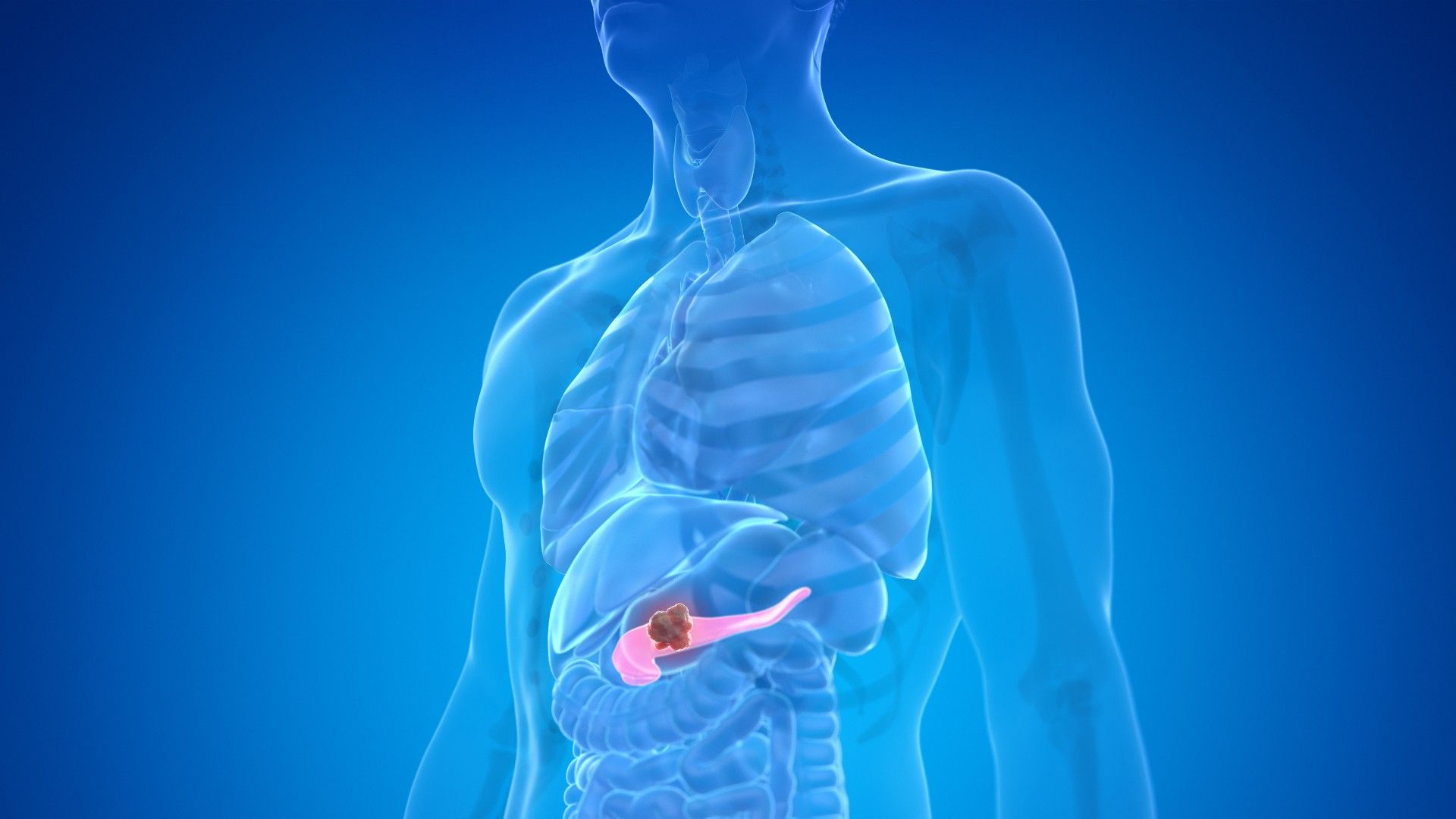
Researchers have reported a potentially important advance in one of cancer care’s hardest problems: finding pancreatic cancer before it becomes obvious on medical imaging and before symptoms force a diagnosis. In a study described in the journal Gut, an artificial intelligence model was used to review nearly 2,000 CT scans that had originally been read as normal. The system identified tiny irregularities in the pancreas that later corresponded to tumor development, suggesting the disease may leave detectable traces long before conventional diagnosis.
That matters because pancreatic cancer remains one of the deadliest major cancers. The disease often progresses quietly, producing few if any early symptoms. By the time a tumor is visible on imaging or confirmed through tissue sampling, patients may already have limited treatment options. The study’s promise lies less in a flashy replacement for doctors than in a narrower but potentially consequential claim: a machine-learning system may be able to recognize structural warning signs that human readers do not routinely detect in otherwise unremarkable scans.
Why earlier detection could change outcomes
The clinical logic behind the work is straightforward. Survival in pancreatic cancer is tightly linked to when the disease is found. According to the researchers cited in the report, the five-year survival rate in the United States is only about 12% to 13%, largely because physicians are usually diagnosing the cancer after it has advanced. In that context, even a modest shift in timing could have outsized consequences.
The new model was reported to detect signs of risk up to three years earlier than physicians typically identify tumors on CT scans. That does not mean the AI is seeing a clear cancer mass years in advance. Instead, it appears to be picking up subtle changes in pancreatic structure that may precede overt tumor visibility. If those findings hold up in broader testing, clinicians could gain a new window for surveillance, follow-up imaging, and possibly intervention while the disease is still more treatable.
For pancreatic cancer, that is a critical distinction. Many other cancers have benefited from screening improvements and earlier detection strategies over the last several decades. Pancreatic cancer has not seen a comparable breakthrough. The disease has remained unusually resistant to the screening playbook that transformed outcomes in other areas of oncology.

What the study actually did
The study, as described in the source material, relied on a large retrospective imaging set. Researchers fed almost 2,000 CT scans into the AI system. Those scans had previously been cleared as normal, with no apparent signs of disease at the time they were read. The model then searched for patterns and minute irregularities in the pancreas that later aligned with tissue that went on to become tumorous.
That framing is important. The reported result is not that the model diagnosed active cancer in every case, and it is not evidence that the tool is ready to replace radiologists. It is evidence that there may be a measurable, machine-detectable prediagnostic signature in CT imaging that standard clinical workflows do not consistently capture.
In practical terms, such a system could be used as a second-pass review layer. Hospitals already generate enormous volumes of imaging data, and many patients undergo abdominal CT scans for reasons unrelated to pancreatic disease. If an AI system can reliably flag scans that deserve closer attention, it could turn routine imaging into an early-risk detection opportunity without requiring an entirely new screening infrastructure from scratch.
Where this could fit in clinical practice
An eventual deployment model would likely be conservative. A tool like this would probably be used to identify patients for additional review rather than to make a stand-alone diagnosis. Radiologists and oncologists would still need to determine whether a flagged scan reflects genuine risk, benign variation, or a false positive. Follow-up could involve repeat imaging, referral to specialists, or additional diagnostic work.
That cautious path is especially important in pancreatic disease, where the stakes are high on both sides. Missed cancers are devastating, but false alarms can also create major burdens for patients and health systems. Any clinically useful system would need strong validation across institutions, scanners, patient populations, and imaging protocols. Retrospective success on previously collected scans is an important step, but it is not the same as prospective performance in real-world practice.
There is also a workflow question. AI tools often succeed or fail not only on raw accuracy but on how they fit into medical routines. To matter, the system would need to surface results in a way that is usable, explainable, and actionable for clinicians working under time pressure. If it simply adds more ambiguous alerts, adoption could stall. If it narrows attention to a genuinely high-risk subset of scans, it could become much more compelling.

Why the result stands out
The broader significance of the study is that it points to a category of medical AI that is more ambitious than automation but more grounded than headline-grabbing claims about replacing physicians. The model is being asked to detect weak signals hidden in ordinary clinical data, not to perform a theatrical diagnostic feat in isolation. That is one of the more credible ways AI may reshape medicine: by extracting overlooked patterns from data that health systems already collect.
Pancreatic cancer is also the kind of target where even incremental improvements matter. Because the baseline prognosis is so poor, a tool that shifts diagnosis earlier by months or years could affect decisions at the most consequential point in the care pathway. If earlier treatment becomes possible for even a subset of patients, the impact would be meaningful.
At the same time, the study should be read as an early indicator rather than a finished answer. The report does not establish that the model improves survival, nor does it prove that every flagged abnormality should trigger aggressive treatment. It does, however, strengthen the case that pancreatic cancer leaves clues sooner than clinicians have been able to use in standard imaging review.
The next test is validation, not hype
The immediate question now is whether the findings can be reproduced and operationalized. Medical AI often generates excitement at the study stage and then struggles when moved into broader clinical environments. Differences in data quality, patient demographics, and clinical processes can quickly expose weaknesses. For this pancreatic model to become consequential, it will need to demonstrate stable performance beyond the initial dataset and show that its outputs lead to better decisions rather than just more noise.
Even with those caveats, the study addresses a problem that medicine has long failed to solve. Pancreatic cancer has been deadly in part because it is usually found after the disease has already narrowed the available choices. A system that reliably identifies subtle precursor changes in routine CT scans would not eliminate that challenge, but it could move the timeline in patients’ favor. In a cancer where time is often the central deficit, that would be a major development.
This article is based on reporting by Live Science. Read the original article.

Originally published on livescience.com