An unusual find from medieval Aberdeen
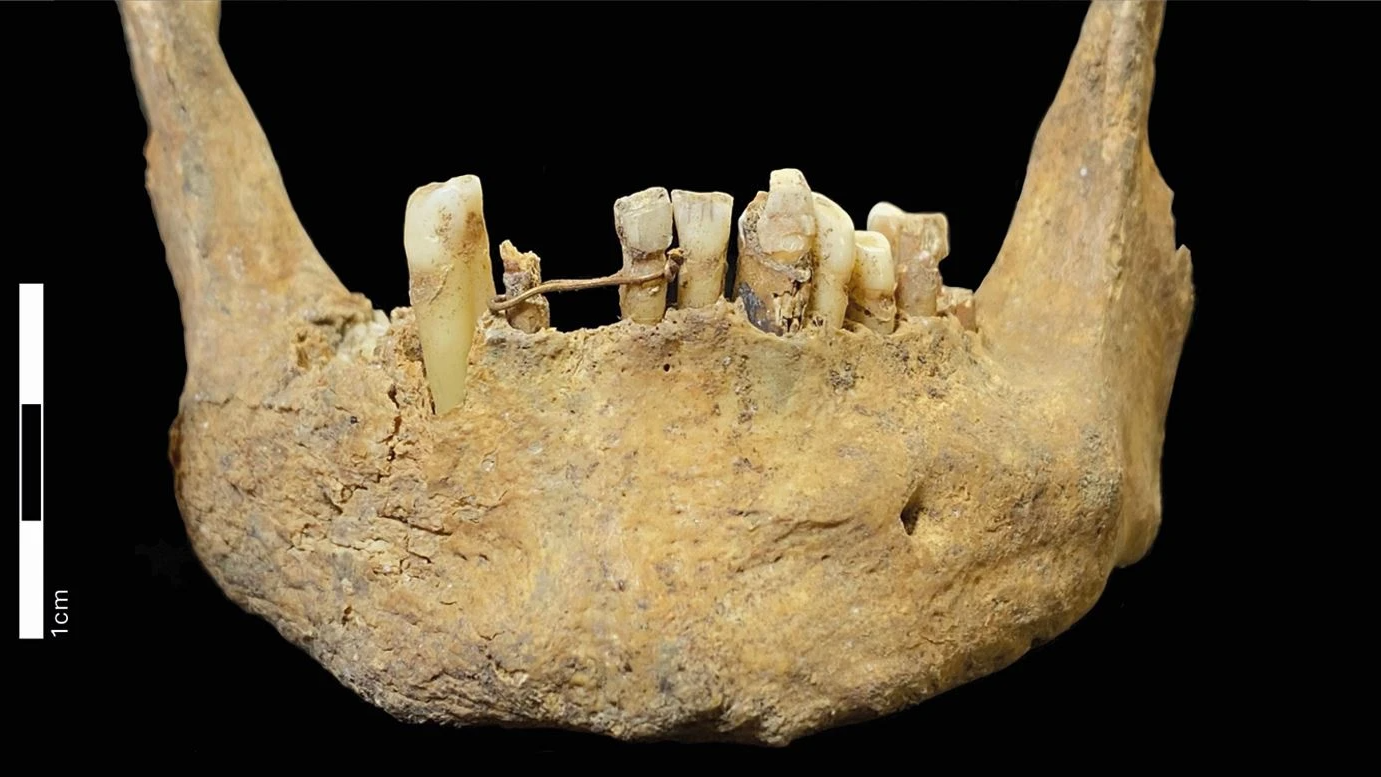
Archaeologists and researchers studying human remains from Aberdeen have identified what is described as the earliest known dental bridge of its kind in Scotland. The find, a lower jaw from a middle-aged man who lived roughly 500 years ago, preserves a 20-karat gold wire wrapped around two teeth to span the gap left by a missing incisor.
The discovery offers a rare glimpse into late medieval oral care and the lengths some people may have gone to address missing teeth. According to the report, the jaw was recovered from excavations at St. Nicholas East Kirk in Aberdeen, a church site that contained more than 900 burials and thousands of human bones. Although the jaw was not found within a complete burial, researchers could infer from the bone shape and tooth wear that it likely belonged to a middle-aged man.
What the jaw reveals
The lower jaw preserved nine teeth and evidence that the lower right central incisor had been lost during the man’s life. Researchers also found widespread signs of poor oral health, including hardened plaque on all teeth, cavities on three teeth and periodontal disease associated with receding gums. In that context, the gold wire stood out as a striking intervention.
The wire, known as a ligature, had been installed around two teeth adjacent to the gap. Researchers believe it likely held a replacement tooth, effectively creating an early dental bridge. Even if the prosthetic tooth itself did not survive, the surviving gold ligature provides direct physical evidence of deliberate dental work rather than accidental postmortem arrangement.
That makes the find significant beyond its rarity. It suggests not only awareness of dental appearance or function, but also access to materials and techniques that would have required skill to apply. Gold was valuable, workable and resistant to corrosion, all properties that help explain its use in dental applications across different periods of history.

A painful procedure, but a revealing one
Rebecca Crozier, a bioarchaeologist at the University of Aberdeen and co-author of the study, told Live Science that the application of the ligature would likely have caused some discomfort during the procedure. She also said the man would most likely have adapted to the presence of the wire over time and probably stopped noticing it.
That observation helps humanize the discovery. The jaw is not only a technical artifact but a reminder that medieval people coped with chronic dental problems much as people do now: with a mix of necessity, ingenuity and tolerance for unpleasant treatment. The surviving wire hints at a procedure that may have been medically practical, cosmetically motivated or both.
The site and the study
The remains were described in a study published April 24 in the British Dental Journal. St. Nicholas East Kirk, where the jaw was found, was likely built in the 11th century and remained in use until the Protestant Reformation in the late 16th century. The scale of the burial assemblage has made it an important source of evidence for health, diet and burial practice in medieval Scotland.
In this case, the isolated jaw carried an especially concentrated story. The man’s poor oral health appears typical enough for the late medieval period, when dental care options were limited and tooth decay or gum disease were common. What was not typical was the gold ligature. That is why researchers say the find represents the earliest known example of this kind of dental bridge in Scotland.

Why the discovery matters
Ancient and medieval dentistry often appears in the public imagination as crude extraction or improvised repair. Finds like this complicate that picture. They show that some forms of targeted dental intervention existed well before modern dentistry and that people sought restorative solutions, not only emergency relief.
The Aberdeen jaw also contributes to a broader body of evidence showing that dental prosthetics and oral modification have deep histories in many regions. The surviving ligature demonstrates that medieval Scottish dental practice, at least in rare cases, included crafted attempts to bridge gaps and possibly replace visible missing teeth.
It is also a reminder that the archaeology of health is often most vivid when it reveals both suffering and adaptation at once. The same jaw records plaque, cavities and periodontal disease, but also ingenuity. A lost tooth did not simply remain a loss. Someone intervened, using gold wire, with enough care and intent that the evidence survived half a millennium.
For researchers, that makes the specimen both medically and culturally valuable. For everyone else, it offers a more intimate encounter with the past: one person, one damaged mouth and one carefully fashioned attempt to repair it.
This article is based on reporting by Live Science. Read the original article.
Originally published on livescience.com