पुनर्निर्मित वस्त्रांमधून मध्ययुगीन न्युबियाचा चित्रित भूतकाळ पुन्हा समोर येतो
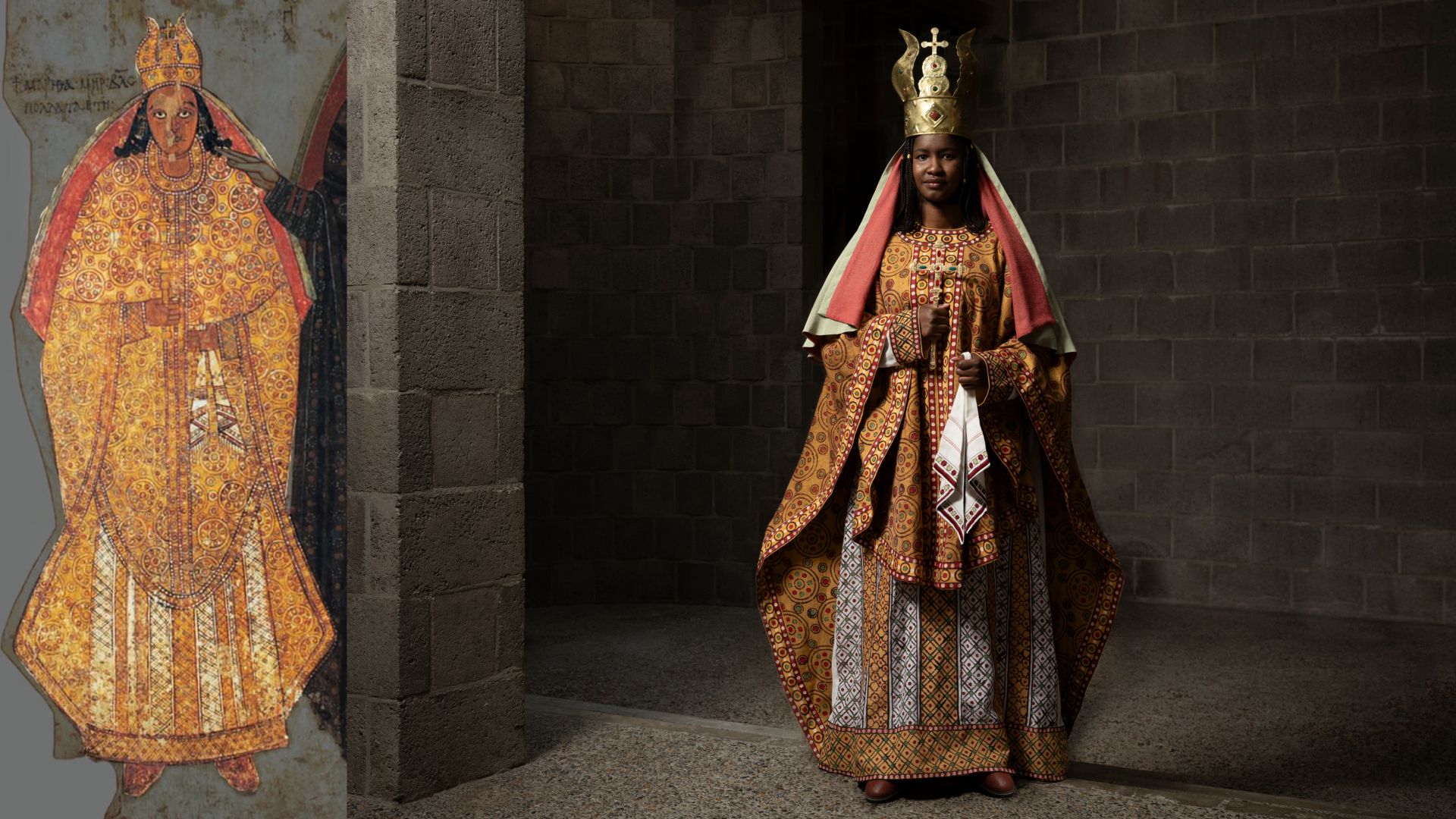
मध्ययुगीन ख्रिश्चन न्युबियन भित्तीचित्रांचा एक संच पुरातत्त्व, वस्त्र संशोधन, आणि सादरीकरण यांना एकत्र आणणाऱ्या लक्षवेधी पुनर्निर्माण प्रकल्पाद्वारे भिंतीवरील चित्रापासून जिवंत रूपात आला आहे. फारासमधील एका कॅथेड्रलमधील प्रतिमांचा आधार घेऊन, संशोधकांनी मध्ययुगीन न्युबियातील राजे, राजमाता, आणि एका बिशपसह उच्चभ्रू व्यक्तींनी परिधान केलेली वस्त्रे पुन्हा तयार केली. वापरलेले कापड आणि रंग मध्ययुगीन ईशान्य आफ्रिकेत उपलब्ध असलेलेच होते.
हे काम केवळ ऐतिहासिक पोशाखांची पुनर्रचना नाही. ते रंगविलेल्या पुराव्याला देहधारी अर्थ लावण्यात रूपांतरित करते. अभ्यासाचे सहलेखकांपैकी एक, पुरातत्त्वशास्त्रज्ञ कारेल इनमे म्हणाले की चर्च आणि सादरीकरणाच्या ठिकाणी मॉडेल्सनी ही पुनर्निर्मित वस्त्रे घातल्यावर ती “संवादाचे एक शक्तिशाली साधन” ठरली. त्यांनी युरोपातील प्रेक्षकांना अश्रूंनी हेलावलेले पाहिल्याचे सांगितले आणि पुनर्निर्मित वस्त्रे परिधान केल्यानंतर सूडानी मॉडेल्सने कुलीन थाट स्वीकारल्याची आठवणही सांगितली.
तो प्रतिसाद हा प्रकल्प केवळ विशेष पुरातत्त्वापुरता मर्यादित नसल्याचे स्पष्ट करतो. भित्तीचित्रे दृश्य माहिती जपू शकतात, पण पुनर्निर्माण हालचाल, प्रमाण, आणि मानवी उपस्थिती जोडते. त्यामुळे संशोधक आणि प्रेक्षक दोघांनाही हे तपासता येते की उच्चभ्रू वस्त्रे केवळ स्थिर प्रतिमांमध्ये नव्हे, तर जगलेल्या विधी-संदर्भात कशी दिसत असतील.
उद्धार पुरातत्त्वापासून ऐतिहासिक पुनर्प्राप्तीपर्यंत
1960 मध्ये इजिप्तमधील अस्वान हाय डॅमचे बांधकाम सुरू झाल्यानंतर सुरू झालेल्या युनेस्कोच्या उद्धार मोहिमेदरम्यान या भित्तीचित्रांकडे व्यापक शैक्षणिक लक्ष गेले. फारासमध्ये काम करणाऱ्या पोलिश पुरातत्त्वशास्त्रज्ञांना एक मंदिर सापडेल अशी अपेक्षा होती. त्याऐवजी, त्यांना सुमारे 8व्या ते 14व्या शतकांदरम्यान पसरलेल्या 150 पेक्षा अधिक भित्तीचित्रांनी सजलेले, उत्तम जतन झालेले ख्रिश्चन कॅथेड्रल सापडले.
त्या शोधाने आज इजिप्त आणि सूदानच्या भागांत विभागलेल्या न्युबिया प्रदेशातील मध्ययुगीन ख्रिश्चन राज्याचा विलक्षण समृद्ध दृश्य संग्रह उघडला. भित्तीचित्रांमध्ये दाखवलेली वस्त्रे दर्जा, विधी, आणि सौंदर्यात्मक निवडी यांचे पुरावे देतात, जे लिखित नोंदी एकट्याने पूर्णपणे पकडू शकत नाहीत. म्हणून त्या वस्त्रांची पुनर्निर्मिती ही केवळ सजावटीची जोड नाही. कापड, रंग, आणि आकारयोजनांमधून रंगविलेल्या व्यक्ती काय व्यक्त करत होत्या, हे विचारण्याचा तो एक मार्ग आहे.
ऐतिहासिक प्रदेशात उपलब्ध असलेल्या साहित्य आणि रंगांपुरते स्वतःला मर्यादित ठेवून, संशोधकांनी प्रकल्पाला शक्य तितक्या वास्तव उत्पादन-परिस्थितींशी जोडून ठेवण्याचा प्रयत्न केला. तो दृष्टिकोन पुनर्निर्मितींना भूतकाळापासून प्रेरित आधुनिक पोशाख कल्पनांपेक्षा प्रत्यक्ष दृश्य संस्कृतीच्या अर्थलागण्या म्हणून अधिक बळकटी देतो.
या पुनर्निर्मिती आज का भिडतात
या प्रकल्पाला पुरातत्त्वीय तसेच सांस्कृतिक वजन आहे. मध्ययुगीन न्युबिया त्याच्या दीर्घ ख्रिश्चन इतिहास, राजसत्ताक संस्कृती, आणि कलात्मक सुसंस्कृततेनंतरही मुख्य प्रवाहातील सार्वजनिक कल्पनेत बहुतेक वेळा अनुपस्थित राहते. पुनर्निर्मित वस्त्रे त्या जगाला नव्याने दृश्यमान करतात. दूरच्या भित्तीचित्र परंपरेतील तुकड्यांप्रमाणे दिसण्याऐवजी, उच्चभ्रू न्युबियन व्यक्ती राजदरबारी आणि पवित्र जागांमध्ये जाणिवपूर्वक दृश्य उपस्थिती असलेले लोक म्हणून पुन्हा उभे राहतात.
संशोधकांनी वर्णन केलेली भावनिक प्रतिक्रिया ही त्या पुनर्प्राप्तीचा भाग आहे. काळजीपूर्वक केलेले ऐतिहासिक पुनर्निर्माण अंतर कमी करू शकते. प्रेक्षकांना फक्त एखादी संस्कृती अस्तित्वात होती, इतकेच सांगितले जात नाही; तर तिच्या भौतिक अभिव्यक्तीची एक आवृत्ती मानवी रूपात समोर येते. आफ्रिका आणि मध्ययुगीन जगाबद्दलच्या व्यापक कथनांमध्ये कमी प्रतिनिधित्व मिळालेल्या किंवा सपाट केलेल्या इतिहासांसाठी हे विशेषतः प्रभावी ठरू शकते.
Antiquity मध्ये 30 मार्च रोजी प्रसिद्ध झालेला हा अभ्यास पुरातत्त्वशास्त्र विविध शाखांमध्ये कसे काम करते ते दाखवतो. वस्त्र विश्लेषण, सादरीकरण, दृश्य पुनर्निर्माण, आणि सार्वजनिक मांडणी ही सर्व अर्थ लावण्याची साधने बनतात. त्या अर्थाने, फारास प्रकल्प केवळ कपड्यांबद्दल नाही. तो तुकड्यांत टिकून असलेल्या भूतकाळाला परिमाण परत देण्याबद्दल आहे.
भित्तीचित्रे पुन्हा वस्त्रे बनतात तेव्हा इतिहासाचा सूर बदलतो. तो आता फक्त पाहिला जात नाही; तो सादर केला जातो, जगला जातो, आणि जाणवला जातो.
हा लेख Live Science च्या अहवालावर आधारित आहे. मूळ लेख वाचा.
Originally published on livescience.com