Data infrastructure is becoming a robotics battleground
AGIBOT WORLD 2026 has been released as an open-source dataset intended to provide infrastructure for embodied robot development, according to a brief report published April 7.
The claim is concise, but it points to one of the most important shifts in robotics and AI: progress is increasingly constrained not only by model design or hardware capability, but by the quality and availability of the data used to train systems that must operate in the physical world.
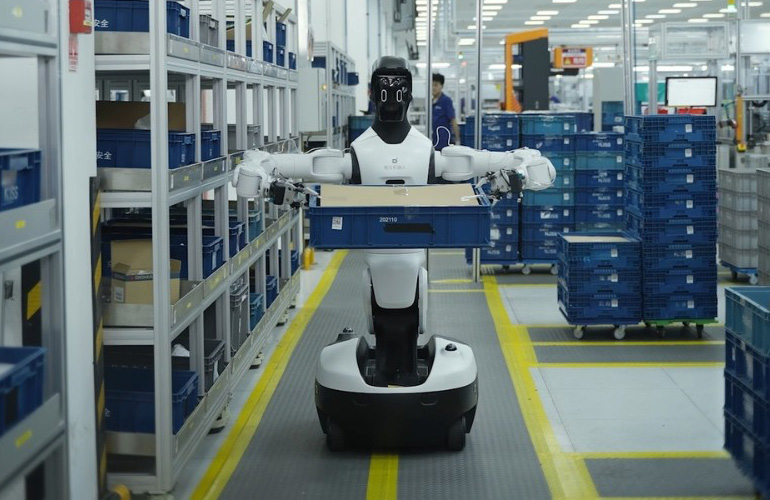
Embodied AI differs from software-only systems because robots have to perceive, decide, and act in environments that are messy, dynamic, and often poorly standardized. A shared dataset can therefore function as more than a benchmark. It can become common infrastructure for research, training, evaluation, and comparison across teams.
Why an open-source dataset matters
When a dataset is open source, the practical effect is to lower barriers to experimentation. Teams do not need to build every foundation from scratch, and smaller labs or startups can work from a common resource rather than relying solely on proprietary internal collections.
That matters in embodied AI because data collection is expensive. Capturing robotic interactions, movement, sensor information, or task demonstrations in real-world settings is materially harder than compiling many conventional software datasets. As a result, organizations with better data pipelines can gain an outsized advantage.
The release of AGIBOT WORLD 2026 therefore suggests a push in the opposite direction: toward a more shared base layer for development. Even without further technical detail in the supplied summary, the positioning is clear. The dataset is meant to serve as infrastructure, not just as a one-off academic artifact.

The broader context for embodied AI
Embodied AI has become a focal point across robotics because the field is trying to move beyond narrow, highly scripted systems and toward machines that can generalize across tasks and environments. That requires more than better models. It requires training material that reflects the diversity and unpredictability of physical interaction.
In that sense, datasets play a role similar to roads or power grids in other industries. They support everything built on top of them. If AGIBOT WORLD 2026 is designed as a foundational resource, then its importance lies in how many downstream efforts it can enable, accelerate, or standardize.
The emphasis on infrastructure is especially telling. It implies that the next stage of competition in robotics may be shaped less by isolated demo systems and more by who can assemble the shared inputs needed for large-scale, reproducible development.
Open versus closed development models
The open-source framing also highlights an unresolved tension in robotics. Some companies view data as a defensible asset and keep it private. Others argue that broader access is needed if the field is to progress quickly and avoid fragmentation. An open dataset enters directly into that debate.
If widely adopted, a resource like AGIBOT WORLD 2026 could make it easier to compare approaches, train models under more consistent conditions, and reduce duplicated groundwork across the sector. It could also help establish common expectations around what embodied AI systems should be able to perceive or do.
That does not eliminate competitive advantage. Companies can still differentiate through hardware, software integration, fine-tuning, deployment, and proprietary additions. But shared data resources can move the baseline upward for everyone.
A sign of where the field is heading
The robotics sector often attracts attention through hardware launches and humanoid demonstrations, yet the release of a dataset can be more strategically important than a new machine. Hardware shows what a company can build. Infrastructure shapes what an ecosystem can become.
The AGIBOT WORLD 2026 announcement indicates that embodied AI development is entering a phase where common resources are being treated as strategic enablers. That is consistent with a maturing field: once the ambition grows from isolated prototypes to scalable capability, the need for shared inputs becomes harder to ignore.
Open-source datasets will not solve every challenge in robotics. Robots still face major obstacles in reliability, cost, deployment, and safety. But training and evaluation infrastructure is one of the clearest leverage points available to the field today.
What to watch next
The immediate question is adoption. The long-term value of any open dataset depends on whether developers actually use it, extend it, and treat it as a reference point for progress. If AGIBOT WORLD 2026 gains traction, it could help anchor a wider ecosystem of embodied AI tools and benchmarks.
Even from a sparse initial description, the message is evident: robotics is increasingly being built on data systems as much as on mechanical systems. The organizations that shape those shared foundations may have an outsized role in determining how quickly embodied AI moves from promising demos to durable real-world capability.
This article is based on reporting by The Robot Report. Read the original article.
Originally published on therobotreport.com