White House helipad project faces a costly reset
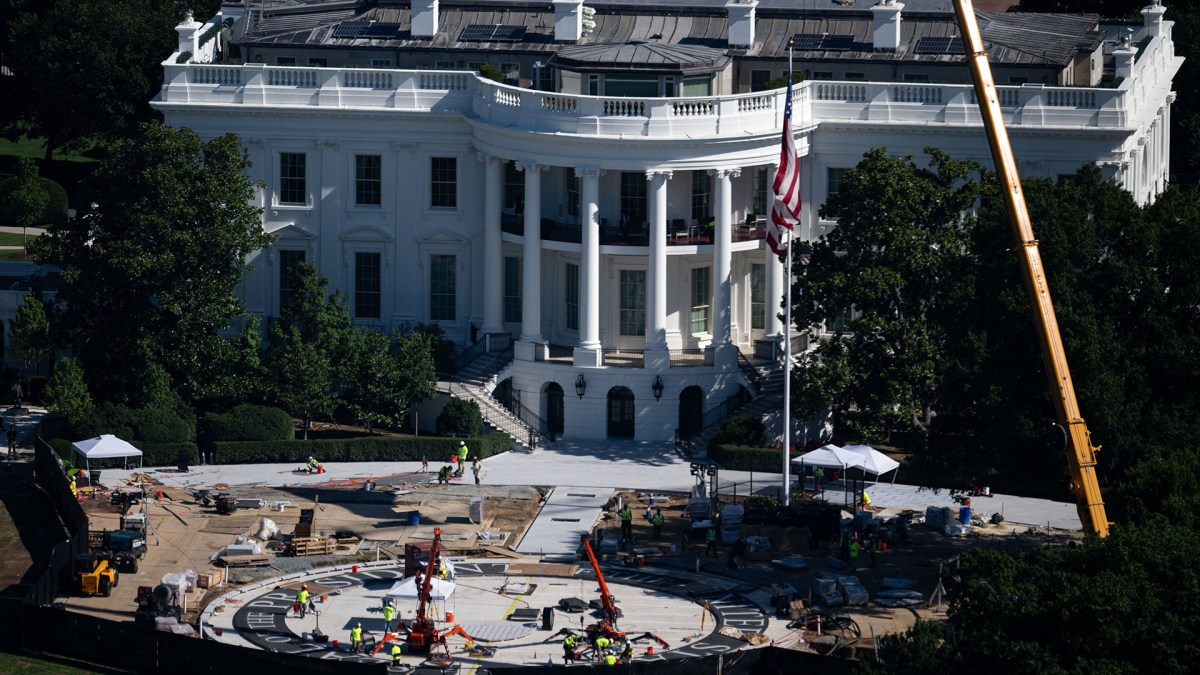
A White House construction project tied to the presidential helicopter fleet has reportedly been partially dismantled and restarted after President Donald Trump objected to the work already underway. The project involves a new granite helipad on the White House South Lawn, designed to withstand the stronger exhaust heat and rotor wash generated by the VH-92A Patriot helicopter.
According to the report, contractors had already made substantial progress on the helipad before being ordered to tear up completed work and begin again. The reversal affects a high-visibility feature that was intended to be finished in time for Chinese President Xi Jinping’s expected visit in late September.
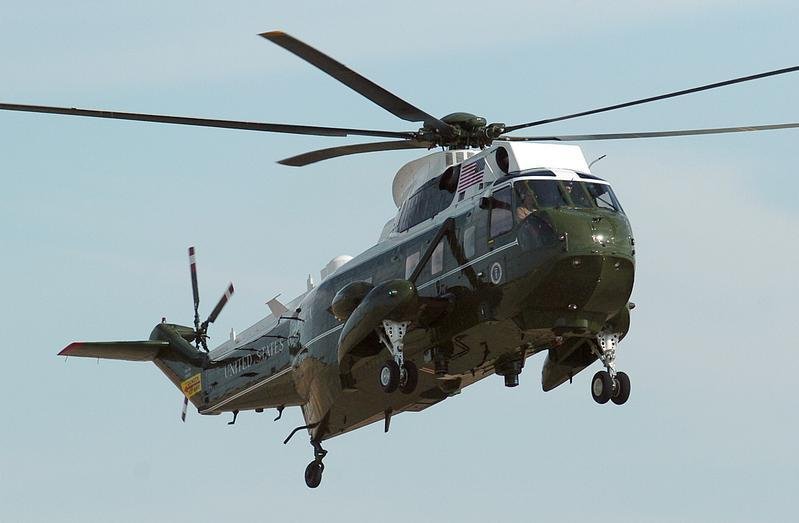
The episode is unusual not only because of the abrupt redesign, but because the project had been publicly framed as a practical infrastructure upgrade tied to a new aircraft. The VH-92A is the new presidential transport helicopter that will carry the president, vice president, their families, and close advisers. Unlike cosmetic renovations, the helipad was presented as a response to the operational demands of a modern aviation platform.
The stated reason: protecting the South Lawn from the VH-92A
Trump announced in June that the White House was getting a granite helipad in order to protect the South Lawn from damage caused by the new helicopter’s downwash and heat. The underlying rationale is straightforward. Helicopters operating from a constrained ceremonial space can produce intense physical stress on the ground beneath them, and a hardened landing surface can reduce wear, erosion, and repeated maintenance needs.
That logic gave the project a functional justification beyond presidential preference. The South Lawn is both a symbolically important location and an operational pickup point for Marine One flights. Adapting it to the needs of the VH-92A suggested a recognition that next-generation aircraft can impose different infrastructure demands, even at one of the most protected and carefully managed sites in the United States.
The reported construction cost was between $5 million and $6 million. Trump said in June that Sikorsky, the Lockheed Martin subsidiary that makes the VH-92A, would cover that cost. The report does not establish whether any extra expense created by the redo will also be absorbed by the company, passed elsewhere, or lead to changes in the schedule.
What was removed
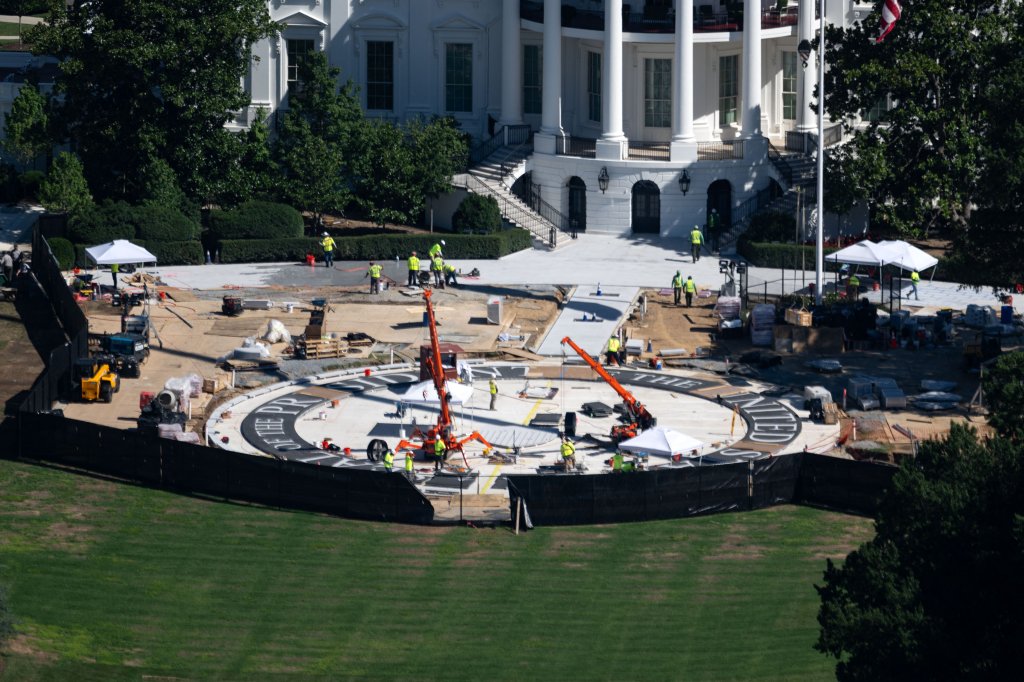
The article says photographs obtained by The Washington Post showed contractors taking apart work that had already been completed, including a 100-foot-wide granite presidential seal that had begun to take shape. That detail matters because it indicates the redo is not a minor touch-up at the edge of the project. It suggests central elements of the design were far enough along to be visible and materially significant before they were removed.
The Washington Post report, as described in the source text, said Trump ordered the reset because he was frustrated with the helipad’s appearance and was also questioning whether the slope of the South Lawn needed to be changed. Those concerns reportedly came from two anonymous people familiar with his private comments.
If accurate, the explanation introduces a tension between technical infrastructure planning and executive aesthetic judgment. A helipad at the White House must satisfy security, aviation, engineering, and preservation concerns. When completed work is reversed late in the process because of dissatisfaction with appearance or grading, the result is likely to affect cost control, project management, and schedule certainty.
A time-sensitive project ahead of a diplomatic visit
The timing of the reported restart raises further questions. Construction crews were said to be working around the clock to complete the helipad before Xi’s September visit. A compressed timeline is common for high-priority federal projects connected to diplomatic or security events, but such schedules leave little room for rework once major construction is underway.
That makes the redo more than a construction anecdote. It becomes a case study in how symbolic sites, presidential logistics, and aviation modernization can collide under deadline pressure. The White House lawn is not just another building site. It is a highly choreographed operational environment where aesthetics, media optics, and aircraft requirements are unusually intertwined.
Any delay could create logistical complications, even if temporary workarounds remain available. The source text does not say the project will miss its target date, only that it is unclear whether the timeline for completion will change. That uncertainty is itself notable given how close the diplomatic deadline appears to be.
Why the VH-92A matters here
The helipad project is also a reminder that aircraft modernization often requires supporting changes on the ground. The VH-92A Patriot is not just a replacement helicopter in a ceremonial role. It is part of a highly visible presidential transport system, and its operational footprint appears to be shaping physical changes at the White House itself.
That makes the story relevant beyond politics. Military and government aviation programs regularly carry hidden infrastructure consequences, from hangars and maintenance facilities to landing surfaces and security perimeters. In this case, the upgrade’s most visible side effect is taking place at the White House, where any construction becomes politically and publicly amplified.
The report leaves several questions unanswered. It does not say whether the redesign reflects a new engineering requirement, a revised visual preference, or a combination of both. It also does not establish who will pay for any added costs or whether the late-stage changes will alter the broader presidential helicopter operating plan.
Still, the core facts are significant enough on their own. A newly built helipad intended to accommodate the VH-92A was already deep into construction. Contractors then reportedly removed completed elements and restarted part of the project after the president objected to the result. With a major state visit approaching, the White House now appears to be racing to finish a security-linked aviation upgrade that was already well underway before being sent back for a redo.
In that sense, the story captures a familiar pattern in defense-adjacent infrastructure: the hardware may be modern, the rationale may be operational, but the final shape of the project can still turn on politics, optics, and timing as much as engineering.
This article is based on reporting by twz.com. Read the original article.
Originally published on twz.com