Denmark starts a longer draft as its security outlook hardens
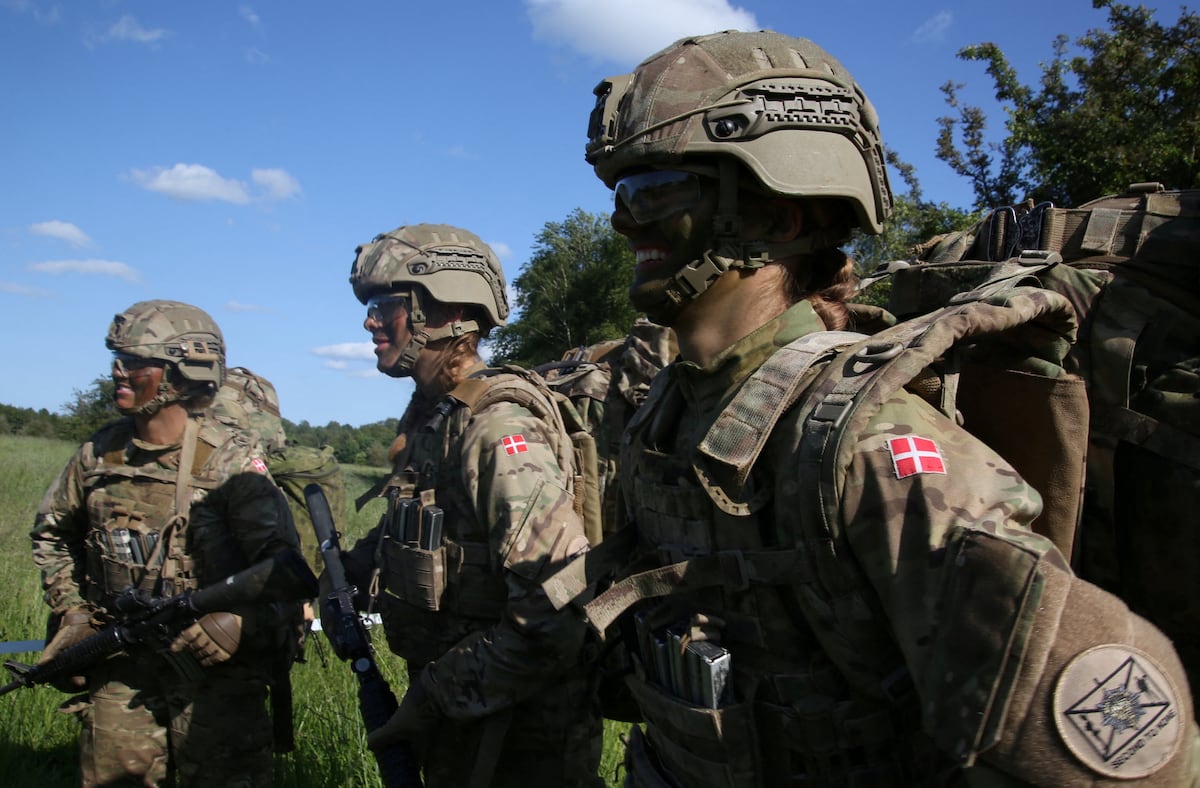
Denmark on Monday began a new phase in its military buildup, bringing in around 1,600 recruits under an expanded conscription system that stretches service to 11 months and, for the first time, includes women. The change marks a significant shift for a country that for years relied heavily on volunteers and used its draft lottery mainly to fill remaining places.
The immediate intake is modest, but the policy change is larger than a routine adjustment to military staffing. Copenhagen has already said it plans to raise the number of conscripts to 7,500 annually by 2033, up from 5,000. The new program also deepens the role of conscription in the Danish armed forces by turning it into a longer training and operational pipeline rather than a short introductory period.
The timing matters. Denmark is responding to a security environment shaped by the war in Ukraine, rising concern over Russia, and mounting strategic attention on the Arctic. It is also preparing to send conscripts to Greenland for the first time later in August, giving the draft a direct role in one of the most politically sensitive parts of the Danish realm.
From four months to 11 months
Under the new structure, recruits will spend five months in basic training followed by six months in operational service. That is a major increase from Denmark’s previous four-month standard service period. The longer term is designed to produce personnel who can do more than pass through an abbreviated training cycle. It creates more time for specialization, unit integration, and practical military tasks.
Denmark first announced the broader reform in 2024. Alongside the longer service period, officials said women would be included in conscription for the first time. The country’s ballot-based system still applies to healthy young adults at age 18, but in practice the armed forces have long depended mostly on volunteers. The lottery has largely functioned as a backstop rather than the main engine of force generation.
Extending the service term changes the value of each intake. A conscript who serves nearly a year can be trained to a higher level, slotted into more demanding roles, and retained long enough to contribute operationally. That makes the new system more useful for a military trying to expand capacity without relying solely on professional troops.
Greenland gives the policy extra weight
The most politically charged element of the current intake is its planned deployment to Greenland. Later this month, a company of more than 100 soldiers is set to serve there for one month, taking over operational tasks from professional troops. That would be the first time Danish conscripts are sent to the semi-autonomous territory.
Greenland has become more central to defense planning because of its Arctic geography and its role in broader North Atlantic security. For Denmark, deploying conscripts there is not just a manpower decision. It signals that the country wants a more visible military presence across all of its territory and is willing to use its expanding draft system to support that goal.
The move also arrives in an unusually fraught political context. U.S. President Donald Trump has repeatedly pushed to annex Greenland on national security grounds, a demand that Greenland’s and Denmark’s governments have firmly rejected. That rhetoric has added diplomatic pressure to an already tense regional picture shaped by Arctic competition and Europe’s wider rearmament push.
Danish Prime Minister Mette Frederiksen underscored that posture at NATO’s summit in Ankara last month, saying Denmark was ready to defend every inch of alliance territory, including its own. In that context, Greenland is no longer a distant flank issue. It is part of the front line of how Denmark defines sovereignty, alliance commitments, and Arctic deterrence.
A broader Nordic pattern, with Danish specifics
Denmark is not acting in isolation. Conscription remains a feature of defense planning across much of northern Europe. Sweden, Finland, and Norway all use conscription-based service models, as do Estonia, Latvia, and Lithuania. Russia’s war against Ukraine has only reinforced the argument that European militaries need larger trained reserves and faster pathways to mobilization.
What stands out in Denmark’s case is the combination of personnel reform and territorial signaling. The country is not only lengthening service and widening eligibility. It is connecting those changes to concrete operational demands, including Arctic deployments and new specialist functions inside the force.
The armed forces are also introducing new conscription tracks, including a drone platoon at the Special Operations Command. That detail suggests the reform is not limited to traditional infantry manpower. Denmark is trying to align conscription with technologies and missions that modern militaries increasingly treat as essential.
For a smaller European military, that matters. A longer and more structured draft can help create a wider pool of recruits who are familiar with surveillance systems, unmanned platforms, logistics, and support roles that would otherwise compete for scarce professional manpower.
Why this intake matters beyond Denmark
The new conscription cycle shows how European defense policy is moving from rhetoric to implementation. It is one thing for governments to announce stronger defenses, bigger budgets, or tougher postures. It is another to change who serves, how long they serve, and where they may be sent.
Denmark is now doing exactly that. Its first cohort under the revised rules embodies several linked shifts at once: a longer service commitment, broader participation, expanded annual intake targets, new technical training tracks, and a visible Arctic mission. Each piece supports the same conclusion that Denmark sees the regional security environment as more demanding and less predictable than it did only a few years ago.
The result is a draft system that is being repositioned from a limited supplement to a more consequential part of national defense. Whether the reform delivers the scale and readiness Denmark wants will depend on training quality, retention, and how effectively conscripts are integrated into real operational tasks. But the direction is clear. Copenhagen is building a larger and more durable defense base for a period defined by Russian pressure, Arctic competition, and the possibility that even close allies can introduce new uncertainty into regional security.
This article is based on reporting by Defense News. Read the original article.
Originally published on defensenews.com