A canceled long-range cannon is finding a second life in hypersonic weapons testing
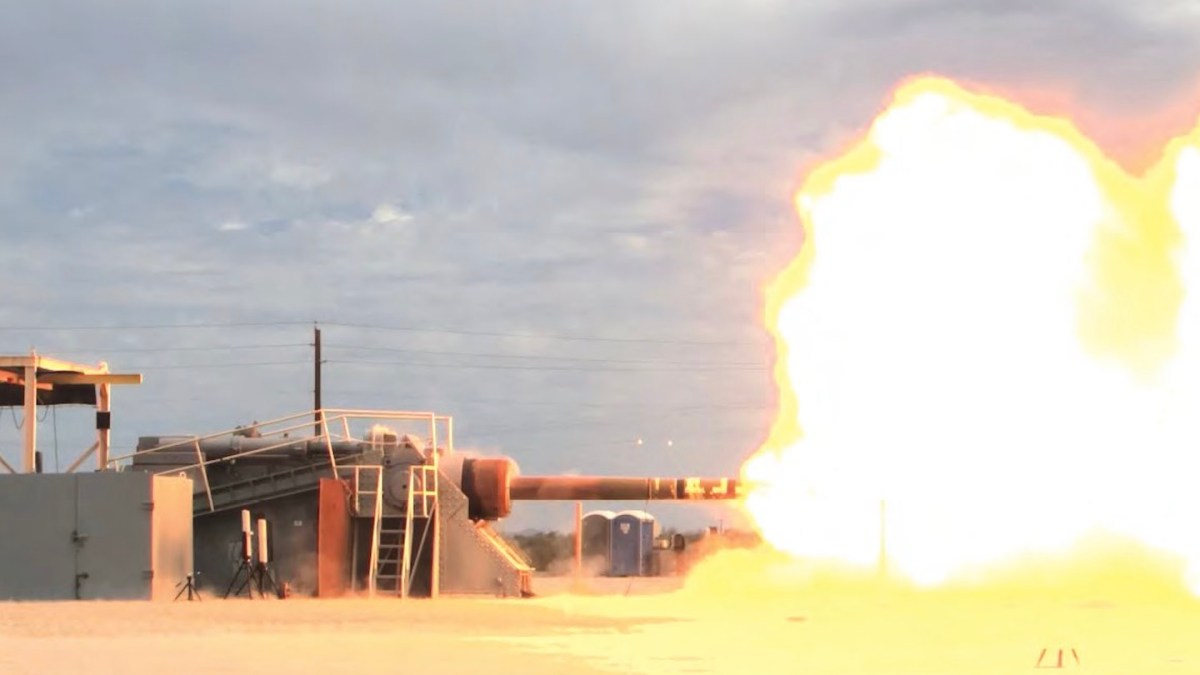
The U.S. Army says it has completed a live-fire test of a full-scale hypersonic warhead using a cannon-based launch system at Yuma Proving Ground in Arizona, a move that could give the service a cheaper and faster way to study how future hypersonic weapons behave at impact. The test also suggests that hardware from one of the Army’s most ambitious canceled artillery projects may still deliver value, even if not in the role it was originally designed for.
According to the Army account cited by The War Zone, the shot marked the first successful live-fire demonstration of a full-scale hypersonic warhead launched from what Yuma Proving Ground described as a “cannon base test system.” Instead of depending on a full missile flight test, engineers used a gun to accelerate the warhead to very high speed before impact, allowing them to examine terminal effects under more controlled conditions.
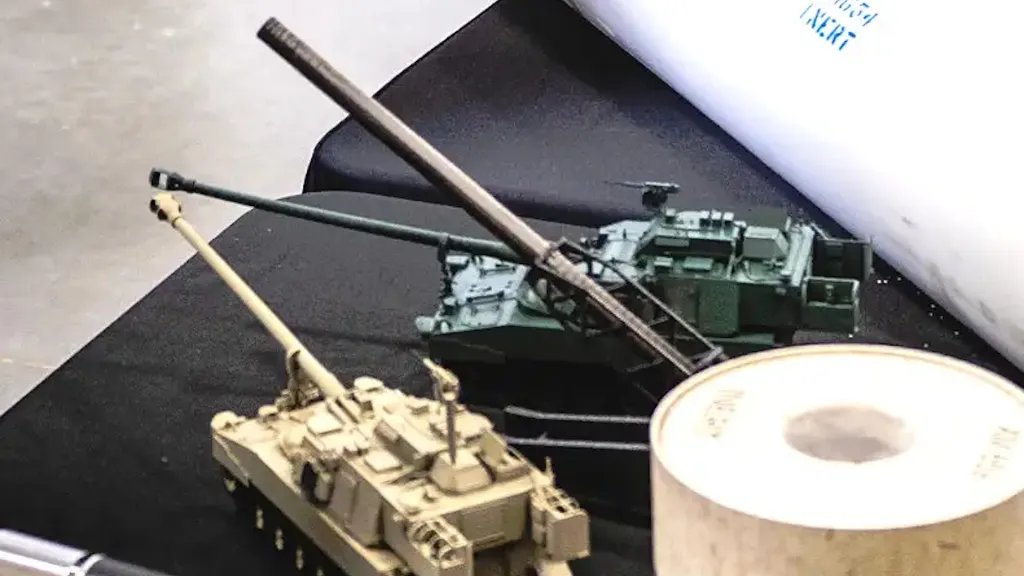
The launch system is identified as the Heavy Artillery Test System, or a modification of it, derived from the canceled Strategic Long Range Cannon program. The Strategic Long Range Cannon, often discussed as a giant artillery concept with a notional range of 1,000 miles or more, was once pitched as a way to strike distant targets at far lower cost than many missile systems. That operational program was canceled, but the latest test indicates the underlying gun architecture may still prove useful in a research and development role.
Why the Army wants a new testing method
Hypersonic weapons are generally defined as traveling at Mach 5 or faster. Their military significance comes not only from speed, but from the amount of kinetic energy they carry into a target and the difficulty of defending against them. Testing those terminal effects with conventional missile launches can be expensive, time-consuming and limited in how often they can be run.
The Army’s cannon-based approach is meant to address that bottleneck. By firing a warhead from a large-caliber gun instead of sending a complete hypersonic missile on a long flight, researchers can focus on what happens at the end of the trajectory, where lethality, survivability and target interaction become central questions. If the method works consistently, it could let engineers gather more data in less time and at lower cost.
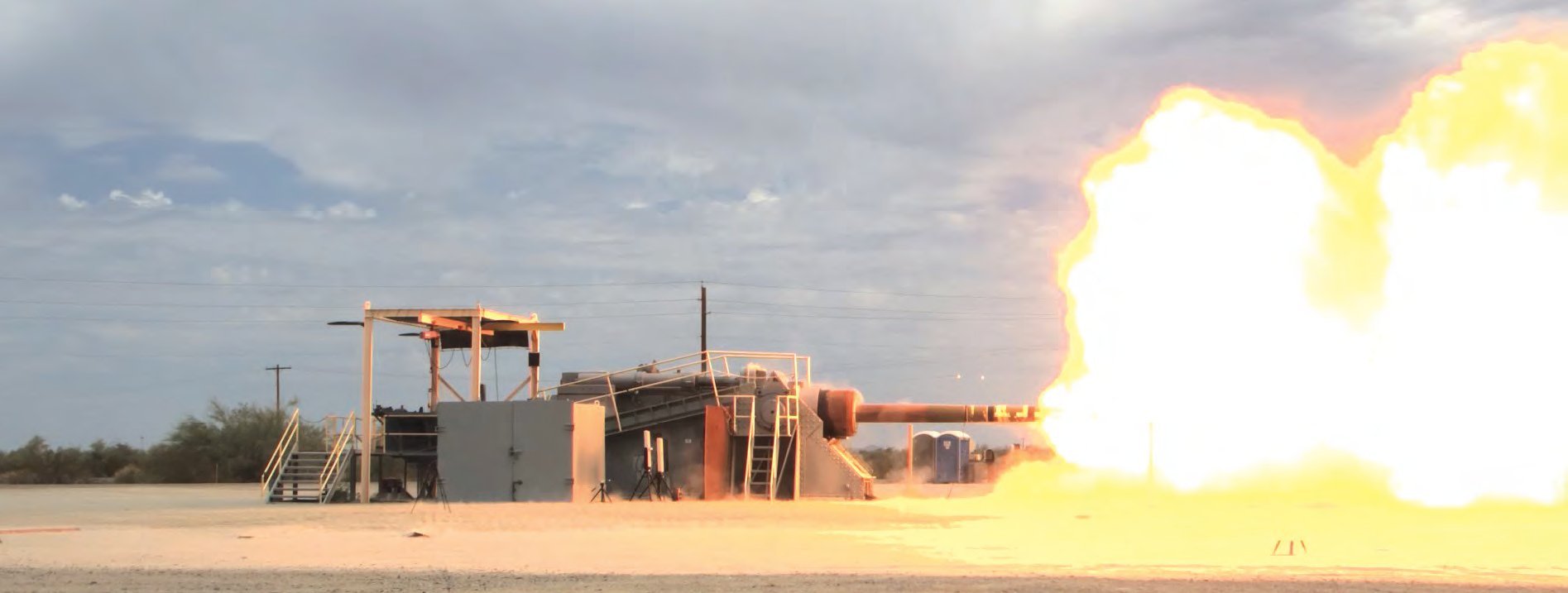
The Army has reportedly been developing the concept for roughly two years as what it calls “a high throughput, alternative method for assessing terminal effects at velocity and scale.” That phrase matters. High-throughput testing implies not just a cheaper substitute, but the possibility of running more experiments, comparing more designs and shortening development cycles. For a field as technically demanding as hypersonics, that could be strategically important.
The latest public details remain limited. The Army did not disclose the exact speed achieved during the shot, nor exactly when the test took place. Even so, the core concept is straightforward enough to understand: use a gun to recreate the extreme approach conditions that matter for impact analysis, without paying for a full-up missile event every time a warhead or target variable needs to be examined.
What the test says about the Strategic Long Range Cannon legacy
The Strategic Long Range Cannon occupied an unusual place in Pentagon modernization efforts. It promised very long range through artillery, but it also carried questions about technical feasibility, survivability and mission relevance. Its cancellation appeared to close the book on the idea that a giant gun could become a major operational capability.
This new application reopens part of that story in a narrower but more practical way. A large artillery system does not have to become a battlefield weapon to justify its engineering. In this case, a platform originally associated with long-range strike may now be contributing to test infrastructure for another high-priority weapons area.
That kind of reuse is notable because hypersonic development remains one of the Pentagon’s most expensive and closely watched efforts. The United States has been pushing to mature offensive hypersonic systems while also improving defenses against comparable threats from major rivals. Any tool that expands testing capacity without requiring a full missile launch could become valuable quickly.
It also points to a broader pattern in defense technology programs: cancellation does not always mean complete technical dead end. Components, prototypes and manufacturing lessons often migrate into other programs. The Heavy Artillery Test System appears to be a case where a controversial operational concept has been repurposed into something more bounded and potentially more useful.
A practical role in a costly race
One reason the test matters is economic. Hypersonic weapons programs place unusual stress on budgets because they combine advanced propulsion, extreme materials demands, guidance complexity and expensive range infrastructure. Full flight tests are indispensable, but they are not ideal for every question engineers need answered. If a cannon-based setup can isolate terminal effects testing, it could preserve missile launches for the problems that truly require end-to-end demonstration.
That does not mean a gun can replace a hypersonic missile program. A cannon-launched test cannot reproduce every aspect of operational flight, especially long-duration thermal loads, guidance behavior across the full trajectory or the broader mission environment. But it may not need to. For certain questions about impact performance, lethality and structural response, a cheaper targeted test may be enough.
The Army’s announcement therefore suggests a complementary pathway rather than a substitute. Flight tests would remain essential for validating complete systems. Cannon tests could help narrow design choices, reduce uncertainty and make those larger demonstrations more efficient.
The lack of finer-grained technical disclosure is typical for military hypersonic work, so outside observers should be careful not to overstate what has been proven. The service has demonstrated a live-fire event with a full-scale warhead and has signaled a practical rationale for the method. It has not publicly shown that this approach can answer every key hypersonic development question, nor has it detailed how often the system can be used or what specific programs may benefit first.
Even with those limits, the message is clear. The Army is trying to expand its hypersonic testing toolkit at a time when speed of iteration matters. Turning a canceled supergun into an instrument for terminal-effects experimentation is a pragmatic move, one that trades grand operational ambition for a more grounded role in weapons development. In the current hypersonic race, that may prove to be the more durable contribution.
This article is based on reporting by twz.com. Read the original article.

Originally published on twz.com