A budget date with big implications
The White House plans to deliver its fiscal 2027 budget request to Congress on April 3, according to an Office of Management and Budget spokesperson cited by Breaking Defense. The date by itself is procedural. The substance behind it is anything but. The administration has floated the prospect of $1.5 trillion in defense funding for FY27, yet key questions remain unresolved about what that number actually includes and how it would be structured.
That uncertainty matters because a topline can suggest momentum without revealing the underlying budget mechanics. Breaking Defense reports that it is still unclear whether the $1.5 trillion figure would come entirely through the base budget or whether it could be assembled with help from a new reconciliation bill or a supplemental request tied to ongoing Iran operations. Those distinctions shape not just politics, but planning, execution, and how sustainable the defense posture would be over time.
Base budget or layered funding?
The administration’s internal budgeting process appears to be close to the finish line, but not fully settled. Jules Hurst, who is performing the duties of Pentagon comptroller, told Breaking Defense on March 17 that officials were in the final stages and had effectively reached “pencils down” on options for the requested $1.5 trillion defense total. Even so, he also indicated that the administration was still working out how the total would be achieved.
That tension captures the current state of play. The defense establishment seems to know the scale of the request it wants to present, but the exact mix of funding channels remains under discussion. Hurst said the FY27 budget would remain intact and that any supplemental would be separate. That suggests the administration is trying to preserve the coherence of the formal budget request even while considering parallel funding vehicles for near-term military demands.
Iran operations are now part of the budget conversation
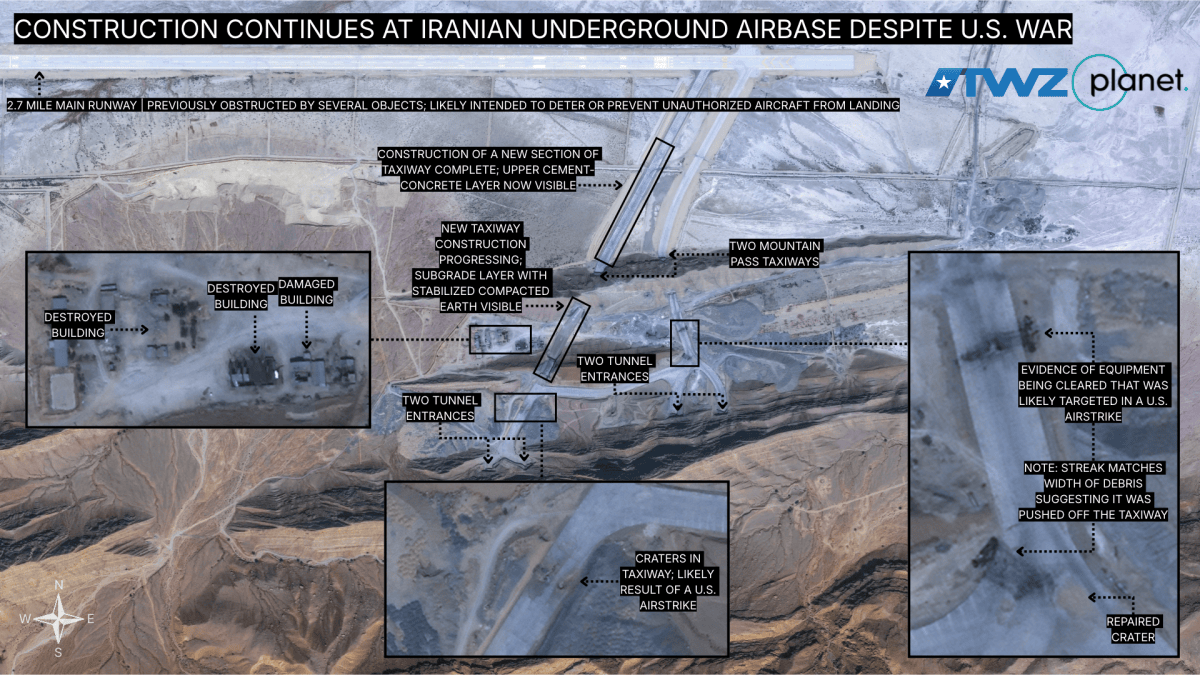
One of those demands is the cost of current and possible future operations involving Iran. Breaking Defense reports that Defense Secretary Pete Hegseth confirmed the department had approached the White House about a possible $200 billion supplemental request. He said the money would be used to pay for operations in Iran and to refill U.S. munitions stockpiles, while also building those stocks above prior levels.
The significance of that request is twofold. First, it shows how active military operations can rapidly spill into the regular budget debate, complicating already difficult funding choices. Second, it highlights the difference between recurring defense capacity and surge spending tied to immediate conflict. A large supplemental may be politically easier to justify in the short term, but it does not answer the longer-term question of what the base budget should support on a sustained basis.
Congressional Republicans are eyeing another path
At the same time, Congress is discussing another reconciliation bill that could add still more defense money. Senate Budget Committee Chairman Lindsey Graham said Republicans intend to move forward with a second reconciliation effort, arguing that more funding is needed to secure the homeland and support troops in combat. House Armed Services Chairman Mike Rogers told Breaking Defense in February that he was advocating for roughly $450 billion for defense in such a package.
That creates an unusual budgeting landscape in which base appropriations, supplementals, and reconciliation could all become part of the same headline defense buildup. For Pentagon planners, this may offer more near-term resources. For lawmakers and outside analysts, it also makes it harder to evaluate what the underlying defense program actually costs and which priorities are being financed through ordinary budgeting versus extraordinary measures.
The comparison point from FY26
Last year’s numbers provide useful context. The Defense Department requested $848.3 billion in discretionary funding for FY26, a figure Breaking Defense says was flat with the enacted full-year continuing resolution for FY25. Congress later passed a defense spending bill in February that reached roughly $873 billion. Against that baseline, a $1.5 trillion figure for FY27 would represent a dramatic increase in headline terms, even if some of it ultimately sits outside the core base budget.
That is why the structure matters so much. A large defense number can communicate strategic seriousness, but without clarity on categories and funding mechanisms it can also obscure the true shape of policy. Are lawmakers being asked to permanently raise the defense baseline, temporarily finance conflict-driven expenses, or both? As of now, the answer appears to be unsettled.
What April 3 will and will not settle
The April 3 submission should provide the first official framework for answering those questions. It may show how the administration wants to present the relationship between regular Pentagon spending and war-related or emergency requests. It may also reveal whether the White House expects Congress to use reconciliation as a major defense funding tool once again.
But even once the request arrives, the fight will only be beginning. Congress will still have to decide whether the topline is credible, whether the split between base and supplemental funding is justified, and how much room exists for lawmakers to reshape priorities. In that sense, April 3 is less an endpoint than the formal opening of the FY27 defense budget battle.
What is already clear is that the coming request will land in a more volatile environment than a standard budget cycle. Active military operations, replenishment needs, and high-stakes political negotiations are all feeding into one fiscal document. That makes this budget request one of the most consequential defense planning moments of the year, even before the numbers are finalized into law.
This article is based on reporting by Breaking Defense. Read the original article.

Originally published on breakingdefense.com