Lessons Written in Steel and Smoke
The war in Ukraine changed how military professionals think about armored warfare. Tank formations that were once protected by their armor and firepower found themselves vulnerable to cheap, commercially available drones operating well beyond the range of traditional defensive systems. What changed was the accessibility, persistence, and reconnaissance capability that drone technology brought to even modestly equipped forces.
The US Army has been watching closely. Now it is actively developing doctrine — the formal playbooks that guide how units operate — for integrating small unmanned aerial systems into armored formations. The goal is ambitious: make drone operation a core competency for every soldier in a tank unit, not a specialized skill held by a few designated operators.
The Vision: Every Soldier a Drone Operator
Army doctrine development is a deliberate process. New concepts must be written, tested, revised, and eventually institutionalized through training programs, equipment procurement, and organizational changes. What makes the current small-drone initiative notable is both the scale of the ambition — every soldier — and the pace at which the Army is moving.
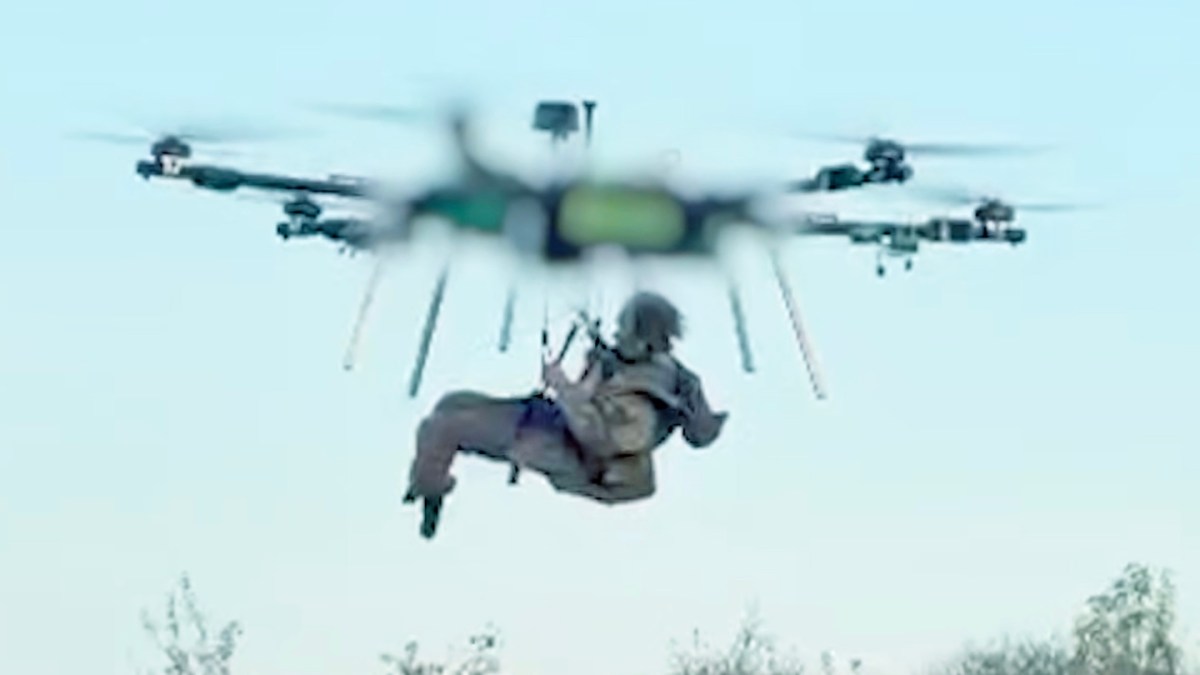
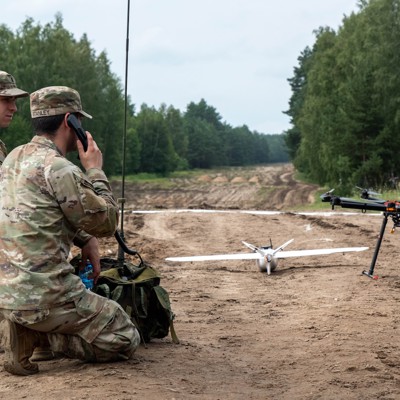
The target capability involves soldiers in armored formations using small drone systems — quadcopters and fixed-wing designs that can be hand-launched — for reconnaissance, overwatch, and target acquisition. These systems extend the tank's situational awareness dramatically, giving crews and commanders a birds-eye view of terrain and threats that armored vehicles are inherently limited in accessing.
What Small Drones Add to Armored Operations
Tanks are powerful but have limited situational awareness by design. Crew visibility is constrained by armor protection, and peering out of a hatch exposes soldiers to enemy fire. Small tactical drones address this directly. A quadcopter that can fly 500 meters ahead of a formation and transmit live video gives the platoon leader information that would otherwise require risking scouts or accepting uncertainty.
The ability to look over terrain features before committing vehicles to movement is operationally significant. Beyond reconnaissance, small drones enable persistent overwatch — maintaining visibility on a position while the formation maneuvers — and can carry small payloads for target marking or, increasingly, kinetic effects.
The Technology Available
The commercial drone market has produced capable systems at price points that make broad distribution feasible. Systems can be purchased, maintained, and replaced at costs an order of magnitude lower than traditional military aviation. Counter-drone technologies have also evolved, which means the Army's doctrine must address both how to use drones offensively and defensively — formations need procedures for detecting, classifying, and responding to adversary drones while deploying their own.
The Training Challenge
Making every soldier a drone operator is easy to say and hard to do. Drone operation skills degrade without regular practice. Maintaining a fleet of small drones across a unit requires logistics support. Integrating drone data into the broader command and control picture requires interoperability that doesn't come automatically.
The Army is addressing these challenges through revised training programs and exercises that incorporate small-drone operations from the ground up. The goal is to reach a state where drone employment in armored operations is as routine as radio communications — a baseline skill rather than a specialty.
The Broader Context
The small-drone doctrine initiative sits within a broader Army transformation effort driven by near-peer competitor analysis. China and Russia have invested heavily in drone warfare capabilities, and recent conflicts have provided empirical data about how drone-equipped forces perform against those without equivalent capabilities.
The Army's willingness to move relatively quickly on new doctrine, rather than waiting for a perfect solution, reflects a recognition that incremental real-world experience will be necessary. Writing the book on drone-integrated armored operations is an iterative process — and the first editions will inevitably be revised as units gain operational experience with the technology in exercises and, eventually, in the field.
This article is based on reporting by Defense One. Read the original article.
Originally published on defenseone.com