A Million-Drone Ambition
The United States Army is embarking on what may be the most aggressive unmanned systems scaling effort in American military history. Army Secretary Dan Driscoll has stated that the service aims to purchase one million drones within the next 18 to 24 months, a staggering figure that reflects how profoundly lessons from Ukraine, Gaza, and other modern battlefields have reshaped Pentagon thinking about the future of ground warfare.
Driscoll made the remarks at the conclusion of the Army's inaugural Best Drone Warfighter Competition, a multi-day event in Huntsville, Alabama, that drew more than 200 soldiers competing in categories including Best Operator, Best Innovation, and Best Tactical Squad. The secretary flew directly from Ukraine-Russia peace talks in Geneva to attend the ceremony, underscoring the connection between diplomatic efforts and the military's urgent push to modernize.
Rethinking Drones as Ammunition, Not Equipment
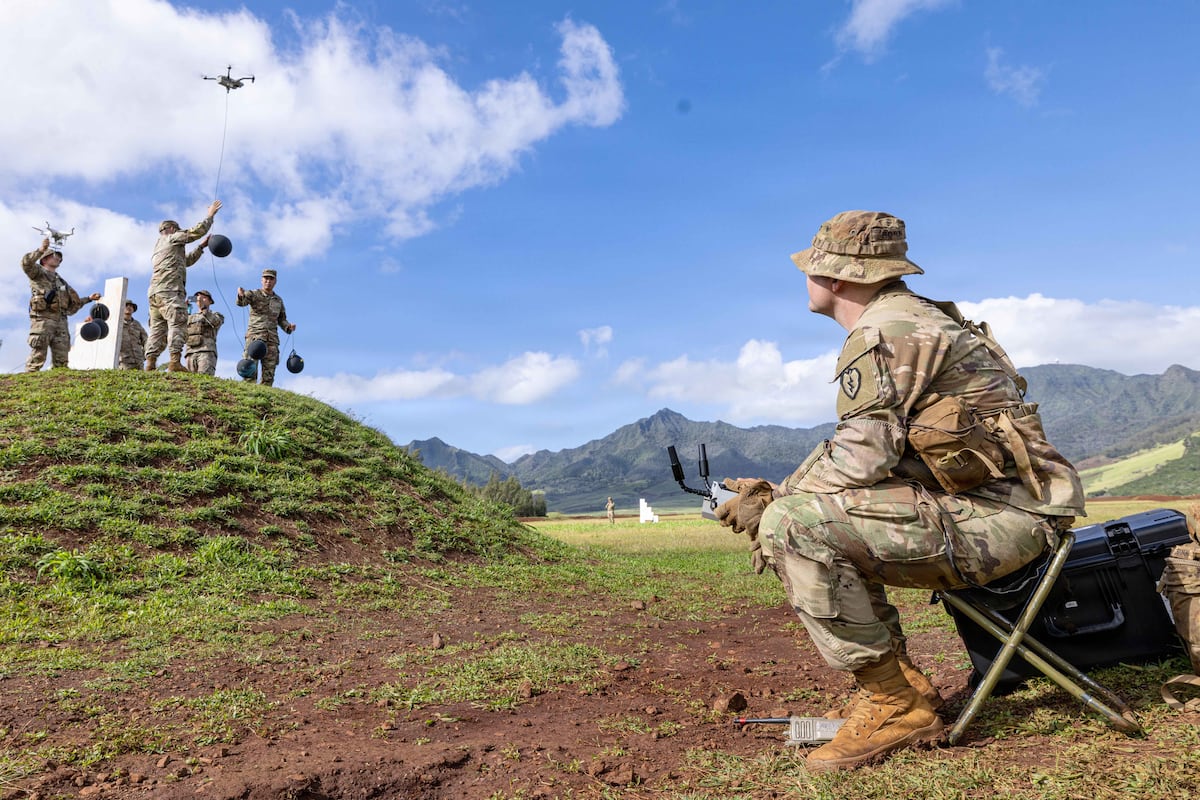
Perhaps the most significant conceptual shift Driscoll outlined is how the Army needs to fundamentally rethink what a drone is. Rather than treating unmanned systems as expensive pieces of equipment that soldiers sign out from an arms room and return after use, the secretary wants drones treated more like ammunition — expendable rounds that soldiers take to a range and use without hesitation.
"A lot of what we've been spending the last year doing is reorienting a lot of our systems so that a drone is not thought of as a piece of equipment that a soldier will have to sign out of an arms room and return, but more like an ammunition or a round that you take to a range," Driscoll told Military Times.
This philosophical change has enormous implications for procurement, training, maintenance, and logistics. If drones are consumable assets rather than durable equipment, the Army's entire acquisition pipeline needs to operate at a fundamentally different speed and scale.
The Drone Marketplace: Amazon for Military UAS
To accelerate procurement and innovation, the Army plans to launch a drone marketplace next month. The concept is essentially a military-grade e-commerce platform where private industry can market and sell drone innovations directly to Army units. Products will be rated and reviewed by soldiers themselves, with market competition expected to drive down prices and push continuous improvement.
"We're going to allow the consumers — that's our soldiers and our units — to rate the equipment that's being sold there," said Maj. Gen. Clair A. Gill, commanding general of the Army Aviation Center of Excellence. "It's going to allow for a natural free market economy to drive the best product."
The marketplace approach represents a significant departure from traditional military procurement, which is typically slow, bureaucratic, and driven by top-down requirements. By putting evaluation power directly in the hands of end users, the Army hopes to create a feedback loop that rewards practical innovation over paper specifications.
Lessons from Ukraine and Beyond
Driscoll's urgency is driven by firsthand exposure to how drones are transforming combat in real time. Having just returned from peace talks where he spent time with both Ukrainian and Russian delegations, the secretary described the visceral impact of seeing drone warfare footage from the front lines.
"One of the things when you spend time with them — beyond the peace talk portion — is them showing you just the violent videos of the drones they're using, slaughtering the soldiers on the other side. The videos are horrifying," Driscoll said.
The secretary also emphasized the scale challenge facing the United States. Adversarial nations, particularly China, are estimated to be producing between 5 million and 15 million drones annually across their commercial and military sectors. The US currently falls far short of that manufacturing capacity, creating a production gap that military leaders view as a strategic vulnerability.
Competition Winners and the Path Forward
The Best Drone Warfighter Competition itself produced notable results. A team from the 2nd Cavalry Regiment won Best Tactical Squad, while 1st Sgt. Javon Purchner earned Best Operator for his drone racing skills. The Army National Guard's 28th Infantry Division claimed Best Innovation for Project R.E.D., a drone-recovering unmanned aircraft system.
Driscoll urged the competitors to return to their units and share what they learned — both successes and failures — as the Army works to integrate drone capabilities across the entire force. The competition is expected to become an annual event, serving as both a talent showcase and a proving ground for emerging drone technology.
"We desperately need you to go back to your formations, tell them what we got right. Just as importantly tell them what we got wrong," Driscoll told the assembled soldiers, signaling that the Army's drone transformation is only just beginning.
This article is based on reporting by C4ISRNET. Read the original article.
Originally published on c4isrnet.com