Ursa Major moves toward a public listing as defense demand rises
Ursa Major, a Colorado company focused on hypersonics and rocket propulsion, said on August 25 that it plans to go public next year in a deal valued at $2.3 billion. The transaction would combine the company with Bleichroeder Acquisition Corp., a publicly traded special purpose acquisition company backed by Inflection Point Asset Management.
According to the announcement described by Breaking Defense, the merger is expected to close in the first quarter of 2027. If completed on that timeline, the deal would give Ursa Major access to public markets at a moment when the Pentagon and military services are pressing industry to expand capacity for missiles, rocket motors, and other propulsion systems that have become central to U.S. defense planning.
The timing matters. Ursa Major is not presenting the listing as a financial event alone, but as a manufacturing and scaling decision. Chief executive Chris Spagnoletti said the company has spent 11 years building out propulsion, manufacturing, testing, qualification, and flight capabilities, and that the new transaction is meant to turn that base into the production capacity customers now need.
That framing reflects a wider shift across the defense industrial base. Startups that once sold the Pentagon primarily on technical promise are increasingly being judged on whether they can deliver hardware repeatedly, at useful volume, and on schedules that match operational urgency. In that environment, production readiness is becoming as important as innovation itself.
A startup built around propulsion
Since its 2015 founding, Ursa Major has raised more than $380 million in private capital, while also attracting Defense Department investment for work tied to solid rocket motors, hypersonics, and space systems. The company now employs more than 360 people across six facilities, according to the release cited in the report.
Those details help explain why the company believes it is ready for a public-market step that has proved difficult for many venture-backed aerospace and defense businesses. Ursa Major already has visible program ties, active testing work, and a portfolio spanning both liquid and solid propulsion. That gives it exposure to multiple defense priorities instead of tying its future to a single experimental platform.
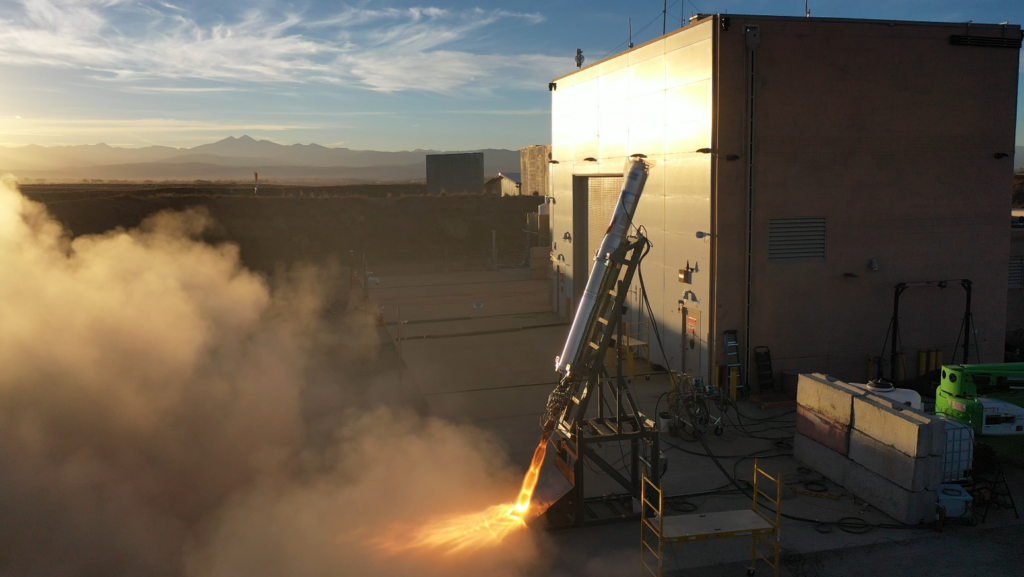
The company’s recent milestones underline that breadth. Last month, Ursa Major announced a $10 million U.S. Navy award to advance its MK 104 solid rocket motor through critical design review and static fire testing. Earlier this year, it also conducted the first flight of its Draper liquid rocket engine as part of the Air Force Research Laboratory’s Affordable Rapid Missile Demonstrator effort.
Those are meaningful markers because they move beyond concept art and into the engineering sequence the defense market cares about: design, test, review, fire, fly, refine, and then scale. For a company aiming to convince investors and government buyers that it belongs in long-term procurement conversations, evidence of progress through that chain is essential.
Hypersonics remain central to the growth story
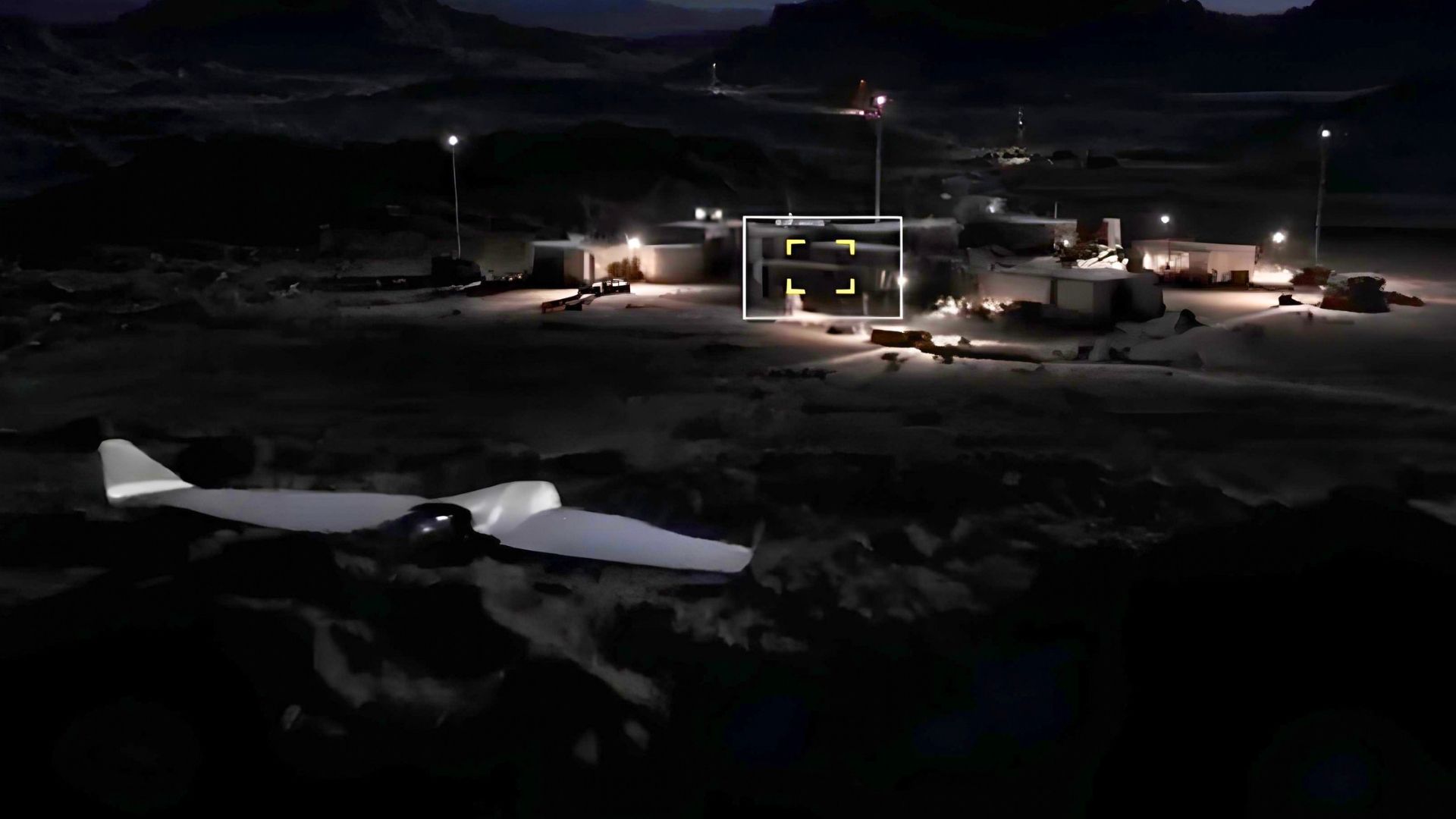
Ursa Major’s public-market pitch is arriving during sustained U.S. interest in hypersonic weapons and the supply chains needed to support them. In February, the company unveiled a hypersonic missile system called HAVOC that it intends to manufacture mostly in-house. Spagnoletti told Breaking Defense at the time that the system could be built for around $3 million per unit.
That cost target stands out because affordability has become one of the central questions hanging over hypersonic programs. Military planners want speed, reach, and survivability, but they also need munitions that can be produced in enough quantity to matter operationally. A company that can pair advanced performance with lower unit economics could find itself in a strong position as the Pentagon balances capability against inventory depth.
The same logic applies to propulsion more broadly. Solid rocket motors have become a particularly important chokepoint in the U.S. industrial base, with government officials and industry leaders repeatedly warning about limited suppliers and constrained output. A company offering additional capacity, alternative designs, or faster development cycles can gain strategic importance beyond its balance sheet.
That is why Ursa Major’s announcement lands as more than a routine corporate-finance update. It speaks to a policy problem the U.S. has been trying to solve: how to rebuild industrial depth in areas where demand is growing faster than legacy supply. Public capital, if secured on acceptable terms, could help the company invest in facilities, equipment, workforce, and test infrastructure that are expensive to finance through private markets alone.
Transparency, accountability, and the public-company test
Spagnoletti also framed the move as consistent with a higher standard of transparency and accountability, saying public-company status would strengthen the firm’s ability to deliver responsibly for the warfighter over the long term. That language is notable in defense, where newer contractors increasingly need to show not only technical ambition but also institutional durability.
Going public, however, creates its own test. Defense startups entering public markets face greater scrutiny over revenue conversion, contract concentration, program timing, and the gap between prototypes and sustained orders. Investors tend to reward strategic narratives early, but public companies eventually have to show dependable execution.
For Ursa Major, the core question will be whether its propulsion portfolio can translate growing national-security relevance into predictable business performance. The building blocks are visible in the report: a private-capital base, recent military awards, a first engine flight, an emerging missile offering, and a declared push to expand production. What remains to be proven is how quickly those ingredients can become durable, scaled output.
The answer matters beyond one company. If Ursa Major succeeds, it could offer a model for how defense hardware startups mature from development-stage firms into manufacturing-centered public companies. If it struggles, it will reinforce concerns that even strategically important technologies face a hard road when investor expectations meet the slower realities of defense acquisition.
For now, the announcement captures a clear industry moment. The Pentagon wants more missiles, more motors, and more resilient supply. Ursa Major is betting that the market will support the capital raise needed to help provide them.
This article is based on reporting by Breaking Defense. Read the original article.
Originally published on breakingdefense.com