A pressure strategy is being judged by its results
An opinion essay published by Defense News makes a blunt case about the current U.S.-Iran standoff: maximalist threats have not delivered the outcome Washington wanted. Despite a recent ceasefire between Iran and the United States, Iran continues to restrict shipping through the Strait of Hormuz, one of the world’s most strategically important waterways. In response, the United States has established its own naval blockade in the strait and has sent thousands more troops to the region.
The central argument from Cato Institute analyst Benjamin Giltner is not merely that tensions remain high, but that President Donald Trump’s brand of coercive diplomacy may be helping produce the very instability it claims to deter. The result, in this telling, is a widening gap between rhetoric and strategic effect.
Because the underlying article is explicitly analytical and opinion-driven, its value lies less in reporting a new battlefield development than in offering a framework for interpreting the diplomatic failure now visible around the strait. The claim is straightforward: threats alone did not reopen shipping lanes, and the broader U.S. approach may have reduced rather than increased the chances of durable calm.
The Strait of Hormuz remains the critical pressure point
The Strait of Hormuz has long been a choke point for global energy and commercial shipping, which makes any sustained disruption economically and militarily consequential. According to the source text, the strait had been open before joint U.S.-Israeli attacks, but Iran continues to restrict shipping even after the ceasefire.
That sequence is what gives the critique its force. If the point of maximal pressure was to alter Iranian behavior quickly and decisively, the continued restrictions suggest the campaign has not succeeded on its own stated terms. The United States has responded with a larger military footprint rather than a visible diplomatic breakthrough.
From a defense planning perspective, that matters for two reasons. First, shipping security in the Gulf is not a symbolic issue. It affects energy markets, insurer calculations, naval posture, and allied confidence. Second, military buildups that do not deliver political results can lock all sides into a more dangerous equilibrium, where every new deployment becomes both a signal and a liability.
The “madman theory” critique
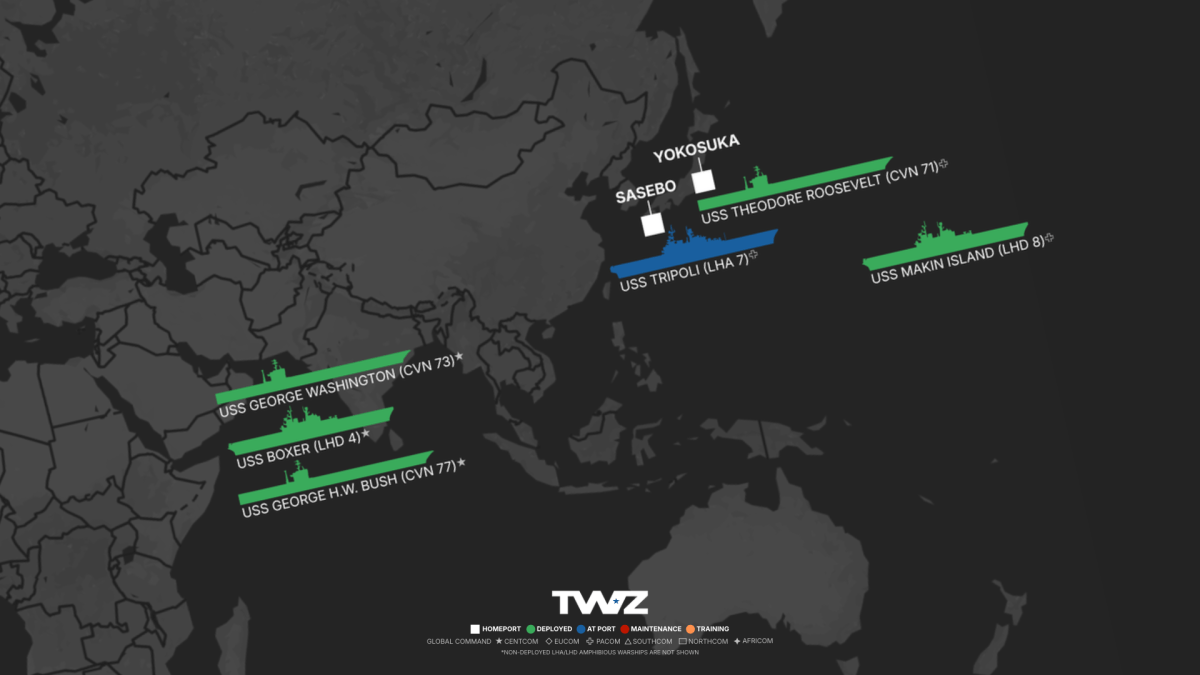
Giltner’s essay centers on what he describes as Trump’s use of a distorted version of the “madman theory.” In classic strategic form, the theory suggests an opponent may make concessions if they believe a leader is volatile enough to do something extreme. But the article argues that effective coercion requires more than theatrical aggression. It requires credibility, clarity, and a coherent strategy behind the threats.
In the author’s assessment, Trump’s approach often amounts to loud threats without a clear plan for translating pressure into negotiated outcomes. The essay points to rhetoric including a promise to destroy Iran’s civilization as evidence that bombast has displaced disciplined signaling.
That critique is important because coercive diplomacy depends heavily on interpretation. States do not simply react to force; they assess intent, capability, constraints, and likely next steps. If an adversary sees threats as erratic, disconnected, or politically performative, they may decide endurance is safer than concession.
The article argues that this is exactly what has happened. Iran has not reopened the strait. Instead, the confrontation has thickened into a cycle of restriction, blockade, troop movements, and deteriorating prospects for peace.
Why threats can backfire
The broader strategic insight in the essay is that intimidation is not self-executing. Threats can fail for multiple reasons: they may lack credibility, they may impose costs without offering a realistic exit, or they may harden an opponent’s domestic incentives to resist. The stronger the rhetoric, the more a targeted government may feel compelled to demonstrate that it cannot be bullied.
That does not mean diplomacy without force always works better. In many crises, military posture shapes negotiations. But the opinion piece argues that force posture must be paired with a plausible diplomatic off-ramp. Otherwise, escalation becomes the message, and neither side has an obvious path to step back without appearing weak.
That framing helps explain why a ceasefire alone has not normalized shipping. A ceasefire can pause direct attacks without resolving the political logic that produced them. If the incentives, grievances, and signaling structure remain unchanged, practical restrictions can continue even after headline hostilities cool.
What this interpretation implies
As an analytical contribution, the essay invites readers to judge policy by measurable outcomes rather than emotional force. The relevant question is not whether threats sound strong. It is whether they changed behavior. By the article’s own benchmark, they have not.
The military implications extend beyond the immediate Gulf theater. Every additional deployment consumes readiness, affects alliance planning, and raises the risk of miscalculation. Naval blockades and massed regional troop movements create friction-rich environments in which accidents or small confrontations can quickly take on strategic weight.
There is also a messaging consequence. If Washington repeatedly relies on maximalist language without delivering predictable political results, future threats may become less persuasive. Deterrence is partly cumulative: credibility is built not only on capability but on a track record of aligning words, actions, and achievable goals.
The article does not offer a detailed settlement blueprint, and its source text is limited to the outline of the argument. But it does present a coherent warning. Blunt rhetoric and improvised escalation may satisfy domestic political instincts while weakening actual bargaining leverage abroad.
That is the reason the piece resonates beyond partisan debate. It asks whether the United States is using power in a way that produces strategic effect. So far, in the Strait of Hormuz, the analyst’s answer is no. Shipping remains restricted, forces are still moving, and the path to peace appears more distant than the rhetoric promised.
This article is based on reporting by Defense News. Read the original article.
Originally published on defensenews.com