A structural overhaul enters its final design phase
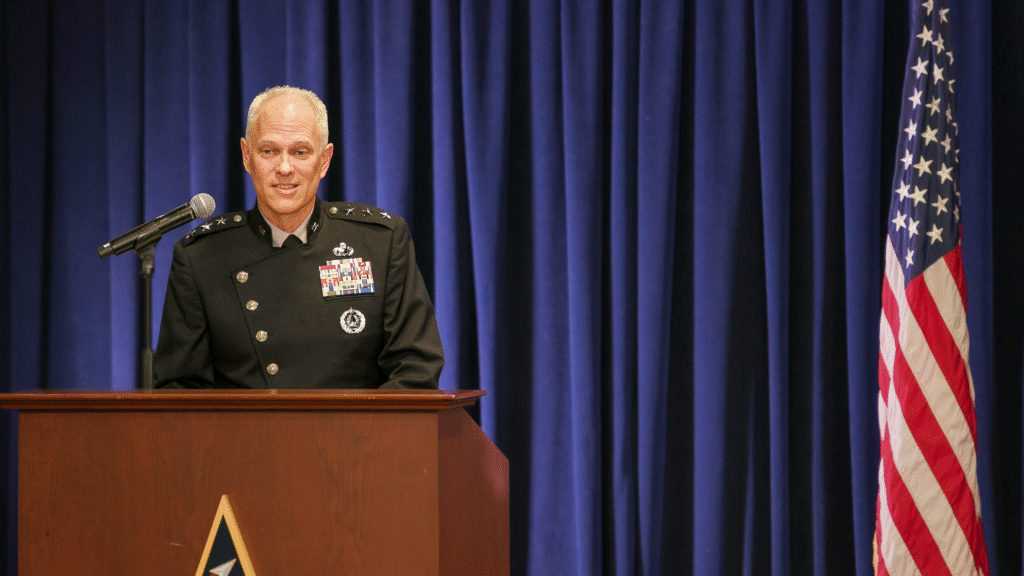
The U.S. Space Force says it is nearing a key milestone in its effort to reorganize how it manages acquisitions, with the remaining pieces of a new portfolio-based structure expected to come into focus in roughly the next two months. The update, reported by Breaking Defense from the Space Symposium in Colorado Springs, came from Lt. Gen. Philip Garrant, head of Space Systems Command.
The service plans to create nine Portfolio Acquisition Executive offices, or PAEs, and has already announced six of them. The final three, according to Garrant, should be sorted out soon, with more concrete information expected in the “June-ish” timeframe. Those offices will cover Space Control; Electronic Warfare, Cyber Warfare and Orbital Warfare; and Integration.
The reorganization is meant to improve how the Space Force executes its acquisition mission. But based on Garrant’s comments, the effort is not just a chart-redrawing exercise. It also involves resolving personnel overlaps, clarifying reporting relationships, and cleaning up the way organizations such as Space Systems Command and the Space Development Agency interface with each other.
From design to full operational capability
There is also a defined deadline further out. Garrant said Pentagon acquisition chief Michael Duffey expects the new structure to reach full operational capability by November 27. That target turns what might otherwise seem like an abstract reorganization into a time-bound implementation effort.
In defense acquisition, timelines matter because program management structures directly affect how quickly requirements, contracts, oversight, and decision authority can move. A portfolio-based model is typically intended to make accountability clearer and align decision-making around mission areas rather than a more fragmented bureaucratic layout.
Whether the new arrangement improves speed or outcomes will depend on execution, but the fact that the Space Force is nearing completion of the portfolio map suggests the service sees acquisition reform as central to its maturity as a military branch.
A workforce problem sits alongside the org chart problem
Garrant’s remarks also made clear that structure is only one part of the challenge. Space Systems Command is trying to rebuild an acquisition workforce that has been weakened by reductions tied to Elon Musk’s DOGE and the Pentagon’s Deferred Resignation Program, or DPR.
According to the report, SSC is now working under lifted hiring caps and plans to bring in under 1,000 employees, amounting to several hundred hires, to both backfill vacant positions and staff new billets. Around 200 of those are entirely new billets, with many tied to new programs entering the five-year budget plan.
That hiring effort is significant in its own right. Organizational redesign can fail if it is not matched by enough trained personnel to run the new structure. Garrant said SSC has been challenged to hire 100 people per month to reach its goals. That is an aggressive pace for a specialized acquisition workforce, especially in a market where technical and program-management talent is in demand.
Why the overlap matters
One practical issue Garrant highlighted is the presence of SSC personnel working for the Space Development Agency and vice versa. His comment that “we’ve got to clean the books up” points to a common reform problem in growing organizations: mission responsibilities evolve faster than the formal systems that assign people and authorities.
For acquisition organizations, blurred boundaries can create confusion over ownership, budget control, milestone authority, and program accountability. If the Space Force is moving to a portfolio model, then untangling those overlaps becomes more than administrative housekeeping. It is necessary for the model to function as intended.

A sign of institutional consolidation
The Space Force is still a relatively young service compared with the other military branches, and acquisition reform has been one of the clearest tests of whether it can build durable institutions around its mission. Space programs are expensive, technologically complex, and tightly linked to broader national-security priorities. That makes the architecture of procurement and program management unusually consequential.
The new PAE structure appears to be an attempt to bring more coherence to that architecture. By organizing around defined portfolios, the service may be aiming to improve both oversight and responsiveness as new space, cyber, electronic warfare, and orbital mission areas expand.
At the same time, the workforce push shows that no amount of structural reform can substitute for capacity. If SSC must both backfill losses and staff new programs, then the reorganization is happening under operational pressure rather than in a period of bureaucratic calm.
What to watch next
The immediate signal to watch is the expected June announcement on the final organizational shape. That will show whether the last three portfolio offices are defined cleanly and how the Space Force intends to reconcile roles across connected acquisition organizations.
The second marker is the hiring pace. Bringing in several hundred people, including about 200 new billets, will be essential if the service wants the new system to be more than a formal rearrangement. The final measure will come in late November, when the Pentagon expects the portfolio structure to be fully operational.
Taken together, the comments from Space Symposium suggest the Space Force is entering a consequential phase: moving from acquisition reform as a concept to acquisition reform as an operating model, while trying to rebuild the human capacity required to make that model work.
This article is based on reporting by Breaking Defense. Read the original article.
Originally published on breakingdefense.com