Bigger Budget for America's Missile Defense Umbrella
The Pentagon's Golden Dome missile defense initiative has received a significant budget expansion, with General Michael Guetlein announcing that the spending plan has been raised by $10 billion to a total of $185 billion. The increase is intended to accelerate development across three core technology pillars: the Airborne Moving Target Indication system, a space data network, and the Hypersonic and Ballistic Tracking Space Sensor constellation.
Golden Dome is designed to provide layered protection against the full spectrum of aerial and ballistic threats — from conventional cruise missiles to hypersonic glide vehicles that current ground-based systems struggle to track and intercept. The scale of the investment reflects both the ambition of the program and the Pentagon's assessment of the threat environment it is designed to address.
The Three Acceleration Priorities
The Airborne Moving Target Indication capability is a sensor and data fusion system designed to track fast-moving objects from airborne platforms. Unlike ground-based radar, which is limited by line of sight and terrain, airborne systems can provide persistent wide-area surveillance over contested regions without being vulnerable to the facility targeting that fixed installations face.
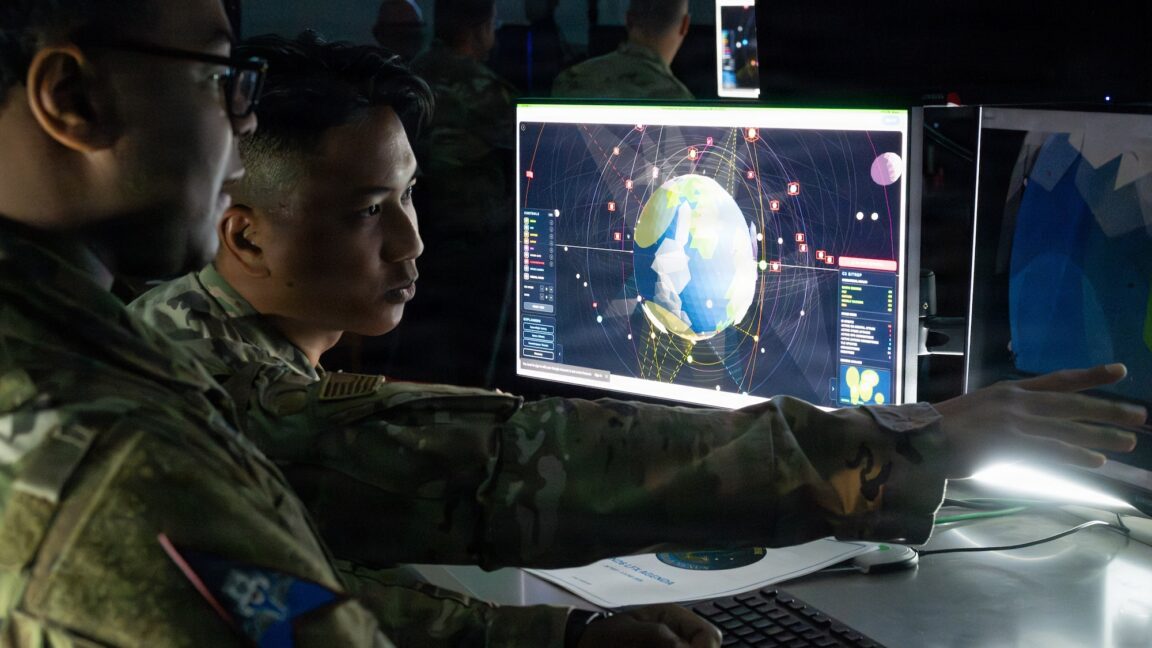
The space data network represents the communications backbone that would tie together Golden Dome's disparate sensor and interceptor elements. In a real engagement scenario, data latency between sensor detection, command authority decision, and interceptor guidance can determine whether a threat is neutralized or reaches its target. Building a resilient, low-latency space-based network to handle this data traffic is a technical challenge on par with the weapons systems themselves.
The Hypersonic and Ballistic Tracking Space Sensor is perhaps the most technically challenging element. Hypersonic glide vehicles exploit their ability to maneuver unpredictably at high speed at altitudes between traditional ballistic trajectories and the atmospheric region covered by conventional air defenses. Tracking them requires sensors positioned in low Earth orbit with sufficient thermal sensitivity to detect hypersonic vehicle signatures against the warm background of the lower atmosphere.
Why the Budget Increased
General Guetlein framed the additional $10 billion as an acceleration investment rather than a cost overrun. Acceleration spending front-loads development activity to compress the timeline to operational capability. The framing reflects the program's stated priority of fielding capabilities faster in response to an accelerating threat environment.
The threat context is significant. China has deployed a large and growing inventory of hypersonic weapons, including the DF-17 hypersonic glide vehicle. Russia has used hypersonic weapons operationally, demonstrating the category's real-world relevance. Peer competitor investment in hypersonic offense has driven US investment in hypersonic defense through a dynamic that both sides acknowledge openly.
Space as the New High Ground
The emphasis on space-based sensing and data networking reflects a broader strategic assessment: that future high-end conflict will be characterized by competition for space access and the ability to deny adversaries the satellite-enabled capabilities that modern militaries depend on. Golden Dome's space architecture is designed not only to detect threats but to do so through a constellation resilient enough to continue operating after attempts to blind or destroy individual satellites.
This resilience requirement drives both technical complexity and cost. A single large satellite is vulnerable and expensive to replace. A distributed constellation of smaller, purpose-built sensors spreads risk but requires sophisticated ground control, inter-satellite communications, and data fusion that a centralized architecture does not. The space data network funding is intended to build precisely this kind of architecture for Golden Dome's orbital components.

Industrial and Congressional Implications
A $185 billion defense program represents significant leverage over defense industry priorities and congressional committee jurisdictions. Companies including Northrop Grumman, Raytheon, L3Harris, and SpaceX are variously involved in sensing, interceptor, and launch aspects of the program. The budget increase will flow through contract modifications and new awards that keep major defense industrial players deeply invested in Golden Dome's continued funding.
This article is based on reporting by Breaking Defense. Read the original article.
Originally published on breakingdefense.com