A month into Operation Epic Fury, tankers are at the center of the strain
Operation Epic Fury is not just a test of combat power at the sharp end. It is also a test of the logistics architecture that keeps U.S. air operations moving, and by The War Zone’s account that burden is falling heavily on the Pentagon’s aerial refueling force. In an interview published March 26, retired Air Force Colonel Troy Pananon described a tanker enterprise under sustained pressure as it supports a major military buildup and an ongoing war in Iran.
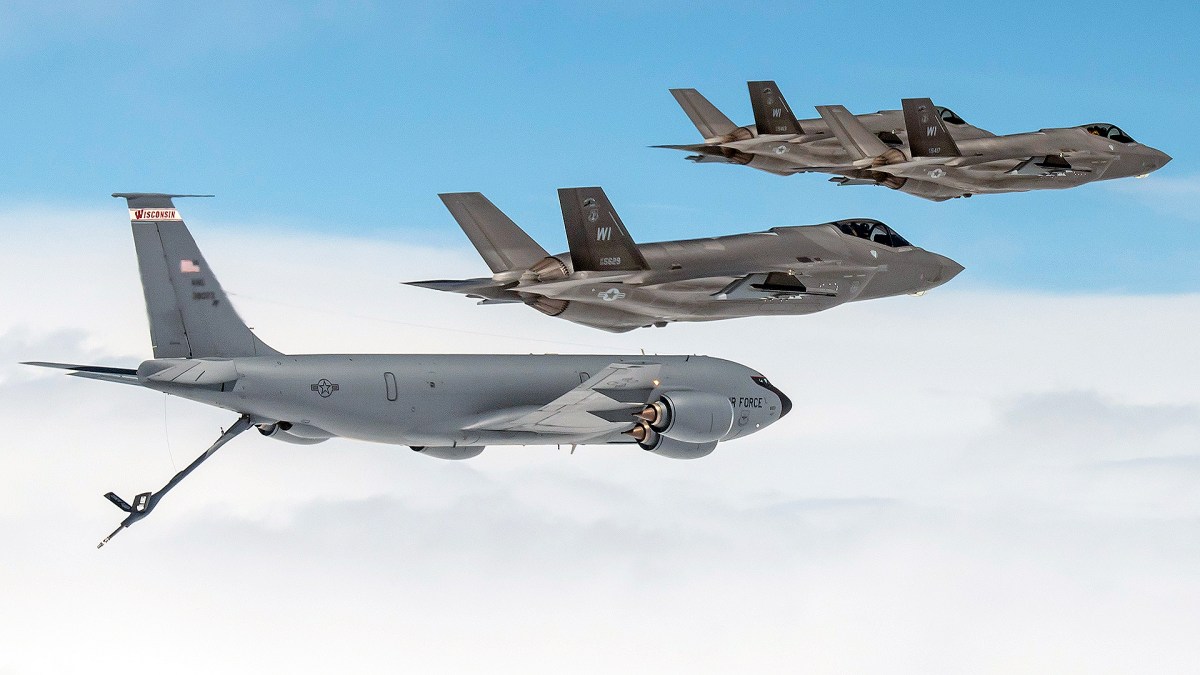
The core point is simple: none of the rapid movement highlighted in modern air campaigns works without fuel delivered in the air. The War Zone reported that tankers have already flown thousands of sorties linked to Epic Fury and the buildup around it, helping move materiel quickly across the globe. Those missions, the report said, have ranged from supporting C-17 transports carrying Patriot missiles to dragging stealth fighters across long distances.
That picture places aerial refueling exactly where mobility specialists have long said it belongs: not as a supporting detail, but as one of the central systems that determines how much combat power the United States can actually project and sustain. Epic Fury, at least as described in this interview, is another reminder that tanker availability is a strategic constraint as much as a tactical enabler.
An experienced insider sees a force already worn by repeated demand
The War Zone’s interview matters because of who is speaking. Pananon spent more than 20 years in the aerial refueling community, flying both KC-10 Extenders and KC-135 Stratotankers. He also served in leadership positions at MacDill Air Force Base in Florida and at RAF Mildenhall in England, both installations the article said are instrumental in the current war effort and operate KC-135 aircraft.
That background gives his comments weight beyond general concern. This is not an outside analyst speculating about readiness. It is a retired senior officer from the tanker world explaining what a high-tempo operation means for aircraft, maintainers, and aircrews in practice.
According to the report, Epic Fury is only the latest in a series of operations that have heavily taxed the tanker fleet in recent years. That framing is crucial. The problem is not presented as a short-lived surge that a healthy force can absorb easily. Instead, the interview suggests cumulative stress: years of intense utilization followed by another major demand spike.
For a fleet built around aging KC-135s, that accumulation matters. The KC-135 remains a workhorse, but the platform’s age imposes realities in maintenance, availability, and manpower. The War Zone said Pananon discussed the challenge of keeping those aircraft flying while they perform hundreds of sorties in support of fighters, airlifters, and other aircraft. The strain is therefore technical and human at the same time.
The aircraft are aging, but the people are also carrying a growing burden
One of the most important elements in the report is its emphasis on personnel. Tanker discussions can become dominated by fleet numbers, sortie counts, and modernization plans, but Epic Fury is also described as a stress test for the maintainers and crews who make those aircraft usable.
The War Zone said Pananon addressed the toll on jets, maintainers, and aircrews. That triad is revealing. Aircraft absorb wear. Maintainers absorb workload and time pressure. Crews absorb operational tempo, fatigue, and risk. When all three are under pressure simultaneously, readiness becomes harder to regenerate.
The article underscores that reality by noting that one mission resulted in the deaths of six airmen after a suspected midair collision over Iraq. The report does not claim that broader tanker strain caused that incident, and it would be wrong to infer more than the source supports. But the mention is a stark reminder that these operations are not abstract logistics exercises. They take place under intense conditions where mistakes, accidents, and exhaustion can carry deadly consequences.
It also sharpens the broader readiness issue. A force can surge for a while. The harder question is what it looks like after months of sustained operations, especially when the same fleet has already been heavily tasked in previous crises. Pananon’s comments, as summarized by The War Zone, suggest that the answer is not comforting.
A mobility mission with consequences far beyond one theater
The interview also points to a larger strategic concern: what today’s tanker workload means for tomorrow’s contingencies. The War Zone said Pananon addressed how Epic Fury is affecting readiness for a potential fight against China, even though those details will appear in future installments.
That single reference is enough to show why tanker stress is not a niche issue. Aerial refueling is one of the fundamental connectors between regional crises and global strategy. If a major operation in one theater consumes large amounts of tanker capacity, it can affect the military’s ability to deter or respond elsewhere.
In that sense, Epic Fury appears to be highlighting a structural truth about U.S. force posture. The country can move aircraft and supplies globally at unmatched scale, but that scale depends on fleets that are finite, aging, and deeply manpower-intensive. The tankers are not infinitely elastic. Every long-range fighter deployment, every rapid resupply mission, and every sustained air campaign draws from the same underlying system.
The War Zone’s reporting makes clear that tanker crews have been central to enabling the operation’s tempo. What is less reassuring is the implied cost of doing so. If the same aircraft and personnel are repeatedly asked to sustain extraordinary demand, the resulting wear can become a readiness issue in its own right.
Epic Fury is a reminder that logistics capacity is combat power
Much public discussion of air warfare still gravitates toward fighters, bombers, and missiles. Epic Fury, as described here, is a corrective. It shows that operational reach is built on support aircraft that rarely dominate headlines but often determine what is possible.
The tanker fleet’s contribution is not glamorous, but it is indispensable. The War Zone’s account of thousands of sorties, rapid global movement, and heavy demand on KC-135s shows a system delivering exactly what planners need. It also shows a force paying for that performance in aircraft fatigue, maintenance burden, and crew pressure.
Pananon’s value in this conversation is that he links those pieces together. He understands the aircraft, the bases, the crews, and the operational demands because he spent decades inside that ecosystem. His warning, implied through the interview’s focus, is not that tankers are failing. It is that they are succeeding under conditions that may be unsustainable if repeated without relief or recapitalization.
That makes Epic Fury more than a case study in wartime mobility. It is evidence that logistics capacity should be treated as frontline capability. When tanker fleets are stretched, the consequences radiate across every other mission set that depends on them. The glamour platforms may still dominate public attention, but the ability to sustain them in the air remains one of the clearest measures of real military power.
This article is based on reporting by twz.com. Read the original article.
Originally published on twz.com