The Navy wants one airborne sonar to do two jobs
The U.S. Navy is exploring a helicopter-borne dipping sonar that could detect both submarines and naval mines, combining two mission sets that have traditionally required separate systems, equipment, and aircraft configurations. The effort is framed in a new Small Business Innovation Research solicitation that opens May 6 and closes June 3.
The idea is straightforward, but the operational implications are significant. Anti-submarine warfare and airborne mine countermeasures have long developed along different technical lines. ASW systems and sonobuoys are typically associated with medium-lift helicopters, while mine-detection packages have been tied to heavier aircraft and dedicated gear. A sonar that can cover both missions without reconfiguration would give the Navy a more flexible aircraft and reduce the burden on ships where storage space, maintenance time, and spare equipment are tightly constrained.
Why the Navy is pursuing the concept now
The source text links the requirement to current operational pressures. Mine detection and sweeping have been underscored by the Iran war, while the submarine challenge remains defined by potential adversaries including China and Russia. The Navy’s answer is not simply more equipment, but a push toward multi-mission capability.
In the solicitation, the service says a dual-role sonar transducer assembly would allow one aircraft to cover both ASW and AMCM mission sets without swapping equipment. That would reduce maintenance requirements and cut down on the volume of gear that must be stored aboard ships. For expeditionary naval operations, that kind of simplification can be as important as raw sensor performance.
What the Navy says the technology should do
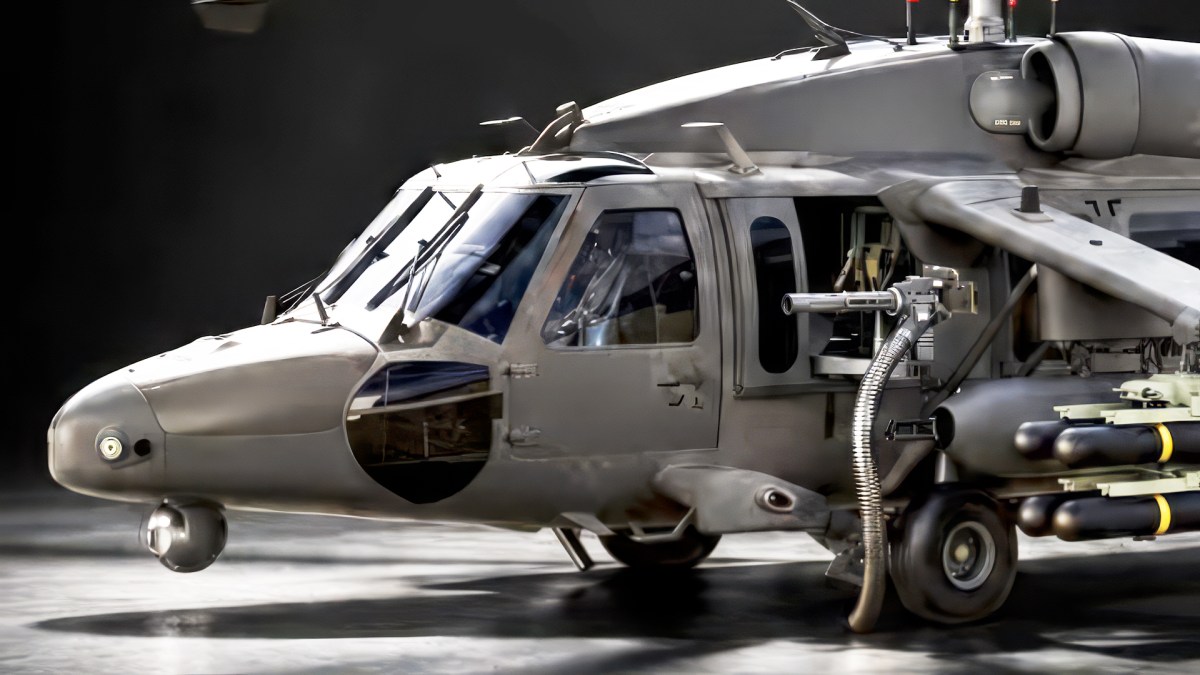
The sonar would be mounted on multi-mission helicopters and designed with future platforms in mind, including the maritime strike future vertical lift aircraft intended to replace the aging MH-60R and MH-60S fleets. The solicitation calls for a primary 3 to 5 kilohertz acoustic transmit band for anti-submarine warfare and a higher-frequency secondary band for mine countermeasures.
The Navy says earlier, minimally funded efforts to use ASW sonar for mine detection have already shown success in finding nearly every naval mine in post-flight data analysis. The new goal is to improve that with an added frequency band, beam steering, and tailored pulses and processing across both bands, while retaining what the service describes as traditional ASW superiority and improving classification in certain scenarios.
The solicitation also sketches demanding physical constraints. The system should weigh less than 180 pounds, have a stowed diameter no greater than 210 millimeters, and an overall length no greater than 1,275 millimeters. It is expected to support inner- and middle-zone submarine detection. The Navy also said a tertiary band below 2 kilohertz would be a significant advance because it could expand helicopter-based ASW into wider-area search and explore convergence-zone advantages.
A signal about future naval aviation
This is more than a narrow sensor upgrade. It reflects a wider defense trend toward modular, multi-role systems that can compress logistics and increase responsiveness in contested theaters. A helicopter that can switch from submarine prosecution to mine detection without major reconfiguration is a better fit for distributed naval operations than one tied to a single specialty.
The Navy is also implicitly looking ahead to a force that may need to do more with fewer platform types. If one sonar package can support several mission sets across current and future aircraft, the payoff would extend from tactics to procurement and sustainment. That does not make the engineering easy. The challenge is to preserve performance in both roles rather than settling for a compromise that is merely adequate at each.
Still, the concept is gaining traction because it answers a real operational problem. Mines remain hard to detect, submarines remain central to maritime competition, and shipboard space remains limited. The Navy’s solicitation suggests it sees a path to tackling all three pressures at once.
This article is based on reporting by Defense News. Read the original article.
Originally published on defensenews.com