An accusation with strategic implications
Iranian state media is accusing the United States of dropping scatterable anti-tank mines near one of Iran’s underground missile facilities, a claim that, if true, would point to a highly targeted new layer in the campaign to suppress Iranian missile launches. The allegation remains unverified, and even the source reporting it most directly says key elements cannot be independently confirmed. But the episode is notable because the alleged weapons and location align with a clear military logic: make access to launch areas harder, slower, and riskier.
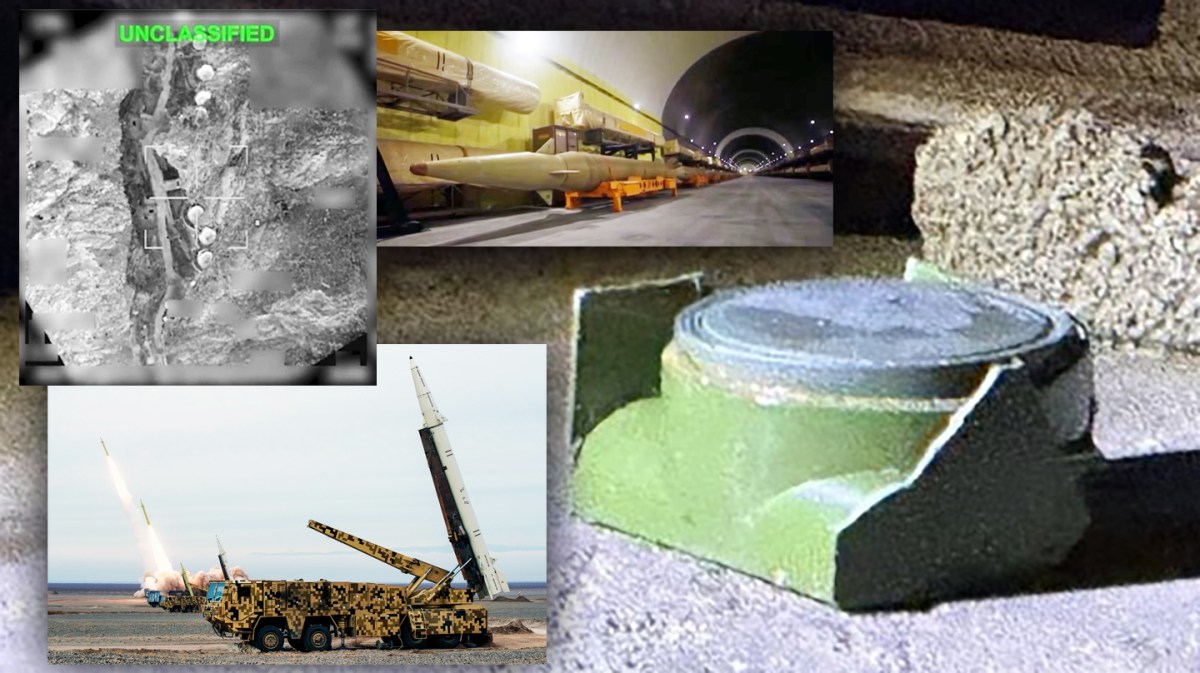
The report, published by The War Zone, says Iran’s official Tasnim news agency posted images and claims on March 26, 2026, alleging that explosive packages had been dropped near the southern outskirts of Shiraz, particularly around the village of Kafari. Tasnim said several people had been killed, though those casualty claims have not been independently verified.
The outlet described the devices as resembling ready-made canned food, slightly larger than tuna cans, and said they detonated when opened. The images included in those posts appeared to show BLU-91/B scatterable anti-tank mines, according to The War Zone.
What can actually be confirmed
The most important distinction in this story is between what Iran claims and what outside observers have established. The War Zone explicitly said it could not independently verify the provenance of the images or the casualty claims. That caution is central to understanding the story.
At the same time, the report cited Bellingcat, which said it geolocated some of the mines to the village of Kafari in Iran. Bellingcat also referenced a video from Canadian lawyer and activist Dimitri Lascaris, who was in Shiraz. According to Bellingcat’s assessment cited by The War Zone, the video showed at least three mines roughly two kilometers from the entrance to what is reported to be Shiraz South Missile Base, one of Iran’s so-called missile cities.
That does not verify who dropped the mines. It also does not independently establish the reported deaths. But it does make the location itself more consequential. If the objects seen in the imagery are indeed scatterable anti-tank mines positioned close to a missile facility, the implication is not random placement. It is area denial.

Why mines would make sense in this context
The War Zone’s core analytical point is that the use of these munitions would make sense. Iran has continued firing missiles across the Middle East despite what the report described as an intense bombing campaign against missile infrastructure and launch sites. In that context, physically complicating access to remote launch points could help reduce the pace or effectiveness of follow-on launches.
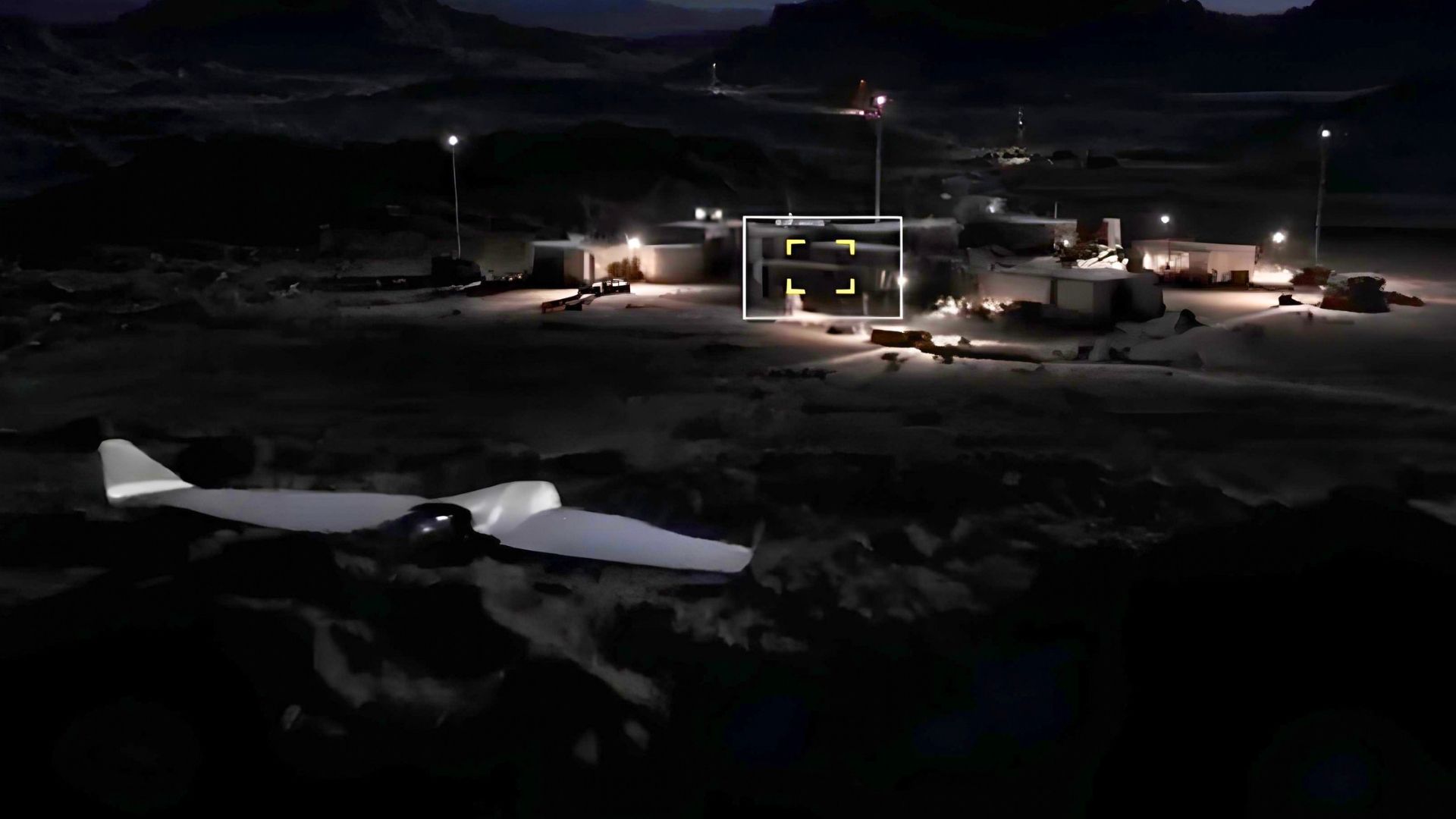
Scatterable mines are suited to that kind of mission. Rather than destroying a facility outright, they can make the surrounding terrain hazardous for vehicles and crews. Around missile sites, transporter-erector-launchers and support vehicles need to move, reposition, reload, and operate under time pressure. A minefield, especially one emplaced quickly and at distance, could interfere with those movements without requiring continuous aircraft presence overhead.
That is the scenario The War Zone points to when it says a highly targeted area-denial campaign around specific missile facilities could help degrade the threat. It is a narrower use case than traditional broad-front mine warfare. The value would come from disrupting a small number of strategically important routes and operating areas.
The BLU-91/B angle
The devices in the published images were described as appearing to be BLU-91/B anti-tank mines. That matters because the munition is designed for rapid scattering, allowing a force to seed an area with obstacles rather than emplace conventional minefields slowly by hand.
If that identification is correct, the alleged use near Shiraz would suggest an effort tailored to mobility denial, not just symbolic signaling. Missile forces depend on movement and dispersal to survive air attack. Interfering with that movement could be one way to increase the effectiveness of a wider strike campaign already targeting missile-related infrastructure.
None of that proves the U.S. carried out the operation. It does, however, explain why analysts are taking the allegation seriously enough to examine it in operational terms rather than dismissing it outright as noise.

A conflict shaped by launch suppression
The broader backdrop here is a campaign focused on reducing Iran’s ability to keep launching missiles after initial strikes. Bombing launch sites and missile facilities can destroy hardware and infrastructure, but it may not fully solve the problem if launch units can relocate, improvise, or continue operating from dispersed areas. That is why terrain denial around access routes and operating zones could be attractive.
The War Zone’s framing is careful but direct: despite heavy attacks, Iran is still firing missiles. That means the campaign has not yet fully shut down launch activity. In that context, mines would not replace airstrikes. They would complement them by restricting the physical freedom of missile crews and vehicles.
That also helps explain why the reported location is so important. Kafari is not just any village in the reporting. It is described as being near the entrance to a reported underground missile base. If munitions were placed there intentionally, the target logic would be obvious.
The uncertainty remains the story
It is tempting in stories like this to jump from plausible military logic to assumed fact. That would be a mistake. The source material supports a narrower conclusion: Iran has made a public accusation, images have circulated showing objects that appear to be scatterable anti-tank mines, and open-source analysis cited by The War Zone places some of those objects near a reported missile facility outside Shiraz.
What remains unresolved is attribution, along with the reported civilian casualties. The War Zone could not independently verify either. That uncertainty should shape how the story is read.
Even so, the allegation matters because it highlights a credible method for tightening pressure on missile forces that rely on mobility. In modern strike campaigns, disruption can matter almost as much as destruction. A minefield in the right place can delay vehicles, channel movement, raise risk for crews, and force a defender into slower and more predictable behavior.
What to watch next
The next meaningful developments will not be rhetorical. They will be evidentiary. Additional geolocation, clearer imagery, official confirmation, or follow-on reports about similar munitions near other missile sites would all sharpen the picture. Without that, the incident remains a serious but unresolved claim.
Still, the episode has already exposed something important about the operational problem at hand. Stopping missile launches is not only about hitting missiles. It is also about denying the conditions that let launchers move, hide, and keep operating. That is why these images, even with all their uncertainties, have drawn attention. They point to a method that would fit the campaign’s immediate objective with uncomfortable precision.
This article is based on reporting by twz.com. Read the original article.
Originally published on twz.com