France wants its own AI backbone for combat data
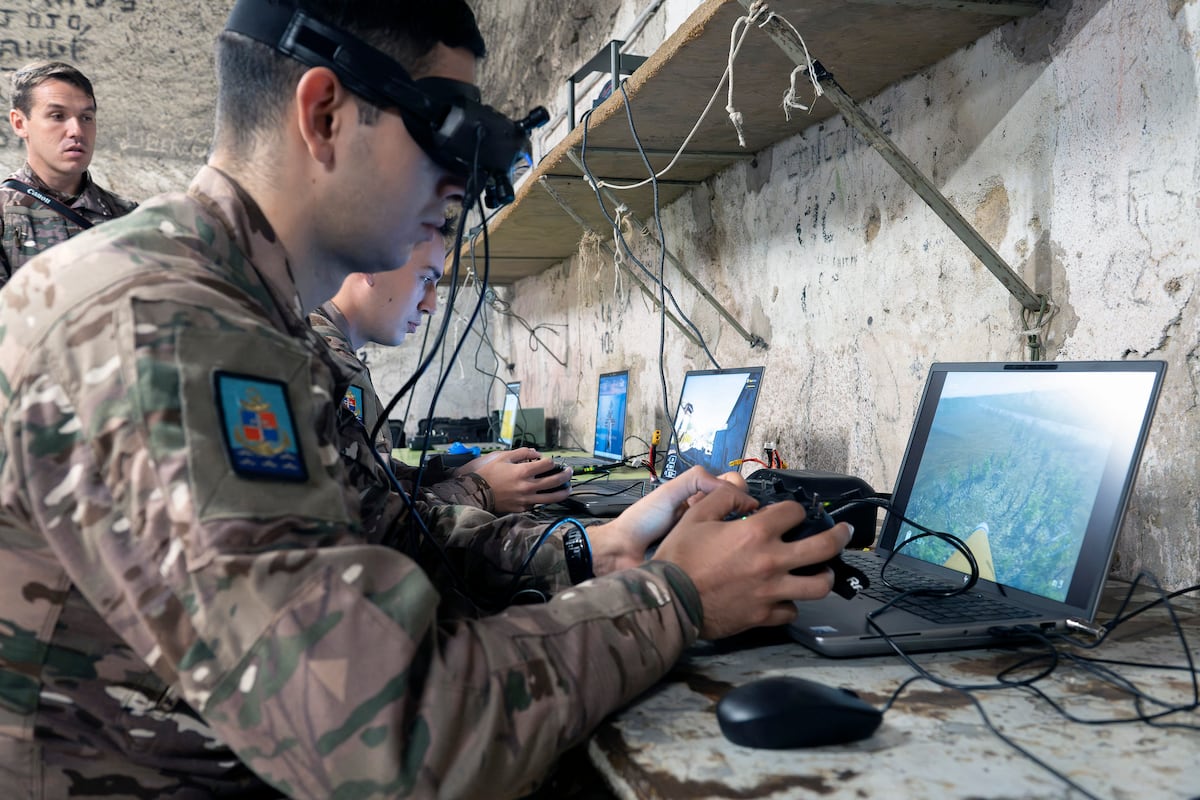
France’s armed forces are working on an artificial-intelligence-powered data-management system that a top general described as a sovereign equivalent to the U.S. Defense Department’s Project Maven. The effort, outlined by Gen. Benoît Desmeulles of the French 1st Army Corps, points to how European militaries are moving from AI discussion to operational command infrastructure.
According to the supplied source text, the system is being built with partners to provide what Desmeulles called a true distributed working capability centered on data and advanced AI. He said the system could be available within a few months and available for exercises in September 2027, though he declined to provide technical specifics.
Why the Maven comparison matters
The comparison with Project Maven is the clearest signal of the system’s intended role. The source text describes Maven as a Pentagon program that uses AI to process drone and surveillance data in order to automatically detect and track objects, using technology from contractors that include Palantir. By invoking Maven, French officials are placing their own project in a category that combines sensor data, analysis, and operational decision support.
That matters because militaries increasingly see data handling as a decisive capability in itself. Desmeulles framed that view bluntly, saying data has become the ammunition of the command post. The supplied source shows that this is not being treated as a niche software tool. It is being positioned as a central organizing layer for how information is collected, interpreted, and shared across the force.
Sovereignty is the point
The French framing puts particular emphasis on sovereignty. Desmeulles said the armed forces are following a logic that allows them to remain sovereign in an area where France believes it is strong. That wording is notable because it reflects a broader European defense priority: using advanced digital systems without becoming structurally dependent on foreign platforms or opaque external control.
In practice, “sovereign” here signals more than national branding. It suggests a preference for domestic or tightly controlled capabilities in an area with strategic, ethical, and operational sensitivity. The source text notes that France has several AI companies active in defense, including Comand AI, ChapsVision, and Safran’s AI business, while also being home to large-language-model developer Mistral AI. It also notes that France created an agency under the Armed Forces Ministry in 2024 to work on AI for defense.
Taken together, those details suggest France is trying to build not just a single system, but a national defense AI ecosystem with institutional backing.
The operational promise and the controversy
The operational appeal of a Maven-like system is straightforward: faster data processing, more coherent distribution of information, and better support for commanders working across dispersed formations. Desmeulles said the corps is already seeing very good results from a data-centric approach, even if he added that there is still some distance to perfection.
But the Maven comparison also brings controversy with it. The supplied source notes that Project Maven has faced criticism tied to AI-assisted targeting in Iran, with concerns about speed, accountability, and harm to civilians in automated kill chains. Those concerns do not mean France’s system will be used in the same way. The source does not claim that. But they do show why battle-management AI is politically and ethically different from ordinary enterprise automation.
Any system that fuses data and supports operational decisions sits close to questions of responsibility. Who validates the output? How much human review is required? How quickly will recommendations move into action? The supplied report does not answer those questions for the French system, but the ethical shadow surrounding Maven makes them impossible to ignore.
What France is signaling
At minimum, France is signaling that command effectiveness in modern war depends on mastering data flows with AI assistance. The effort also suggests that European powers no longer see these systems as optional future add-ons. They are becoming part of core force design.
The timeline in the report is also revealing. Availability within months and use in exercises in September 2027 indicate a project moving on an operational cadence rather than a purely experimental one. Exercises will matter because they are where ambitious data systems encounter military reality: messy inputs, time pressure, coalition interoperability, and the need to keep humans meaningfully in the loop.
A strategic shift in military software
The deeper story is that defense AI is moving from isolated analytics tools toward integrated command infrastructure. France’s proposed system appears to fit that pattern. It is about distributed work, data centrality, and operational sovereignty all at once.
The source material leaves major technical details undisclosed, so the project should not be overstated. Still, the direction is clear. France is preparing a domestically anchored AI data-management capability explicitly compared to Project Maven. That makes this more than a procurement curiosity. It is a marker of how armed forces are redefining military readiness around data and the systems that can make it actionable at speed.
This article is based on reporting by Defense News. Read the original article.
Originally published on defensenews.com