A Moonshot for Battery Technology
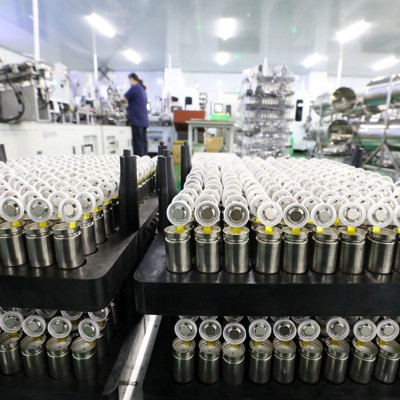
The United States Department of Energy has announced funding for six research teams tasked with developing battery technology capable of delivering four times the energy density of today's best commercial lithium-ion cells. The teams, drawn from national laboratories, universities, and private companies, have been given an ambitious two-year timeline to produce not just laboratory curiosities but manufacturable prototypes that could realistically be scaled to production.
The initiative represents one of the most aggressive battery development targets the federal government has set in recent years. Current state-of-the-art lithium-ion batteries achieve energy densities in the range of 250 to 300 watt-hours per kilogram at the cell level. A fourfold improvement would push energy density toward 1,000 watt-hours per kilogram or beyond, a threshold that would fundamentally change the economics and capabilities of virtually every application that relies on stored electrical energy.
Why Four Times Matters
The specific target of quadrupling energy density is not arbitrary. At that level, batteries become transformative rather than merely incremental improvements over existing technology. The implications span multiple sectors:
- Military applications: Soldiers carry increasingly heavy loads of electronic equipment, from radios and sensors to unmanned systems and electronic warfare devices. Batteries that weigh a quarter as much for the same energy capacity would dramatically reduce the physical burden on dismounted troops and extend the operational endurance of battery-powered military systems.
- Electric vehicles: A fourfold increase in energy density would enable electric cars with ranges exceeding 1,000 miles on a single charge, or alternatively, vehicles with current ranges but dramatically smaller and lighter battery packs. This would eliminate range anxiety as a barrier to adoption and make electric vehicles competitive with combustion engines in every performance dimension.
- Aviation: Battery weight is the primary obstacle to electric flight for anything larger than small drones. Batteries with four times the current energy density would bring electric regional aircraft within reach and dramatically extend the range and payload capacity of military and commercial drones.
- Grid storage: Higher energy density means more storage capacity in less space, reducing the land use and material requirements of grid-scale battery installations that are essential for integrating intermittent renewable energy sources.
The Technical Challenge
Achieving a fourfold improvement in battery energy density is an extraordinarily ambitious goal, and there is no guarantee that any of the six funded teams will succeed within the two-year timeframe. Current lithium-ion technology has been refined over three decades of intensive research and development, and the remaining opportunities for incremental improvement are diminishing. Getting to four times current performance will almost certainly require fundamentally different chemistries or architectures.
Several candidate approaches are being explored by the research community, though the DOE has not publicly detailed which specific technologies each funded team is pursuing. Among the most promising avenues are the following:
- Lithium-sulfur batteries: Sulfur cathodes offer a theoretical energy density several times higher than conventional lithium-ion cathodes. However, lithium-sulfur cells have historically suffered from rapid capacity degradation due to the dissolution of sulfur compounds in the electrolyte, and solving this problem at a commercial scale has proven elusive.
- Solid-state batteries: Replacing the liquid electrolyte in conventional lithium-ion cells with a solid electrolyte enables the use of lithium metal anodes, which have much higher energy density than the graphite anodes used in current cells. Solid-state technology has attracted enormous investment but faces manufacturing challenges that have delayed commercialization.
- Lithium-air batteries: These cells use oxygen from the ambient air as a cathode reactant, theoretically offering the highest energy density of any battery chemistry. Practical lithium-air batteries remain largely in the research stage, with significant challenges in cycle life, efficiency, and sensitivity to humidity and contaminants.
- Advanced silicon anodes: Silicon can store roughly ten times as much lithium per unit mass as graphite, but it swells dramatically during charging, which causes mechanical degradation. Nanostructured silicon and silicon-carbon composites are being developed to mitigate this problem.
The Manufacturability Requirement
Perhaps the most important aspect of the DOE initiative is its emphasis on manufacturable prototypes. The history of battery research is littered with laboratory demonstrations that achieved impressive energy density but could not be produced at scale, at competitive cost, or with adequate cycle life. By requiring funded teams to demonstrate manufacturability, the DOE is attempting to avoid the common trap of celebrating research results that never translate into commercial products.
This requirement adds a layer of practical constraint that shapes which technical approaches are viable. A chemistry that achieves extraordinary energy density but requires exotic materials available only in tiny quantities, or manufacturing processes that cannot be scaled beyond a laboratory, would not meet the program's objectives. The teams must consider supply chain, cost, and production scalability alongside raw performance metrics.

The Competitive Landscape
The United States is not alone in pursuing advanced battery technology. China, Japan, South Korea, and the European Union all have major battery research and manufacturing programs, and the global race to develop next-generation batteries is one of the most consequential technology competitions of the decade. The country or region that achieves breakthrough battery performance first will gain significant advantages in automotive manufacturing, defense capability, and energy infrastructure.
The DOE's investment reflects a recognition that the United States cannot afford to fall behind in this race. Advanced batteries are increasingly seen not just as a commercial opportunity but as a matter of national security and economic competitiveness. The two-year timeline is aggressive by any standard, but it reflects the urgency of the competition and the potential payoff of success.
If any of the six teams can deliver on the fourfold energy density target with a manufacturable design, the result would be one of the most consequential materials science breakthroughs of the century, one with the potential to reshape transportation, energy, defense, and consumer electronics simultaneously.
This article is based on reporting by Defense One. Read the original article.
Originally published on defenseone.com