An aircraft long thought grounded for good may get a second act
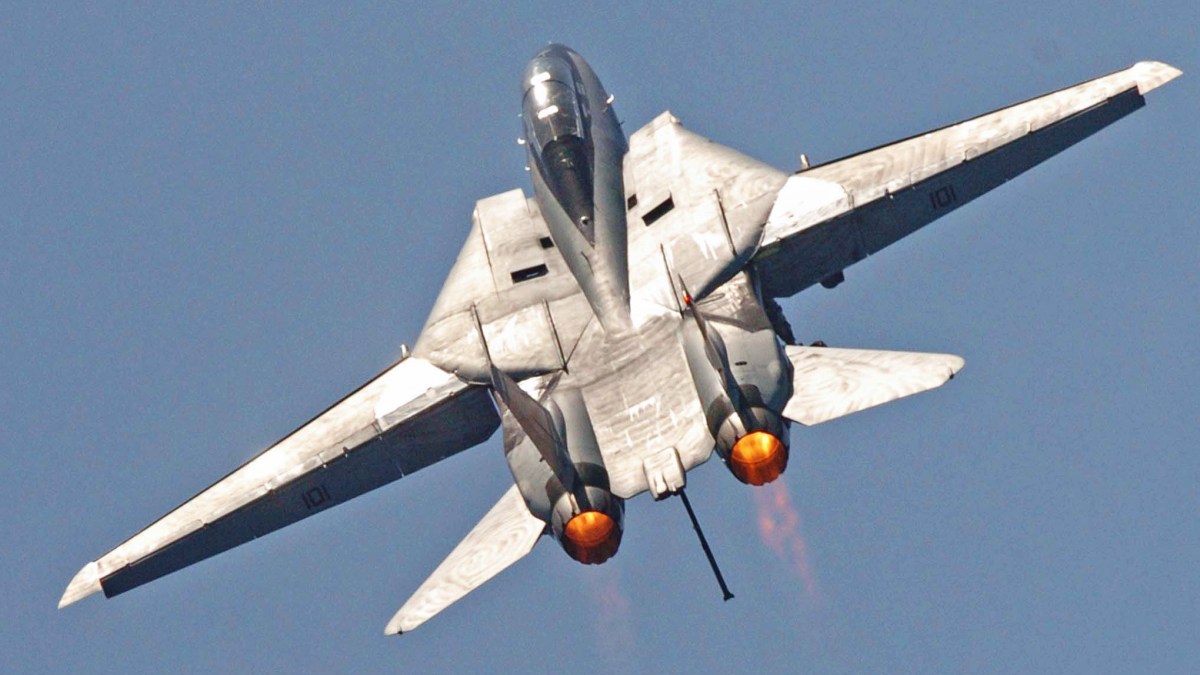
The possibility of seeing an F-14 Tomcat fly again in the United States has moved from wishful nostalgia to a live legislative question. A bill known as the “Maverick Act” would allow the U.S. Navy to gift three retired F-14D aircraft to the U.S. Space & Rocket Center museum in Huntsville, Alabama, creating a path for one of them to potentially return to flight status.
According to The War Zone, companion versions of the bill have been introduced in both the Senate and House. The Senate version was introduced on March 23 by Senator Tim Sheehy and co-sponsored by Senator Mark Kelly. The House version was introduced on April 16 by Representative Abe Hamadeh and has nine co-sponsors, including one Democrat. The Senate measure cleared by unanimous consent on April 28, leaving the House as the next major hurdle.
Why an F-14 comeback is so unusual
The F-14 was officially retired from U.S. Navy service in September 2006 after 32 years in the fleet. Since then, a return to flying status in the United States has been treated as effectively impossible. The main reason is not just age. It is security.
The Tomcat remains subject to extraordinarily tight export and control measures because Iran is the only other nation ever to operate the aircraft and still uses it. That fact has made the handling of retired U.S. F-14 airframes unusually sensitive. Even static preservation has existed under a cloud of restrictions, and restoration to flight has generally been treated as beyond reach.
The Maverick Act does not automatically put a Tomcat back in the air. But it changes the legal and institutional landscape enough to make the scenario plausible. That alone is what makes the story significant. A path that had been closed for roughly two decades is now open, at least in legislative terms.

The aircraft named in the proposal
The report identifies the three F-14Ds in storage at Davis-Monthan Air Force Base that are earmarked for potential transfer by their Bureau Numbers: 164341, 164602, and 159437. These are described as the only three F-14Ds currently in storage at the boneyard.
That specificity matters because it turns a symbolic idea into an actionable one. This is no longer a vague proposal about preserving Tomcats in general. It is a concrete legislative effort tied to named airframes, a receiving institution, and a process that has already advanced in the Senate.
The cultural force behind the bill
The title “Maverick Act” is an explicit nod to the Top Gun franchise and its fictional naval aviator Pete “Maverick” Mitchell. The name reflects how completely the F-14 occupies both military history and American popular culture. Few retired combat aircraft have the same combination of operational legacy, public recognition, and emotional pull.
That cultural resonance is part of why the proposal is getting attention. But it is not the entire story. The legislation also highlights how museums, lawmakers, and veterans can shape the afterlife of military technology. Preservation is not just about placing equipment in a hangar. In some cases, it is about deciding whether a historically important platform should remain inert or whether it can still serve an educational and commemorative role in motion.

What happens next
The immediate question is whether the House advances the measure. If it does, further implementation questions would follow: what conditions would govern transfer, what compliance requirements would apply, and whether one of the three aircraft could realistically be restored to flight status under existing restrictions.
The War Zone’s reporting stops short of declaring that a flying Tomcat is guaranteed. That caution is appropriate. Legislative approval is only one step, and the aircraft’s sensitivity, age, and restoration complexity remain substantial barriers.
Still, the fact that the idea has advanced this far is remarkable. For nearly 20 years, the assumption was simple: the American Tomcat era was over, and it would remain over. The Maverick Act has not yet overturned that assumption, but it has made it contestable.
If the bill succeeds and restoration proves feasible, the result would be one of the most striking warbird developments in recent U.S. aviation memory. An aircraft that symbolized late Cold War and post-Cold War naval air power could once again take to American skies, not as a frontline weapon, but as a living piece of military history.
This article is based on reporting by twz.com. Read the original article.
Originally published on twz.com