The A-10 gets another congressional reprieve
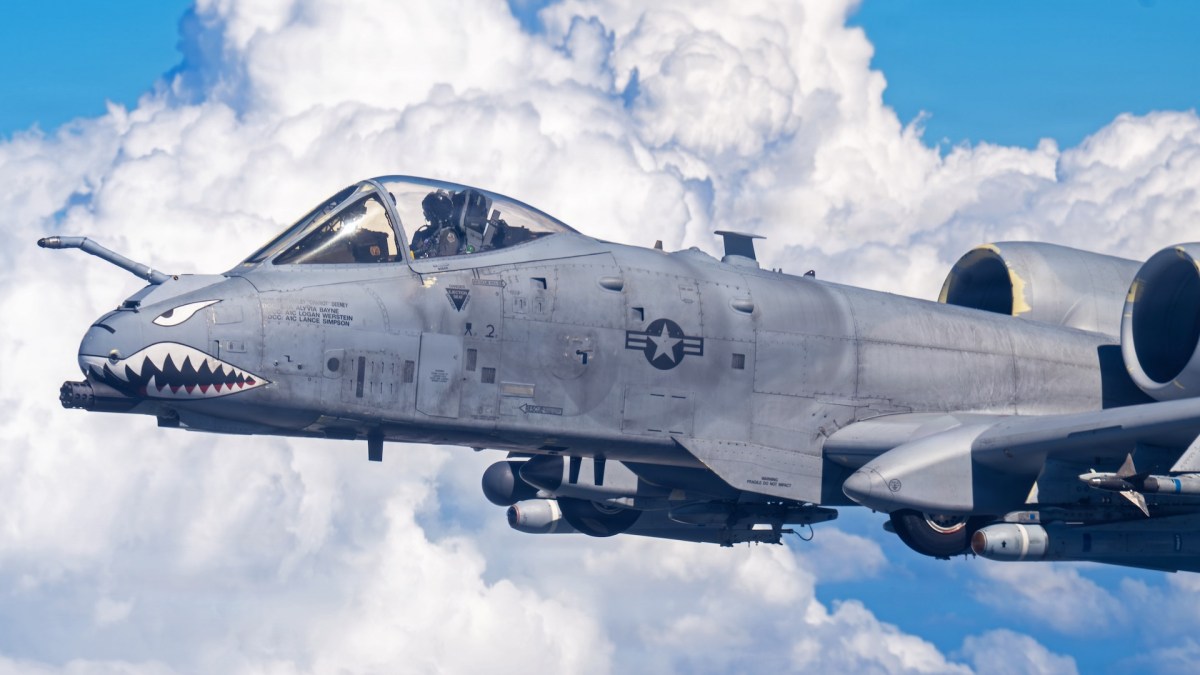
The long-running struggle over the future of the A-10 Warthog has entered another round, with an amendment to the House Armed Services Committee’s version of the National Defense Authorization bill seeking to preserve key training, maintenance, and operational capabilities tied to the aircraft. The Air Force has pushed for retirement for years, but Congress has repeatedly slowed or reshaped that process.
The latest move goes beyond simply keeping aircraft on the books. It would require the Secretary of the Air Force to continue supporting A-10 training, testing, experimentation, maintenance, and sustainment efforts through the jet’s planned 2030 retirement date, while also preserving lessons learned and operational expertise for whatever replaces the aircraft’s mission set.
Why expertise is now the central issue
The amendment, attributed in the source material to Representative Abe Hamadeh of Arizona, is notable because it arrives as several institutional supports around the A-10 are already being wound down. The 357th Fighter Squadron at Davis-Monthan Air Force Base graduated its last class of A-10 student pilots in April. Depot-level maintenance for the aircraft officially ended in February with the deactivation of the 571st Aircraft Maintenance Squadron at Hill Air Force Base. The A-10 Weapons School is also due to close this year.
That means the question is no longer only whether the aircraft stays in service through 2030. It is whether the Air Force maintains the infrastructure needed to operate it effectively and to transfer its combat knowledge into future systems. Once training pipelines and specialized maintenance organizations disappear, preserving capability becomes much harder even if the airframes remain.
The combat argument has not gone away
The amendment reflects a reality the Air Force has struggled to dismiss cleanly: the A-10 still has political and operational defenders because it has continued to prove useful in real conflicts. The War Zone notes recent demand for the aircraft in the Middle East and points specifically to its role in close air support during the recovery of two downed F-15E aircrew from Iranian territory.
That recent combat relevance complicates the retirement case. The Air Force has argued for years that newer multi-role aircraft and future systems can absorb the mission more efficiently. Critics counter that the A-10 combines survivability, persistence, and close-support specialization in a way that has not yet been fully replaced in practice.
What Congress is trying to lock in
The amendment would not permanently save the Warthog, but it would force the Air Force to sustain its support structure for longer and to document the expertise built around the platform. That includes maintaining a formal training unit for pilots until retirement, an especially pointed requirement given that the last student class has already graduated.
This is a familiar pattern in the A-10 debate. Congress often intervenes not just because of attachment to the aircraft itself, but because lawmakers are skeptical of retirement plans that reduce capacity before a mature replacement system is clearly in hand. The amendment’s emphasis on preserving lessons learned shows an awareness that capability resides in institutions and people, not just hardware.
A retirement date that may not settle the issue
The aircraft’s standdown is currently scheduled for 2030, but the source notes that satisfying all the demands in the legislation could extend its practical life beyond that point. Even if that does not happen, the amendment increases pressure on the Air Force to keep the Warthog viable in the years that remain.
That matters strategically because the A-10 debate has become a proxy for a larger argument about force design. How quickly should legacy specialized platforms be retired? How much risk is created by assuming that broader, newer fleets can absorb narrowly defined but still essential missions? And when operational demand resurfaces, how difficult is it to rebuild expertise that was allowed to atrophy?
- A House amendment would require sustained A-10 support through the planned 2030 retirement date.
- The measure emphasizes training, maintenance, testing, and preservation of operational expertise.
- It comes after the end of new pilot training and the closure of depot-level maintenance.
- Recent Middle East operations continue to strengthen the aircraft’s defenders.
The amendment does not end the retirement fight. It does, however, reinforce the same message Congress has delivered before: retiring the A-10 is one thing; dismantling the knowledge base around its mission before a convincing replacement exists is another.
This article is based on reporting by twz.com. Read the original article.
Originally published on twz.com